
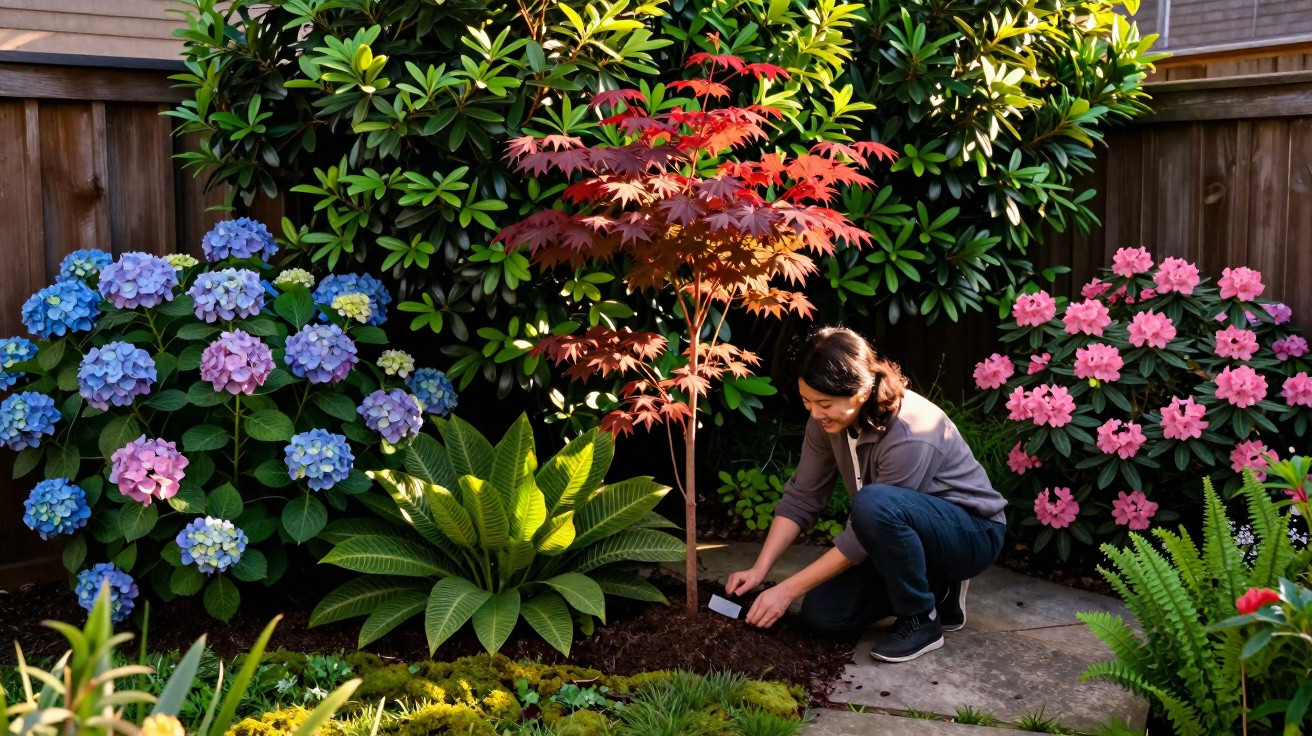
A supposedly lifeless area can, however, offer enormous potential. Carefully chosen shrubs for shade can turn it into a surprisingly lush, cool retreat with plenty of structure and colour – without obsessive daily maintenance or endless trips with the watering can.
Why shade in the garden is an opportunity, not a problem
In many gardens, shady spots are treated as leftover space. They receive little sun, the soil may look dry or depleted, and moss or ivy begins to take over. Anyone who has tried planting roses or lavender there will know the outcome: weak growth, no flowers and frustration.
The answer is to view shade not as a shortcoming but as its own garden climate. Temperatures are gentler, the ground dries out more slowly and delicate foliage is less likely to scorch. With summers becoming increasingly hot, these areas are particularly valuable.
With the right shrubs, a dark corner becomes a cool retreat – visually interesting and surprisingly easy to maintain.
Shade varies: observe first, then plant
Before bringing in new plants, assess the position carefully. Not all shady corners provide the same growing conditions.
How much light does the area actually receive?
- Light shade: The site receives indirect light, such as along the north side of a patio or beneath open-canopied trees.
- Partial shade: Sun in the morning or evening and shade at midday – a situation many flowering shrubs enjoy.
- Deep shade: Almost no direct sun throughout the day, for example beside a north-facing wall or beneath dense, mature trees.
Try a straightforward test: on a typical summer day, check the area every hour. Does direct sunlight reach the ground at any point? If so, for how long? Even two to three hours of gentle morning sun can make a difference for certain species.
Soil conditions matter too
As well as light, the nature of the soil is crucial. Shaded parts of the garden often have:
- Root competition: Thick roots beneath large trees take water and nutrients.
- Compacted soil: Common alongside old paths or at the edges of buildings.
- Waterlogging: Water can collect in courtyard corners or at the foot of a slope.
A quick dig with a spade will reveal plenty: does the soil crumble loosely, or does heavy clay stick to the blade? Does it smell fresh and faintly of woodland, or rather stale? The answers determine which shrubs will truly cope over the long term.
Five shrubs that thrive in shade
Among the many reliable species available, five stand out when the aim is to turn a grey corner into a lush garden feature.
| Shrub | Best for | Position |
|---|---|---|
| Cherry laurel | Screening, evergreen backdrop | Partial shade to shade |
| Hydrangea | Abundant flowers, colour accents | Partial shade, sometimes full shade |
| Japanese maple | Specimen plant, container growing | Partial shade, sheltered from wind |
| Fatsia japonica | Exotic foliage appearance | Shade, mild locations |
| Rhododendron | Spring flowers, woodland garden | Partial shade, acidic soil |
1. Cherry laurel: fast screening in partial shade
Cherry laurel is often the choice for a drab corner that is overlooked. It grows quickly, stays evergreen and copes with a remarkable amount of shade. A hedge along a northern boundary or behind a garage is ideal, especially where other woody plants struggle.
It does need a few purposeful trims each year; otherwise, it becomes too wide and bare in the centre. Those who prefer using secateurs to a chainsaw should opt for narrower-growing varieties and prune a little more often, but less severely.
2. Hydrangeas: bursts of colour for cool positions
Hydrangeas are among the few flowering shrubs that remain impressive in shade. Their large rounded flowerheads or looser panicles brighten dark recesses in shades ranging from white to pink, red and blue.
Many varieties dislike fierce midday sun and instead thrive on a north-facing side or below lightly shaded trees. They need humus-rich soil that remains evenly, slightly moist. During dry summers, they benefit from a thick mulch of leaves or composted bark.
Hydrangeas turn a bare north-facing wall into a flowering ribbon – as long as the soil stays cool and nutrient-rich.
3. Japanese maple: delicate form for shaded patios
Japanese maple adds elegance to the planting scheme. Finely cut leaves, vivid autumn colour and a delicate canopy make it an ideal focal point in a small courtyard or front garden. Intense direct midday sunshine can scorch its leaves, so a partially shaded place suits it far better.
In a pot on a north-facing patio, it can look almost like a small work of art. It simply needs a loose, slightly acidic growing medium and protection from strong winds, so that its fine shoots do not dry out.
4. Fatsia japonica: a holiday feel in the back garden
With its large, glossy leaves, Fatsia japonica immediately lends the feel of a “courtyard in Tokyo” to walls and shaded corners. It prefers mild regions, making sheltered urban gardens or courtyards particularly suitable.
It slowly develops into a substantial shrub and is equally at home in a border or container. A note for households with children and pets: its black berries are poisonous and should be kept away from children and dogs.
5. Rhododendron: spring colour in partial shade
Rhododendrons favour woodland-like conditions: acidic soil, consistent moisture and shelter from harsh sunshine. Provide that combination and they reward you each spring with dense clouds of flowers, from pure white to purple or bicoloured forms.
They are particularly effective planted in groups beneath open-canopied pines or near large deciduous trees. Add suitable underplanting, such as ferns or ground-covering woodland perennials, and a calm, dense woodland area quickly takes shape in the garden.
Caring for shade shrubs: less fuss, more consistency
Shade-loving shrubs rarely need complicated specialist care; above all, they benefit from steady attention.
- Watering: Hydrangeas and newly planted shrubs need regular watering during their first few years.
- Pruning: Keep cherry laurel and Fatsia in check with an annual prune, so paths and neighbouring plants remain clear.
- Feeding: A layer of compost in spring releases nutrients gradually and improves the soil.
- Mulching: Leaves, bark mulch or woodchip retain moisture and protect fine roots.
Many roots grow very close to the surface in shade. When weeding, it is therefore best to work by hand or with a small hand cultivator to avoid damaging the shrubs.
Climate and wildlife benefits: shaded corners come alive
These shrubs do more than look attractive. Dense canopies cool their surroundings, filter dust from the air and slow heavy rainfall before it erodes the soil. During hot summers, they create small pockets of fresher air – ideal near seating areas or around the house.
Hydrangea and rhododendron flowers attract numerous insects, including solitary bees and butterflies. Later in the year, berries and dense growth provide birds with food and shelter. Adding native shade-loving perennials strengthens this effect considerably.
Combining plants effectively in shaded beds
A technique used in professional gardens is to use shrubs such as cherry laurel, Fatsia or rhododendron as the structural framework. Ground-covering perennials and ferns are then planted between and in front of them, shading the soil and reducing weed pressure.
Typical companions include hostas, epimediums and barren strawberries. They make use of the space beneath the shrubs without competing with them for light. The result is a cohesive planting design that retains structure even in winter.
Planting uncertain shaded areas thoughtfully brings several rewards at once: a cool retreat, an eye-catching feature and a noticeably livelier microclimate in your own garden – precisely in the place you may previously have preferred to ignore.

Comments
No comments yet. Be the first to comment!
Leave a Comment