
Many amateur gardeners become frustrated when zucchini seeds simply refuse to germinate – yet an almost forgotten trick from Grandma’s garden can suddenly make the process much easier.
Anyone who grows zucchini knows the situation: expensive seeds, carefully filled pots, daily watering – and in the end, the soil remains empty. The cause is rarely a “poor variety”; it is nearly always the wrong timing, cold soil or an inconspicuous sowing mistake. One traditional technique, still passed on by older gardeners, can address precisely this problem.
Why zucchini seeds so often fail
Zucchini grow quickly and are considered easy to cultivate. Even so, many sowings fail, particularly for beginners. There are clear reasons behind this:
- Soil that is too cold – the seeds rot or germinate extremely late.
- Permanently wet compost – moisture builds up and fungi can easily take hold.
- Too little light – seedlings become leggy, grow tall and fall over.
- Sowing too early in the year – young plants stop growing altogether in cold conditions.
Many gardeners then repeat the same routine: they keep watering, hoping and waiting. If nothing happens for days, they sow again – often with exactly the same outcome.
“Zucchini often fail not because of a lack of gardening skill, but because of one tiny detail when sowing.”
The best time for vigorous zucchini plants
If you start zucchini indoors, the ideal time is between late March and April. There is usually enough daylight by then, while temperatures in the home are within a suitable range.
A temperature of 18 to 22°C is ideal. Place the pots on a very bright windowsill, or preferably in a conservatory or beneath a grow light. Without sufficient light, seedlings will grow, but they become thin and unstable.
For sowing straight into a bed, the rule of thumb is to wait until there is no longer any risk of overnight frost. This is generally during the second half of May, once the soil has warmed noticeably. Seeds then germinate far more reliably, and young plants continue growing without suffering a cold shock.
Before sowing, it is worth preparing the soil briefly: loosen it, remove stones and work in well-rotted compost. Around one handful at each sowing spot is enough to give the plants an easier start.
The old gardening trick: lay zucchini seeds flat instead of standing them upright
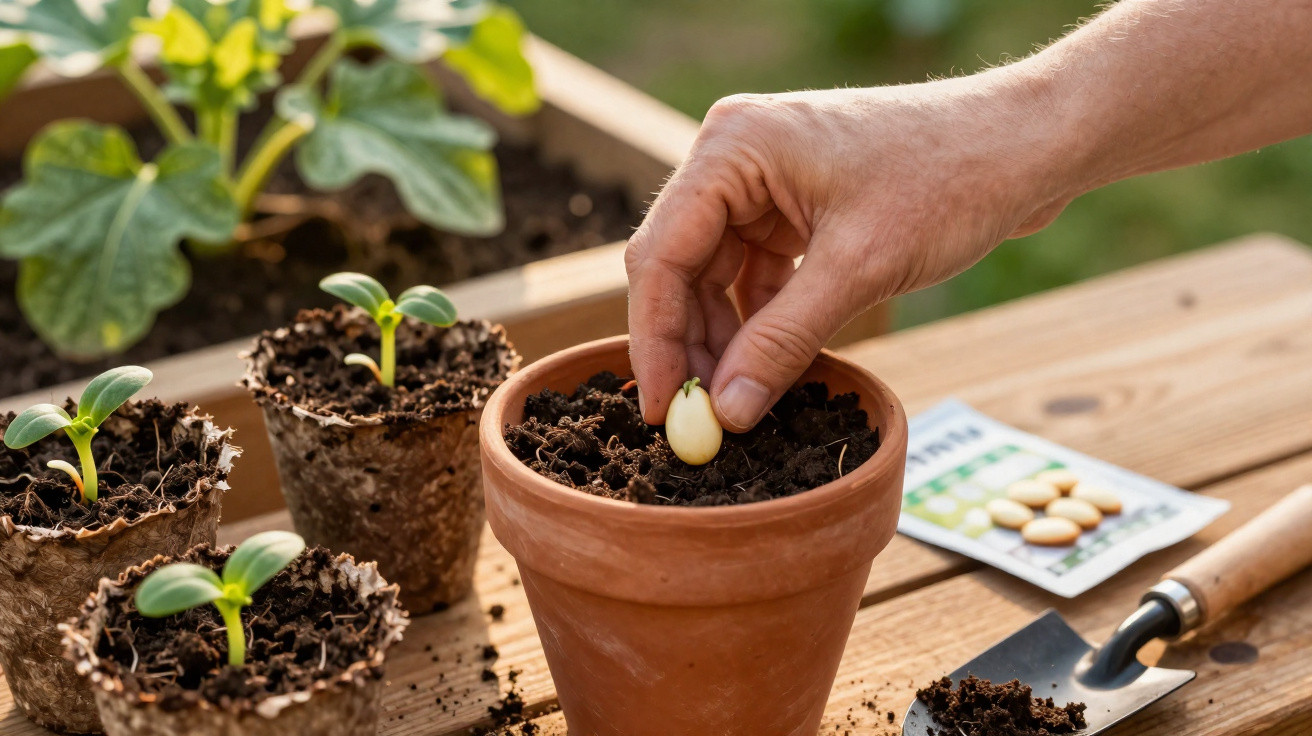
The key trick used by many experienced gardeners sounds almost too simple: place zucchini seeds flat, horizontally, in the soil rather than pushing them in upright.
Although it may seem insignificant, this offers several benefits:
- More of the seed’s surface is in contact with the moist growing medium.
- Moisture is distributed more evenly around the seed coat.
- The emerging root gains purchase more quickly and can grow downwards more easily.
- Germination is often more even and slightly faster.
“Placing seeds deliberately in a horizontal position greatly reduces the risk of rot and weak seedlings.”
In unsettled weather especially, this small difference can be what turns “nothing comes up” into strong young plants.
Starting zucchini in pots: step by step
For an early start, raising zucchini indoors or in a greenhouse is the most reliable approach. Here is how to do it in practice:
- Choose wide pots measuring 8 to 10 centimetres in diameter so that the roots can develop properly.
- Use fine, loose seed compost and moisten it lightly rather than soaking it.
- Place two to three seeds flat in each pot and cover them with two to three centimetres of compost.
- Moisten with a spray bottle or a gentle stream of water.
- Keep the pots at around 20 to 22°C in the brightest possible position.
In good conditions, the first shoots can appear after only three to five days. Once the first “true” leaves form after the seed leaves, the young plants need as much light as possible.
Before moving plants outdoors, they should be acclimatised to wind and changing temperatures. For about a week, put them outside during the day and bring them back in at night. This hardens them off and helps them continue growing more steadily later.
Direct sowing in the bed: spacing, depth and care
If you have enough space and warm garden soil, zucchini can be sown directly into a bed. The method is similar to starting them in pots, although outdoor conditions fluctuate more.
- Allow 80 to 100 centimetres between planting spots – zucchini need plenty of room.
- Make a small hollow at each location and incorporate a handful of compost.
- Lay two to three seeds flat at a depth of two to three centimetres.
- Cover with fine soil, press down gently and water carefully.
- A thin mulch layer of grass clippings or leaves helps prevent the soil from drying out.
After germination, leave the strongest seedling in place and carefully remove the others. This allows the soil’s resources to be concentrated on one productive plant.
Care mistakes that can cost you the harvest
Even seeds that have germinated perfectly can still fail if their care and position are unsuitable. Common problems include soil that is too wet, cold draughts and pests.
- Watering: Water directly around the root area where possible, rather than over the leaves.
- Moisture balance: Keep the soil evenly moist, but never wet and heavy.
- Protection: Cover young plants with horticultural fleece or a cloche on cool nights.
- Slugs: Check carefully after rain, as they particularly like tender leaves.
“Dry leaf surfaces, an airy position and consistent soil moisture greatly reduce the risk of disease.”
Organic mulch made from straw, lawn clippings or shredded leaves keeps the soil cool, slows evaporation and suppresses weeds. It also supports soil life, which benefits zucchini.
How much yield one zucchini plant produces
A good start to the crop is usually rewarded generously. One healthy zucchini plant often produces five to eight fruits. Depending on the variety and fruit size, this amounts to around 2.5 to 5 kilograms per plant.
With roughly six well-tended plants, it is usually easy to cover the summer needs of a family of four – with enough left over for the neighbours.
To make this yield a reality, the complete combination matters: warm soil, loose earth, an initial feed of compost, seeds laid flat and regular, moderate watering.
A “small” technique with a big effect
Anyone familiar only with seeds pushed vertically into the soil is often surprised by how much germination changes once the seed is simply laid horizontally. Contact with the soil is better, moisture spreads differently and the young roots establish themselves more securely.
This method is reported to bring considerably greater success, especially among amateur gardeners who have complained about empty pots and missing seedlings in previous years. The amount of work stays the same; only the hand movement changes.
What beginners should also know about zucchini seeds
Some terms and practices may sound confusing to newcomers, but they are easy to understand:
- Planting pocket / sowing spot: This means one defined planting position where several seeds are placed.
- Seed leaves: The first two “leaves” that appear after germination; they look different from the leaves that develop later.
- Becoming leggy: Plants grow tall and thin because they lack light – a common issue when growing them on a windowsill.
When growing zucchini, you can combine them effectively in the bed with herbs such as basil or with calendulas. These attract pollinators and can partly deter pests. They also make better use of the space between the zucchini’s widely spreading leaves.
The main risks remain cold springs and heavy slug pressure. It therefore helps to sow a few spare seeds and not begin too early in the season. Those who are patient and consistently use the simple technique of laying seeds flat will be much more likely to grow strong plants – and eventually harvest plenty of zucchini for the kitchen, barbecue and preserving cupboard.


Comments
No comments yet. Be the first to comment!
Leave a Comment