
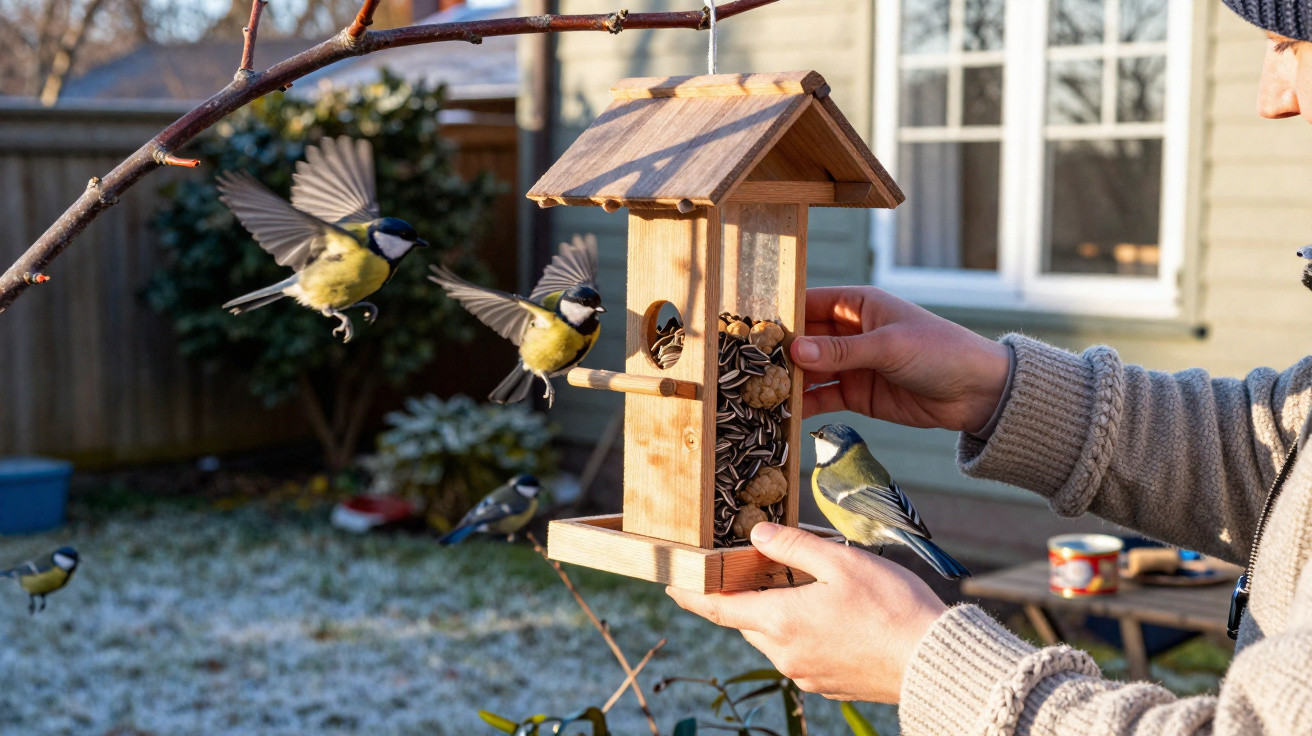
Many garden owners wonder why the neighbour’s garden is full of constant activity from small birds, while their own patch feels almost lifeless in winter. The reason is often not the size of the garden or expensive feed, but consistent habits that birds register as dependable.
Winter quiet in the garden – and what tits truly need right now
In January, the garden can look frozen in place: bare branches, hard ground, hardly any movement. For tits, this period is brutally demanding. They stay in the UK rather than heading south, and each icy night they burn through huge energy reserves just to keep their body temperature up.
Come morning, every minute matters. They need fast, accessible energy, otherwise things get critical. If you feed with purpose at this point, you’re not only helping the birds – you also bring life back to the view outside your window. These little acrobats cling upside down on the feeder, zip from branch to branch, and create a surprisingly lively winter scene.
"Anyone who keeps tits close through winter is often saving their lives – and in return gets a daily nature film for free."
Tits are brilliant visitors to have around: in spring they eat huge numbers of caterpillars and aphids and are seen as real allies against pests. First, though, they need to learn that your garden is a safe, reliable place.
The real trick: feed at exactly the same time
The big difference between gardens with constant action at the bird feeder and those that are almost bird-free often comes down to one detail: the time of day. Tits remember very precisely when and where food is available. They won’t waste energy on places that only offer something now and then by chance.
If you top up the feeder one day in the morning, the next in the afternoon, then not at all for two days, the birds will treat your garden as an unreliable source. They may drop in briefly, but they’ll soon move on.
It looks completely different when the feeder is stocked at the same time every day, ideally early in the morning. Then the following happens:
- The tits link your garden to a fixed time.
- They shape their morning route around it.
- Over time, they’ll already be waiting in the branches before you even step outside.
Many birdwatchers report the same experience: as soon as feeding becomes genuinely daily and punctual, the tits turn up almost to the minute. Keep the routine going for two to three weeks and you’ll be amazed how quickly a real “regular flock” forms.
The perfect high-energy food: what tits genuinely like
Once timing is sorted, the feed itself determines whether birds merely sample it or keep coming back. Cheap supermarket mixes often contain lots of filler such as wheat or millet, which tits ignore and fling out of the tray.
In the cold months, the priority is energy-dense, high-fat ingredients. Particularly suitable options are:
- Black sunflower seeds – very oily, thin shells, easy to open.
- Unsalted, unroasted peanuts – best offered chopped or in dedicated peanut feeders.
- Fat blocks or suet balls without nets – please ensure no salt and no low-quality fillers.
Avoid bread, salty leftovers, or sweets. Bread swells in the stomach, provides hardly any appropriate nutrients, and can make birds ill. Salty snacks put additional strain on their bodies.
"The right mix: lots of fat, little ballast, no salt – and your feeder becomes an energy station for winter nights."
| Type of food | Suitable for tits? | Note |
|---|---|---|
| Black sunflower seeds | Yes | Ideal in winter, very popular. |
| Unsalted peanuts | Yes | Never salted; best offered chopped. |
| Cheap seed mix | Limited | Lots of waste, often low in fat. |
| Bread | No | Swells in the stomach; wrong composition. |
| Salted snacks | No | Strain the circulation and organs. |
The right spot: safe, clear sight lines, and close to cover
Tits are cautious. They want to scan the surroundings and be able to vanish within seconds if danger appears. That’s why it’s not only the food that matters, but also where the feeding station sits.
A mix of cover and visibility works best:
- a clear view in several directions, so threats are spotted early
- at the same time, a dense shrub or hedge about 2–3 metres away
- enough distance from window panes to prevent collisions
From this secure staging point, tits make short dashes to the feeder and straight back again. Birds of prey and cats then have a far harder time.
A clean feeder means healthier birds
If you feed every day, hygiene needs to be part of the routine. Damp, stale seeds and droppings can spread pathogens and weaken the whole small local population.
A quick check in the morning is often enough:
- Empty trays if the food clumps together or smells musty.
- Clean feeders regularly with hot water.
- Remove leftovers on the ground so bacteria – and rats – don’t gather there.
"The daily ritual can look like this: step outside, throw away old leftovers, top up the food – and it’s all done in a few minutes."
Why it pays back twice in spring
Morning feeding isn’t just a winter pastime. Anyone who helps their feathered regulars through the cold season is laying the groundwork for a lively, healthy garden in spring.
Well-fed tits enter the breeding season in better condition. They are more likely to raise multiple broods, feed their chicks more reliably, and have the energy to catch masses of insects during this period. Caterpillars and aphids sit right at the top of the menu then.
For hobby gardeners, that means less damage to fruit trees, roses, and ornamental shrubs. Feed now, and later you get natural pest control in return.
Getting started: small steps, big impact
If you’re beginning the routine from scratch, you don’t need to get everything perfect. Three points are more than enough at first:
- A simple feeding station at eye level in a spot that’s easy to see, but still sheltered.
- High-quality, high-fat feed, preferably black sunflower seeds.
- A fixed time in the morning – and then stick to it.
Many people notice the first visitors after only a few days. With each additional week, the chances rise that tits will build your garden firmly into their morning circuit.
What the tits’ “internal clock” is all about
Tits don’t run on alarm clocks, but on light, temperature, and experience. They store places where they’ve succeeded repeatedly as “safe filling stations”. If food is available there at the same time every day, solid routines develop.
If the supply fails, birds must search for longer in winter and burn energy they actually need to survive. Consistent feeding gives them a kind of lifeline in a harsh season.
More than feeding: small extras for a bird-friendly garden
Morning feeding combines well with other steps. A wildlife-friendly garden with native shrubs, a few untidy corners, and later on nest boxes strengthens the effect noticeably.
Useful additions include, for example:
- Nest boxes with the correct entrance-hole diameter for tits
- Berry shrubs such as elder or rose hips
- Leaf piles and old stems as insect shelter
This gradually creates a small habitat where tits don’t just refuel briefly in winter, but can remain all year round. And if you’re standing at the window in the morning with a cup of coffee, you’ll understand why a few consistent minutes a day are enough to turn a quiet garden into a lively observation spot.



Comments
No comments yet. Be the first to comment!
Leave a Comment