
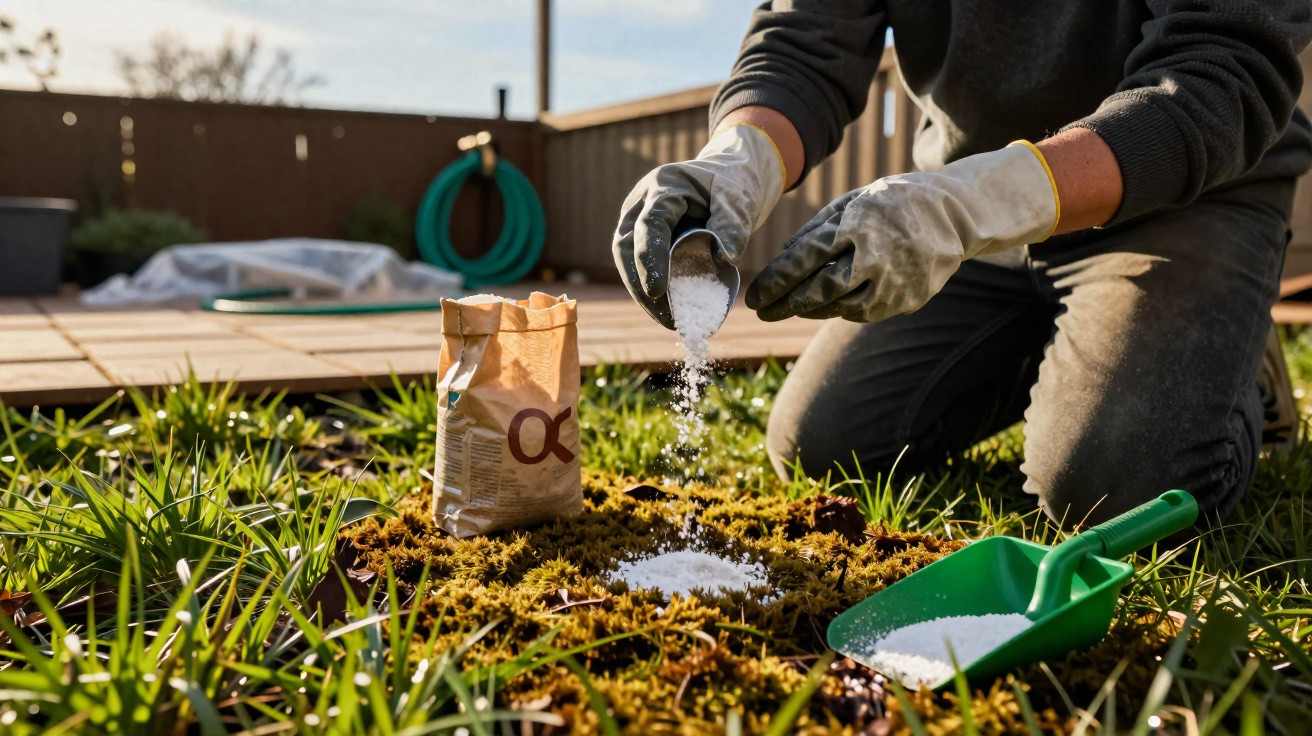
Plenty of keen gardeners come out of winter and feel defeated by a lawn that’s patchy, matted and dull. A long-used professional technique from horticulture shows how one deliberate move in March can change how your lawn performs all summer - provided you get the dose right, pick the right window, and avoid a few awkward pitfalls.
Why the lawn looks tired after winter
Winter takes a heavy toll on grass. Low light levels, constantly wet ground, frost and waterlogging weaken the turf. At the same time, other “residents” in the soil thrive - especially moss.
By March, the ground is often compacted. Grass roots can’t get enough air, so they struggle to take up nutrients properly. That’s exactly when moss really gets going, because it loves moisture, shade and acidic conditions.
“A thatchy, mossy lawn isn’t just a cosmetic issue - over time it can genuinely die off.”
As winter rain leaches the soil, the pH value drops, meaning the ground becomes more acidic. Moss and broadleaf weeds benefit, while lawn grasses are pushed further back. If you don’t intervene at this point, you effectively give away the entire lawn year: you set the foundations for dense green growth in early spring, not in May.
The powder professionals swear by: iron sulphate
In March, landscape gardeners and greenkeepers often reach for a tried-and-tested staple: iron sulphate. You can buy it as a powder, as granules, or pre-dissolved as a liquid. Its appeal is that it works in two ways at once - and that’s what makes it so useful.
Why iron sulphate stops moss so quickly
Iron sulphate reacts with the moss on contact. The tiny plants dry out and turn dark, right through to black. After just a few days, the dead moss is much easier to lift out of the lawn.
At the same time, the iron acts as a trace nutrient for grasses. Iron plays a role in chlorophyll formation - the substance responsible for the green colour in leaves.
“The result: the moss dies back, while the lawn looks noticeably stronger and greener within a short time.”
That mix of treatment and immediate visual improvement is why many professionals deliberately use iron sulphate before the season starts - particularly when a large area needs to look presentable quickly.
The perfect timing: why March is so important
With iron sulphate, timing matters more than speed. The best window is early March, as soon as temperatures are a little milder and the ground is no longer frozen.
- The soil should be slightly damp, but not waterlogged.
- There should be no frost - but also no blazing sunshine.
- Avoid rain in the hours after application, otherwise it will simply wash away.
Apply too early and you risk frost damage. Leave it until April or May and you hand moss a head start that’s difficult to claw back later.
Get the dose right - or you’ll scorch the grass
Iron sulphate is not a “more is better” product. Excess amounts can burn the grass blades and leave brown patches.
Typical manufacturer guidance is around 20 to 30 grams per square metre, dissolved in water. For small areas, a watering can with a rose or a pump sprayer works well. For larger lawns, a spreader is the practical option when using granules.
“It’s better to apply slightly too little and repeat after a few weeks if needed, than to go in too strong in one hit.”
A key point is even coverage. Patchy application will show later as clearly different colour tones across the lawn.
Risky staining: how to protect patios and paths
One major downside of iron sulphate is often underestimated: when moisture is involved, it can leave stubborn rust marks on stone, concrete, paving slabs, tiles and natural stone.
If you walk across paving after spreading - with contaminated shoes - you can be left with brown tracks for a long time. A bit of preparation is worth it.
The most important protective steps at a glance
- Work only with rubber gloves and sturdy wellington boots.
- Keep a generous distance from walls, patios and paths.
- If any splashes hit stone surfaces, rinse thoroughly with water immediately.
- Clean watering cans, sprayers, boot soles and tools carefully after use.
If you must apply close to paving, you can lay down boards or plastic sheeting as a splash guard. A few minutes of prep can save you expensive cleaning attempts later - which often don’t even work once slabs have rust-stained.
What happens after the moss dies - and what to do next
After roughly 10 to 15 days, the visible effect is fully developed: the moss is dark, dry, and no longer clinging to the grass. That’s when the second - and frequently overlooked - part of the job begins.
Without thorough follow-up work, the lawn stays thin
If you simply leave the dead moss where it is, it forms a dense layer of thatch on the surface. That blocks air and water from reaching the roots. This is where a scarifier becomes essential.
Using a scarifier or a rake, pull the dry moss out of the lawn and remove it. The area can look alarmingly bare afterwards, particularly where large moss patches were lifted out. But that “shock” appearance is exactly what sets the stage for fresh, dense regrowth.
Acid control and overseeding: keeping the lawn strong long term
Over time, iron sulphate can make the soil more acidic. Moss loves that - which is a paradox when you’re trying to get rid of it. That’s why a further step, a few weeks after treatment, is part of the process: liming.
Garden lime or dolomitic lime raises the pH value again. Grass then grows more happily and moss loses one of its biggest advantages. If you do a soil test first, you can calculate the lime amount more accurately instead of spreading it by guesswork.
Scarifying often leaves bare areas behind. Those are exactly the spots where moss likes to return later. There’s only one reliable response: overseeding with a specialist lawn regeneration seed mix, paired with an organic long-lasting fertiliser.
“Only when new grasses move in after the moss is removed will the lawn stay dense and resilient in the long run.”
Organic feeds release nutrients slowly and help keep the soil active. That supports root development and offers better protection against summer drought stress.
How to avoid mistakes and strengthen the results
A few familiar traps keep cropping up. If you recognise them early, you save money, time and frustration:
- Never use iron sulphate in strong sunshine or heat - there’s a real risk of scorching.
- Don’t spread it immediately before heavy rain - otherwise the active ingredient ends up down the drain.
- Mow before treatment so the product reaches the moss and soil more effectively.
- Keep off the lawn for one to two days afterwards so the application can settle evenly.
One practical professional tip: if an area is extremely mossy, treat it in two gentle passes - a lower dose first, then a second application a few weeks later if required. This is less stressful for the grasses than applying a high dose all at once.
When the effort is especially worthwhile - and when it isn’t
Using iron sulphate is most worthwhile on lawns that still have a decent base but are heavily overrun with moss. In that situation, you can achieve a lot with relatively little effort.
If the soil is severely compacted, permanently shaded, or constantly wet, this method has clear limits. In those cases you may need additional measures such as replacing soil, adding drainage, or even rethinking the area altogether - for example, choosing shade plants instead of a traditional lawn.
If you stick to the March routine - iron sulphate, scarifying, liming, overseeding and restrained feeding - for a few years in a row, the change becomes obvious: the lawn gets tougher each year and moss finds it harder to establish. A tired patchwork of green gradually becomes a dense, stable lawn that not only looks good, but also copes better with children playing, garden parties and dry summers.






Comments
No comments yet. Be the first to comment!
Leave a Comment