
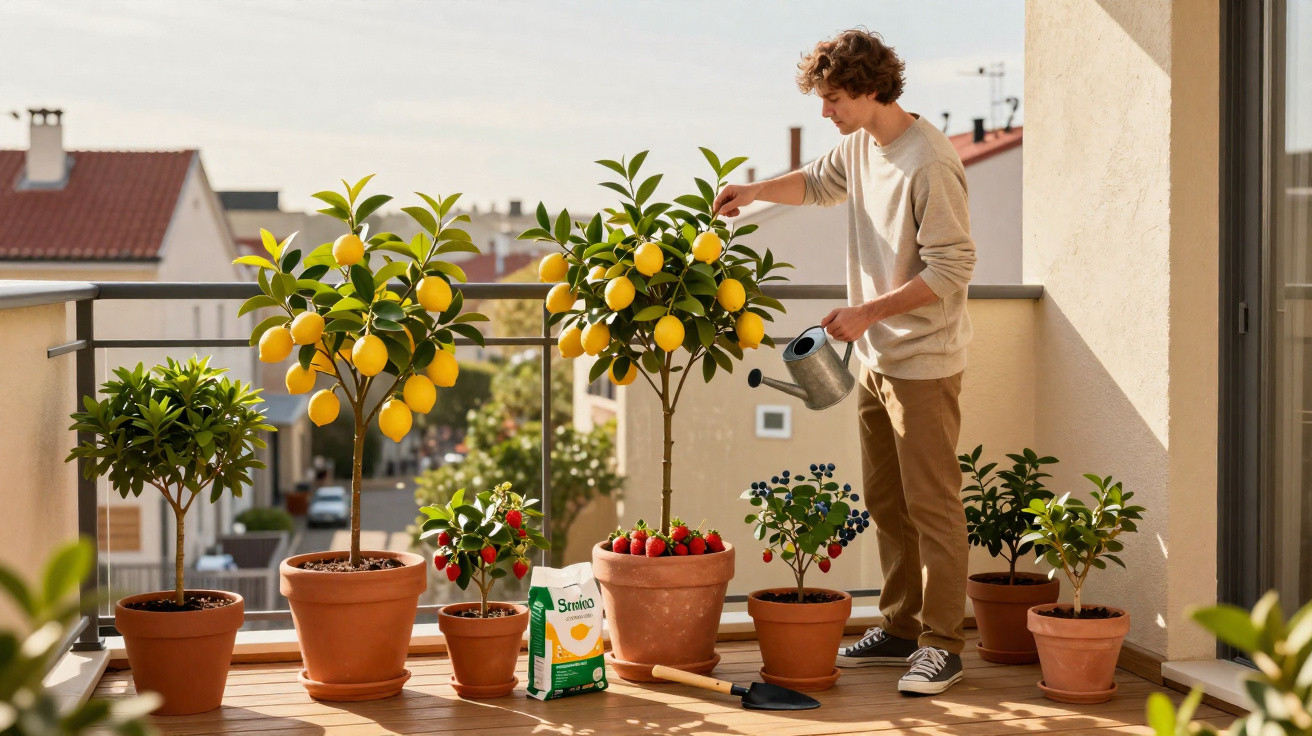
In urban settings, where room is at a premium, many people look for ways to grow fresh food at home. Growing fruit trees in pots is no longer limited to specialists: it has become a practical choice for small gardens, balconies and terraces, provided the species, container and growing position are selected carefully.
Which fruit trees are best suited to pots in small spaces?
Among the most popular choices for compact gardens are three fruit trees: the dwarf Surinam cherry, grafted lemon or Tahiti lime, and the compact jabuticaba tree. Their root systems are easier to manage, they respond well to pruning, and they can crop successfully in deep containers, including on balconies and terraces.
The dwarf Surinam cherry generally fruits well in medium-sized containers when it receives direct sunshine for several hours a day. Grafted lemon trees, a popular option for flat gardens, allow fruit to be harvested from lightweight pots made of materials such as fibre or reinforced plastic. The compact jabuticaba tree requires more patience, but adapts well to larger containers and becomes a striking feature in the space.
- Dwarf Surinam cherry: moderate root growth, suited to medium-sized pots and partial sun.
- Grafted lemon: controlled roots and good yields in pots measuring 50 to 60 cm.
- Compact jabuticaba tree: smaller habit, recommended for large, deep containers.
How do you choose the right pot for fruit trees in containers?
The choice of pot affects root development, stability, and the amount of water and nutrients available. For dwarf Surinam cherry trees, pots at least 40 cm deep are usually adequate. Grafted lemon trees benefit from containers between 50 and 60 cm, which encourage root establishment, while compact jabuticaba trees perform best in pots that are even deeper and wider.
Good drainage is also vital, as waterlogging can damage the roots. Before adding growing medium, many gardeners place a layer of gravel, broken roof tiles or expanded clay at the base of the pot. They also favour durable materials such as terracotta, concrete, reinforced plastic or fibreglass, which can withstand the weight of a mature plant and regular handling.
What are the basic feeding, watering and pruning requirements for potted fruit trees?
As the volume of soil in pots is limited, nutrients are depleted more quickly, making regular feeding essential. Organic fertilisers such as compost, worm castings and bone meal can be used alongside controlled-release fertilisers, applied every two or three months according to the species and the manufacturer’s guidance.
Water often enough to keep the growing medium moist without leaving it saturated, since it dries out faster than ground soil. Surinam cherry and jabuticaba trees prefer consistent moisture, whereas lemon trees tolerate brief drier spells but perform better with a regular watering routine. Pruning for shape, cleaning and fruiting helps keep the tree manageable, lets light into the canopy and promotes productive branches.
How should fruit trees in pots be positioned in small gardens?
Where pots are placed directly affects the amount and quality of fruit harvested throughout the year. In general, these species favour bright conditions with several hours of direct sunshine: grafted lemon trees should be placed in sunnier spots, dwarf Surinam cherry trees benefit from morning sun, and jabuticaba trees prefer filtered light or partial shade, sheltered from very strong winds.
Alongside light levels, consider airflow and how easy the plants will be to manage each day. Very heavy pots can be set on wheeled bases to make them easier to move during periods of heavy rain or cold weather. Sturdy shelving and wall supports can also make use of vertical space, leaving the ground clear for access and other plants. With a few adjustments, it is possible to create a productive small orchard in only a few square metres.





Comments
No comments yet. Be the first to comment!
Leave a Comment