
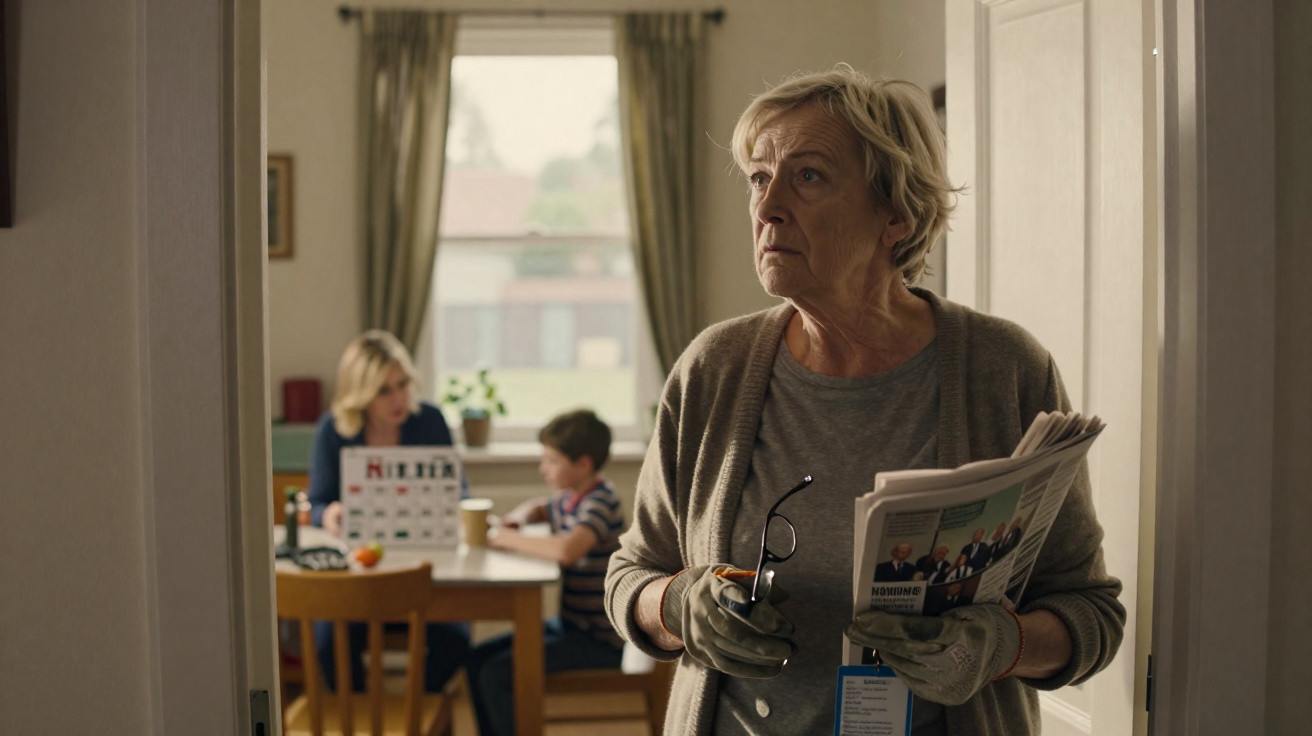
At a community centre on the edge of Birmingham, around 50 people in their late fifties occupied plastic chairs, holding government letters and pension-provider printouts. A woman wearing a navy cardigan fixed her eyes on one line of her statement: “Projected income at 67.” Half speaking to herself and half to the person beside her, she said: “I’d planned to be done at 60.”
The facilitator, a weary-looking careers adviser, asked how many had gone back to work after “retiring”. About a third raised their hands. A few gave a quiet, self-protective laugh, while others appeared close to tears.
Beyond the building, buses passed adverts declaring “Now hiring – flexible hours” in large, optimistic type. Inside, attendees searched job websites on their phones for positions they believed they had left behind long ago. For many, the new rules had shattered their vision of retirement.
Early retirement and the changing rulebook
From London to Lyon, people who retired early are finding that their supposed years of freedom have conditions attached. Concerned by ageing populations and staff shortages, governments are steadily revising the social contract. Pension ages are rising, tax relief is being altered and eligibility rules are becoming stricter, making retirement in the late fifties feel less like an entitlement and more like a risk.
The impact is especially harsh for people who stopped work during the pandemic. They believed their working lives had ended. They cleared their desks, gave away office clothes and discovered the pleasure of alarm-free Monday mornings. Then letters began arriving, policy announcements followed and their pension-calculator figures no longer made sense. Leisurely mornings and lengthy walks increasingly resemble an expensive privilege.
More and more are returning to work, not because they want to, but because rent, food shopping and heating costs cannot wait for inflation to ease.
Mark, 61, took early retirement from a logistics company in 2021. His savings seemed healthy at the time, his mortgage was almost repaid and his modest workplace pension appeared “enough”. That reassurance vanished when steep price rises and revised pension rules reduced his expected future payments. Just two years after his leaving drinks, he was back stacking boxes as a part-time warehouse supervisor.
He calls it a “retirement boomerang”. One week, he was looking after his allotment and arranging an inexpensive holiday out of season; the next, he was pulling on his steel-toe boots again. His experience is far from unusual. In the UK alone, hundreds of thousands of people over 50 have returned to the labour market since 2022, often because real incomes have fallen and benefit eligibility has tightened.
The irony is stark. Governments are calling for workers to fill shortages in health care, transport and retail, yet many of those being drawn back feel they are carrying the cost of earlier political errors.
Behind the headlines is a straightforward arithmetic problem. People are living longer, having fewer children and leaving employment later. Pension systems created for a time when retirement at 60 might last 15 years must now provide for 25 or 30 years. Governments face growing pension costs while essential industries report persistent recruitment problems. As a result, the least politically painful lever is pulled: retirement rules and early access are “adjusted”.
Officially, these measures are intended to safeguard sustainability and keep experienced people in the workforce. On the ground, however, it can feel as though the goalposts are being moved just before the winning shot. People who carefully prepared for a particular retirement age discover that the conditions have changed five years before they reach it. The sense of betrayal is rarely loud, but it weighs heavily on conversations around kitchen tables and in GP waiting rooms.
For policymakers, the wager is that bringing people back into employment will ease labour shortages without prompting open rebellion. For early retirees, it leaves an uncomfortable question: was retirement ever truly theirs to choose?
Managing a “forced” return to work without losing yourself
Those coping best with this transition are not simply gritting their teeth and accepting any job. Instead, they view the new rules as a hard reset and create a new plan one stage at a time. A sensible starting point is uncompromisingly practical: gather every pension statement, savings account and expected state benefit, then calculate what each retirement age would mean.
Avoid the optimistic version in your mind and focus on the actual figures. Use an online retirement calculator or speak to a fee-only adviser, then compare three possibilities: fully retiring at the legal age, working part-time until then or taking seasonal or casual work to cover the gap. Seeing the trade-offs in black and white can be painful, but it’s often less scary than the vague dread of “I’ll never manage.”
After establishing the real shortfall, you can decide how much work you genuinely require, and what kind, rather than accepting the first opportunity in a panic.
Many early retirees who return to employment make the same mistake: assuming they have no bargaining power, they take roles that seem a backward step in both status and wellbeing. They then burn out quickly. A more measured approach begins by identifying what you refuse to do again: long night shifts, toxic managers or physically demanding work. That list is important.
There is an emotional blow that few people mention. Returning after a “last day” may feel humiliating. People fear colleagues’ comments or relatives’ judgement. In reality, everyone is quietly reassessing their own future. You are not an awkward exception; you are simply at the beginning of a story that many others will enter later. Let us be honest: nobody really follows that perfect plan every day, saving exactly the right amount at exactly the right time and then leaving work at precisely 60.
When you manage both financial and emotional expectations, you are far less likely to feel defeated if your first job is not the perfect encore role.
One careers coach who works with over-55s expressed it plainly:
“We tell clients to stop chasing the retirement they imagined at 40 and start designing the life they can actually live at 60. That shift alone can turn a ‘forced’ return to work into a strategic choice, even if the numbers are tough.”
Several small choices can have a substantial effect:
- Focus on employers promoting flexible working and multigenerational teams, rather than only those seeking people who are “young and dynamic.”
- Negotiate working hours before pay, so that your health is not the price you pay.
- Consider short training courses in sectors urgently seeking staff, including care work, driving and digital administration, if your former career has ended for good.
At a more personal level, speak honestly about the anger and shame that can accompany these policy changes. Most of us have seen a life plan quietly disappear in front of us. Acknowledging that loss will not change the rules, but it makes the experience less isolating. That connection is often what stops people from giving up midway through the job search.
A retirement debate only just beginning
What is happening goes beyond pensions, the cost of bread or the latest employment statistics. It represents a profound renegotiation of how the final decades of life should look. Should they be a reward and a gentler landing after decades of employment, or an extended period of semi-employment fitted around ill health and caring responsibilities?
Early retirees who are being encouraged - or compelled - to return to the labour market are at the forefront of this issue. Some discover unexpected benefits, including a renewed purpose, new social connections and a stronger financial cushion. Others feel deprived of time they had expected to spend with grandchildren, partners or simply on their own. In either case, the new rules force people to voice questions that were once taken for granted: who pays for ageing, and who is allowed to stop working when they have had enough?
The argument is likely to grow more intense as the next generation reaches its fifties with more precarious housing, less secure careers and smaller pensions. For now, those quietly refreshing their CVs at 60 are sending a warning that others would do well to hear. Retirement is no longer a fixed date in the diary. It is a moving target shaped by policy, economics and the courage to recognise that the original plan no longer suits the world you inhabit.
| Key point | Detail | Why it matters to the reader |
|---|---|---|
| Rising retirement age | Governments are increasing the legal retirement age and restricting access to early pensions. | Understand why your “retirement date” is moving further away and what this changes in practical terms. |
| Early retirees returning to work | Hundreds of thousands of people aged 55–65 are taking jobs again, often because of financial pressure. | Place yourself within this trend and recognise that you are not an isolated case. |
| Adaptation strategies | Reassess your needs, target flexible jobs and limit emotionally driven mistakes. | Gain practical ways to retain some control over the end of your career. |
FAQ
- Why are so many early retirees being forced back to work? New pension rules, higher living costs and labour shortages have combined to make early retirement much less sustainable than it appeared a few years ago.
- Is this happening only in my country? No. From the UK and France to Germany and the US, most affluent countries are raising pension ages and encouraging older people to rejoin the workforce.
- What if my health can’t handle full-time work anymore? Prioritise part-time, less demanding or flexible work, and investigate any disability or health-related benefits you may be entitled to, with help from a financial or social adviser.
- Can going back to work ever feel like a positive choice? For some people, yes. A suitable role can provide routine, income and social contact, provided it respects their limits and does not take away all their free time.
- How can I protect my future retirement now? Review pension forecasts regularly, diversify income where possible and plan a phased departure from work instead of relying on one single “retirement day.”






Comments
No comments yet. Be the first to comment!
Leave a Comment