
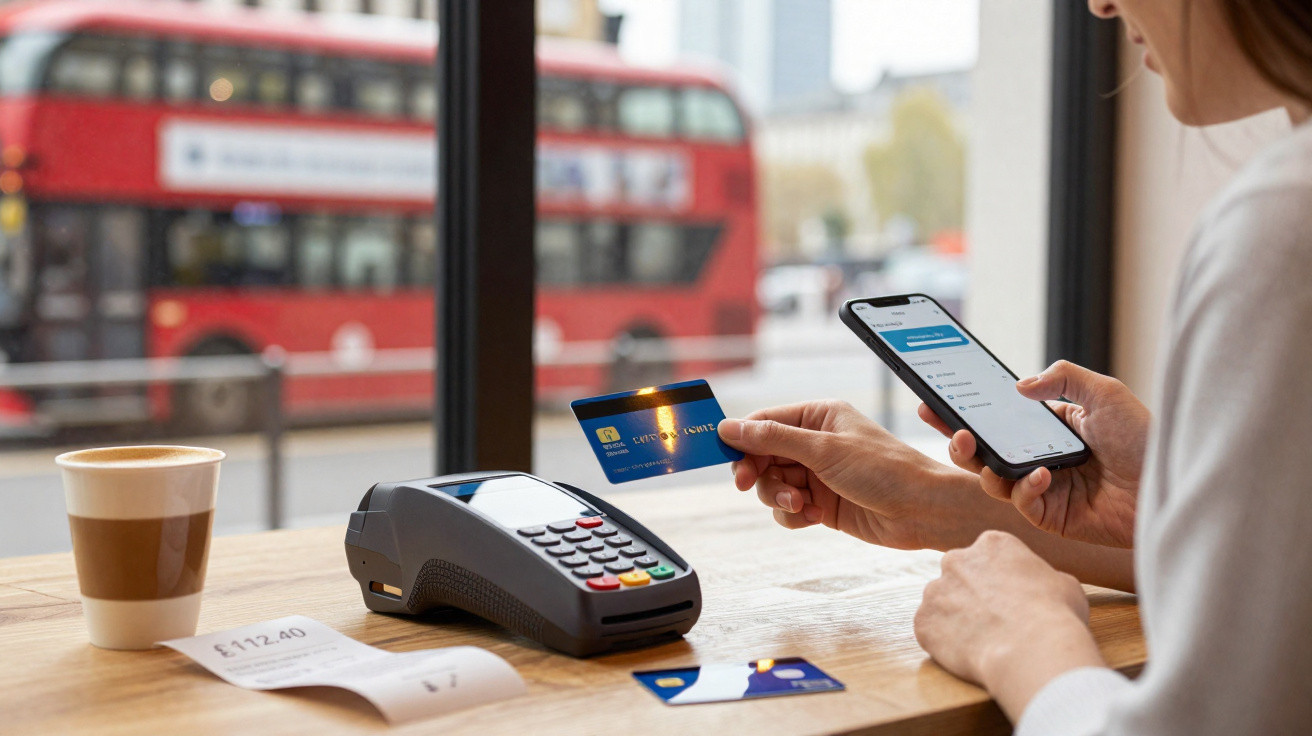
The UK financial regulator, the FCA, will now allow banks and payment providers to set their own contactless card payment limits - potentially well above the previous £100 ceiling. Although many firms are initially retaining the current position, they have indicated that they will review the situation regularly and make adjustments where necessary.
What is changing in the rules
Until now, the FCA set mandatory limits for the maximum value of an individual contactless payment, as well as the payment amounts or number of transactions after which a PIN had to be entered. Those fixed thresholds are now being removed.
“Banks with demonstrably robust fraud controls will be able to set their own contactless card payment limits in future - both higher and lower.”
The key changes are as follows:
- The legal requirement for a fixed contactless limit is being removed.
- Banks and payment providers will set their own maximum amount for each transaction.
- They may also redesign the so-called cumulative limit, meaning the total value of several smaller payments.
- Any changes must be explained to customers clearly and transparently.
- Firms are expressly encouraged to offer personalised customer limits and the option to disable contactless features entirely.
With this move, the FCA is responding to changing spending habits, high inflation in recent years and technical advances such as mobile wallets, biometric verification and real-time risk assessments.
How UK banks are responding
There has been no immediate shock from higher limits. Major UK banks say they will retain the existing £100 maximum for now. Many already allow customers to lower their own limit or switch contactless payments off altogether.
Overview: how major providers handle contactless limits
| Bank / provider | Current card limit | Can the customer change the limit? | Can contactless be disabled? |
|---|---|---|---|
| NatWest | £100 | Yes, to below £100 in the app | Yes |
| Santander UK | £100 | Yes, in £5 steps | Yes |
| Lloyds / Halifax / Bank of Scotland | £100 | Yes, in £5 steps | Possible, depending on the card |
| Barclays | £100 | Yes, up to £100 in the app | Partly possible |
| HSBC UK / First Direct | £100 | No, currently no individual lower limits | Limited options |
| Nationwide / Virgin Money | £100 | Yes, a limit below £100 can be set | Yes |
| TSB | £100 | Yes, can be reduced | Yes, complete switch-off |
| Starling Bank | £100 (still under review) | Yes, from £0 to £100 using a slider | Effectively via a £0 limit |
| Monzo | £100 | Yes, including deactivation | Yes |
| Revolut | £100 | No lower contactless limit; only a monthly limit for total spending | Partly through security features |
Almost all providers are now considering whether to use their new flexibility in future. There are no firm commitments to introduce a higher limit yet, but the direction is clear: greater responsibility for banks - and for customers.
Contactless payments are booming: the figures behind the trend
The FCA has not relaxed the rules without reason. Contactless payments have long become established across the UK. Figures from payments giant Barclays and trade body UK Finance paint a clear picture:
- 94.6 per cent of all eligible in-store card payments were made contactlessly in 2024.
- There are now around ten times as many contactless transactions each month as there were in 2015.
- By the end of 2025, contactless accounted for around 67 per cent of all credit card payments.
- For debit cards, the share was as high as around 76 per cent.
- The average value of a contactless payment is just under £18.
Contactless functionality has therefore become standard in the UK. Cash is becoming less important, while even smaller retailers are consistently equipping themselves with card and smartphone payment terminals.
Security: how high is the fraud risk really?
The higher the limits become, the greater many users’ concerns about lost or stolen cards. What happens if a card goes missing? The FCA points to the protection measures already in place.
“Even with the new freedoms, the obligation to refund unauthorised payments remains in place - banks, not customers, carry the financial risk.”
The most important safeguards are:
- Refund obligation: Where transactions are proven to be unauthorised, such as after theft, providers must repay the money.
- Cumulative limits: After several lower-value payments or once a total threshold is reached, the terminal requires a PIN. Banks can adjust this mechanism flexibly.
- Robust fraud controls: Only firms with strong anti-fraud systems may set higher limits. The incentive is clear: organisations raising limits must invest in security at the same time.
- Mobile wallets: Apple Pay, Google Pay and similar services often permit substantially higher values, as every payment is protected by biometric verification, such as facial recognition or a fingerprint.
A KPMG payments expert stresses that contactless payments have become Britons’ “standard method” in just under ten years. People place enormous value on speed and convenience. Higher limits - or no limits at all - are therefore only a matter of time, provided that security arrangements keep pace.
What German users can learn from the UK changes
The FCA rules apply only in the UK. Nothing changes directly for German cardholders. Even so, the UK is worth watching because it indicates the direction of international payments.
Three trends are emerging:
- Contactless payments are displacing conventional chip-and-PIN payments in everyday life.
- Personal settings in banking apps are becoming standard, including limits, country permissions and blocks by card type.
- Regulators set the framework but increasingly leave the details to providers - and ultimately to the market.
Anyone using bank cards or mobile wallets in Germany today can draw several lessons from the UK example: regularly check which limits are preset in the app, make active use of security functions and, if a card is lost, act faster than was previously possible with cash.
Practical tips: how cardholders can stay in control
Even though the new FCA rules do not apply directly, they can readily be transferred to daily life in German-speaking countries. A few simple steps can noticeably improve personal control:
- Check your banking app to see whether you can set a personal contactless limit.
- Deliberately choose lower limits for children’s or partner cards.
- Turn contactless off in situations where the card is frequently handed over, such as while travelling.
- Enable notifications for every card payment so that irregularities are spotted immediately.
- If the card is lost, freeze it straight away - at any time via the emergency number or app.
This final point becomes more important as limits become more flexible. The faster customers react, the easier it is to clarify and refund unauthorised transactions.
Why regulators are opting for flexibility
The overhaul of contactless payment rules forms part of a broader UK package of around 50 measures through which the FCA aims to stimulate the economy. Greater flexibility in payments is intended to make innovation easier, support new business models and make digital financial services more attractive.
Banks face pressure from both sides. Those that keep limits too restrictive may appear outdated and could lose customers to more agile competitors. Those setting very high limits, on the other hand, must invest heavily in fraud prevention. Ultimately, the market will decide which balance of convenience and security prevails - and European regulators are watching that development very closely.






Comments
No comments yet. Be the first to comment!
Leave a Comment