
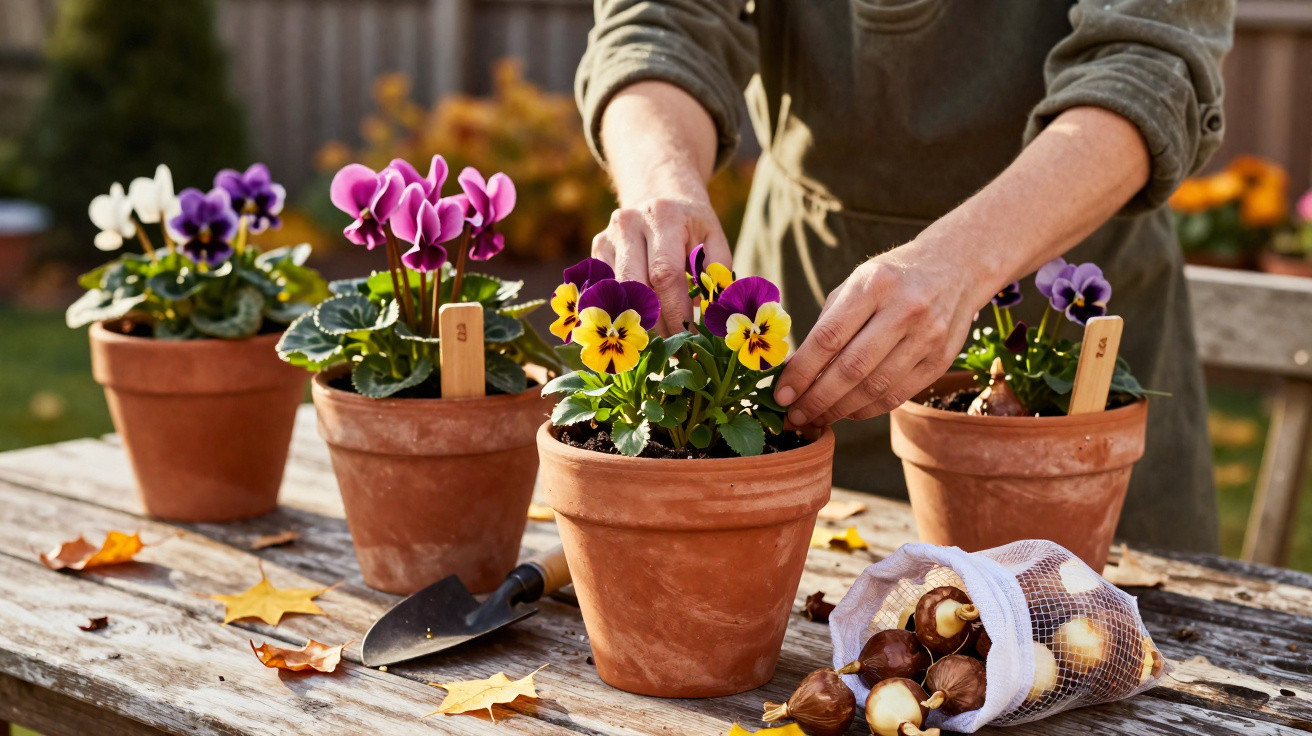
As temperatures shift, a few carefully selected plantings can keep pots in bloom without having to wait for spring to return.
Late summer marks a turning point for flower lovers. Some plants provide instant colour, while others quietly lay the groundwork for the display of the months ahead. Above all, the right choice depends on local weather conditions, aspect and the room available in each container.
Two flowering schedules not to confuse
One common planting mistake is expecting bulbs to bloom straight away. These underground stores of energy first need to establish roots, then experience a cool period before they can flower in spring.
By contrast, plants bought as established plug plants can transform the look of a patio within days. Pansies, cyclamen, chrysanthemums and asters provide a quick solution when summer beds are beginning to fade.
“For colour straight away and flowers in spring, it is best to separate plantings according to their timetable.”
This approach helps prevent disappointment. A pot set aside for autumn plants will remain visible and decorative, while another can hold bulbs that will develop below ground for several months.
Flowers that bring quick colour to pots
Pansies: hardy and floriferous
Pansies are among the easiest choices for brightening a window box as the days grow shorter. They cope reasonably well with cooler conditions and come in a broad range of colours: yellow, purple, white, orange, deep blue and bicoloured varieties.
They prefer light compost that remains consistently moist without becoming waterlogged. In a container exposed to wind, careful watering is still essential, as compost can dry out quickly even once the air feels cooler.
Cyclamen: position with care
Cyclamen give an elegant look to window ledges and pots placed by an entrance. Their delicate flowers can last for a long time if the plant is kept away from scorching sun. Gentle light or bright partial shade is often more suitable than direct afternoon sunshine.
Standing water must also be avoided. The centre of the plant should not stay permanently wet, as this can encourage rot. Water sparingly at the base instead, then empty the saucer after a few minutes.
Late-season flowering plants
Asters, rudbeckias, echinaceas, ornamental salvias and chrysanthemums extend the summer feel as the season progresses. When planted in the ground, they benefit from a more stable volume of soil. They also cope better with temperature changes and occasional missed watering.
For pots, compact varieties are the best option. A large perennial confined to a small container soon becomes exhausted. It may also topple over in strong winds or heavy rain.
- Pansies suit small window boxes.
- Cyclamen prefer filtered light.
- Asters need a sufficiently deep container.
- Chrysanthemums produce dense flowers but need regular watering.
- Rudbeckias favour bright positions and large pots.
Bulbs to plant for spring flowers
Daffodils, tulips, crocuses, hyacinths and muscari should be planted in autumn. They will not flower immediately, but this delay is entirely normal. Roots form first, before shoots emerge as winter draws to an end.
Drainage is the crucial factor. A container without drainage holes retains water at the bottom, which can rot the bulbs. Select a pot with holes, add a layer of drainage material if required, and use loose compost that will not compact.
“A healthy bulb should feel firm to the touch. If it is soft, marked or dried out, successful growth is uncertain.”
Planting depth varies between varieties. There is no single rule that applies to every plant. The directions on the packet remain the most reliable guide. Leave a little space between bulbs too, so their roots have room to grow.
| Plant | Desired effect | Recommended position |
|---|---|---|
| Pansy | Immediate colour | Bright window box |
| Cyclamen | Refined flowering | Sheltered partial shade |
| Aster | Late-season volume | Large pot or open ground |
| Daffodil | Spring flowers | Drained pot or flower bed |
| Crocus | First touches of spring | Shallow but pierced pot |
Adapt planting to the actual weather
The date on the calendar alone is not enough. In regions where nights turn cool early, cyclamen, pansies and hardy perennials can be planted without much delay. It is still sensible to watch for the first frosts, particularly where young plants have only just been put in place.
In areas where autumn still feels like summer, newly planted specimens can suffer in the afternoon sun. It is better to keep them in light shade for a few days, then gradually acclimatise them to their final position. Compost that is still hot can dry out roots in very little time.
If leaves droop every day despite regular watering, wait for a milder spell before adding more plants. One week can make all the difference to successful establishment.
Creating pots that last
Combining plants with opposing needs greatly reduces their chances of lasting. A cyclamen that prefers cool conditions does not readily share a pot with a flower needing full sun and plenty of heat. Group plants according to their water, light and space requirements.
One straightforward option is to fill a large window box with pansies for an immediate effect, then reserve a second pot for daffodils and muscari. When the first spring flowers emerge, that arrangement can be moved into the foreground.
Mulch can also be useful in deep containers. A thin layer of bark, dry leaves or plant fibre reduces evaporation and provides slight protection for roots against temperature fluctuations. It must not smother the crowns of the plants.
Lastly, remove faded blooms as the weeks pass. This very simple task improves the appearance of pots and often encourages plants to form fresh buds. A flower-filled outdoor space depends less on a large purchase than on regular observation and a few well-timed measures of care.




Comments
No comments yet. Be the first to comment!
Leave a Comment