
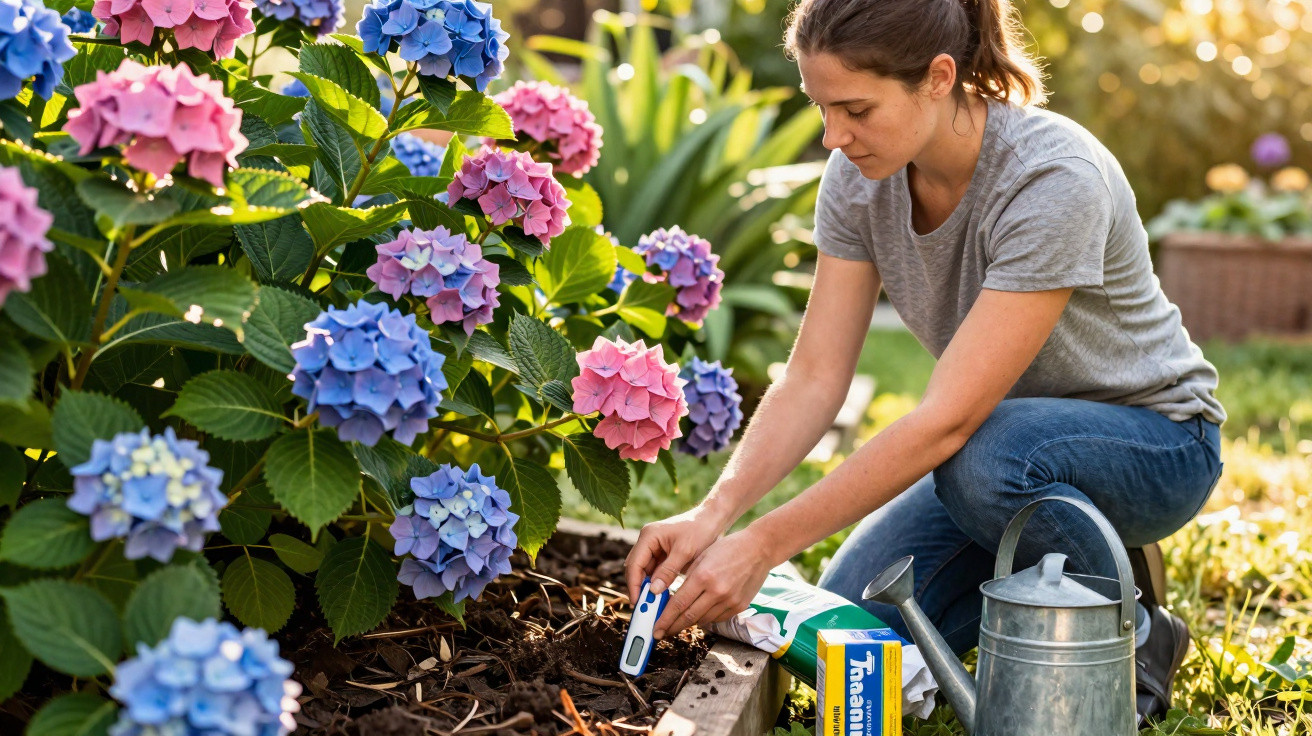
August is a useful time to get the hydrangea ready before it moves into a more vigorous phase of growth. Focus on moisture levels, organic matter and the soil’s acidity, as these points affect root development, bud set and-on some types-even the shade of the blooms.
Why look after the hydrangea in August?
While the shrub is resting or only putting on slow growth, you can sort out soil issues without having to wait for the flowering season to begin. Start by clearing away diseased leaves, unwanted weeds and any branches that are completely dead, while keeping healthy stems that may carry next cycle’s buds.
A light layer of organic compost or mulch helps shield the roots and limits water loss. Avoid heavy feeding, especially fertilisers high in nitrogen, unless it is genuinely needed-too much can push leafy growth without delivering a matching number of flower heads.
- Remove dried leaves or any showing signs of fungal problems;
- Get rid of weeds that compete for water and nutrients;
- Check drainage around the root area;
- Add organic matter without letting it touch the main stem;
- Check moisture before each watering.
How does soil pH affect flower colour?
Colour shifts happen mainly in varieties of Hydrangea macrophylla and Hydrangea serrata. In acidic soil, aluminium becomes more available for uptake, encouraging blue to purple-leaning flowers; in neutral or alkaline conditions, pink tones tend to dominate. White cultivars and many other species do not react to pH in the same way.
What should you apply for blue or pink flowers?
Before putting down any soil amendment, it is best to test the soil pH. To encourage bluer shades, you can use garden acidifying products such as sulphur or aluminium sulphate, always following the recommended rate. Too much aluminium sulphate can damage the roots and set back the shrub’s growth.
To promote pink tones, apply a suitable garden lime, again only after checking the soil. Changes need to be made gradually, because the soil type, the cultivar and the amount of available aluminium all influence the final result. The difference usually shows up only in new flowering, as with the approach used to get blue or pink hydrangeas by adjusting the soil.
Irrigation water can change acidity too
Water that contains a lot of dissolved mineral salts can raise the pH over time and make it harder to keep flowers blue. For that reason, correcting the soil once is not enough: you need to monitor acidity month by month, particularly when the plant is frequently watered with chalky, mineral-rich water.
- Water when the top layer of soil starts to dry;
- Keep the soil consistently moist, but never waterlogged;
- Aim water at the base rather than soaking all the leaves;
- Use low-mineral water where possible;
- Test the pH again before repeating any amendment.
How to protect buds for the next cycle
Pruning needs a careful approach because not all species flower on the same type of wood. Many big-leaf hydrangeas set buds on the previous season’s growth, and a hard cut in August can remove the very parts that would open in spring. Species that bloom on new growth follow a different pruning schedule.
If you are unsure which variety you have, the safest option is to limit pruning to dead, weak or damaged sections. With free-draining soil, steady watering, organic mulch and pH corrections made in small amounts, hydrangea flowering is better placed to return on strong stems with well-formed flower heads.

Comments
No comments yet. Be the first to comment!
Leave a Comment