
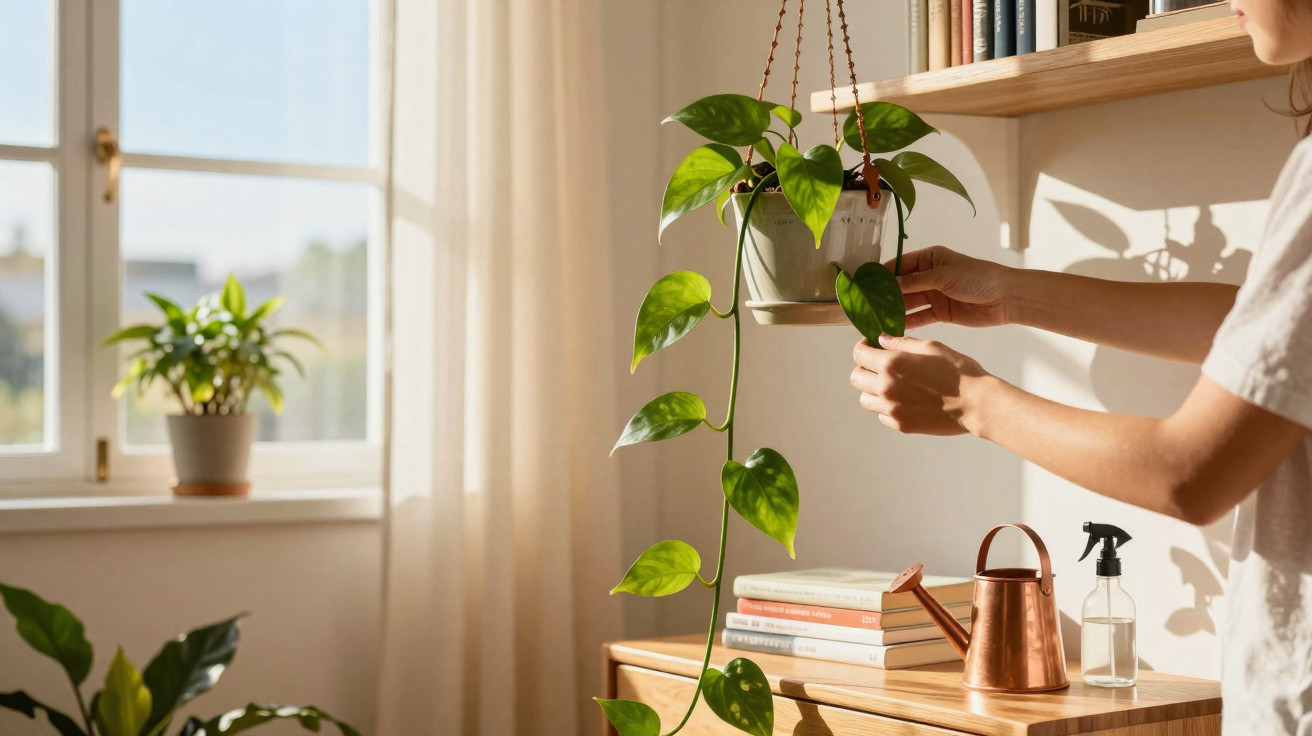
Devil’s ivy is a houseplant prized for its rapid growth, trailing leaves and ability to adapt easily. Alongside its tropical appearance, it is often linked with protection, prosperity and renewal, while its practical benefits are felt in interior styling, a greater sense of comfort and everyday contact with greenery.
Why is devil’s ivy considered a powerful plant?
Devil’s ivy has gained this symbolism because it grows readily, spreads over supports and retains green foliage indoors. In many homes, these qualities are seen as signs of vitality, resilience and energy in motion.
In decorative practices and popular beliefs, trailing plants are regarded as a way to soften empty corners and make a room feel less stark. With Epipremnum aureum, the visual impact is particularly striking, as its stems add movement to shelves, bookcases and hanging pots.
What practical benefits does it offer indoors?
Devil’s ivy can reshape an interior without requiring major decorative changes. Its leaves add green volume, lessen the impression of a cold space and suit living rooms, offices, bright bedrooms and hallways with indirect light.
Horticultural guides state that pothos, the international name for devil’s ivy, copes with moderate to bright light provided it is kept out of direct sunshine. It also prefers a well-draining growing medium and watering only once the compost has begun to dry out.
Where should you place devil’s ivy to make the most of its effects?
The best position is close to a bright window, shielded by a sheer curtain or away from strong direct sunlight. Indirect light keeps the foliage looking its best and helps prevent scorching, especially on varieties with yellow or pale markings.
Some locations showcase the plant particularly well:
- high shelves, allowing the stems to trail naturally;
- bookcases near windows with filtered light;
- hanging pots in living rooms and covered balconies;
- vertical supports, when the aim is to train the plant upwards;
- empty corners that need green texture without taking up much room.
How should you care for it to keep its leaves strong and growing continuously?
Devil’s ivy does not tolerate waterlogged compost. Water it thoroughly, allow excess water to drain through the holes in the pot, then wait until the top layer of the growing medium has dried before watering again.
These steps help keep the plant healthier:
- use a pot with effective drainage;
- avoid direct sun during the hottest part of the day;
- wipe the leaves with a damp cloth to remove dust;
- prune overly long stems to encourage new shoots;
- keep it out of reach of pets and young children, as the plant may cause irritation if eaten.
What does devil’s ivy change in the home?
Devil’s ivy is a plant with a subtle yet constant presence. It fills walls, shelves and corners with trailing foliage, making a space feel more alive without demanding complicated maintenance.
The benefits of the plant are most noticeable when it has indirect light, balanced watering and room to grow. Together, these conditions bring greenery, movement and a more welcoming atmosphere into the home, while the plant remains strong and leafy over time.



Comments
No comments yet. Be the first to comment!
Leave a Comment