
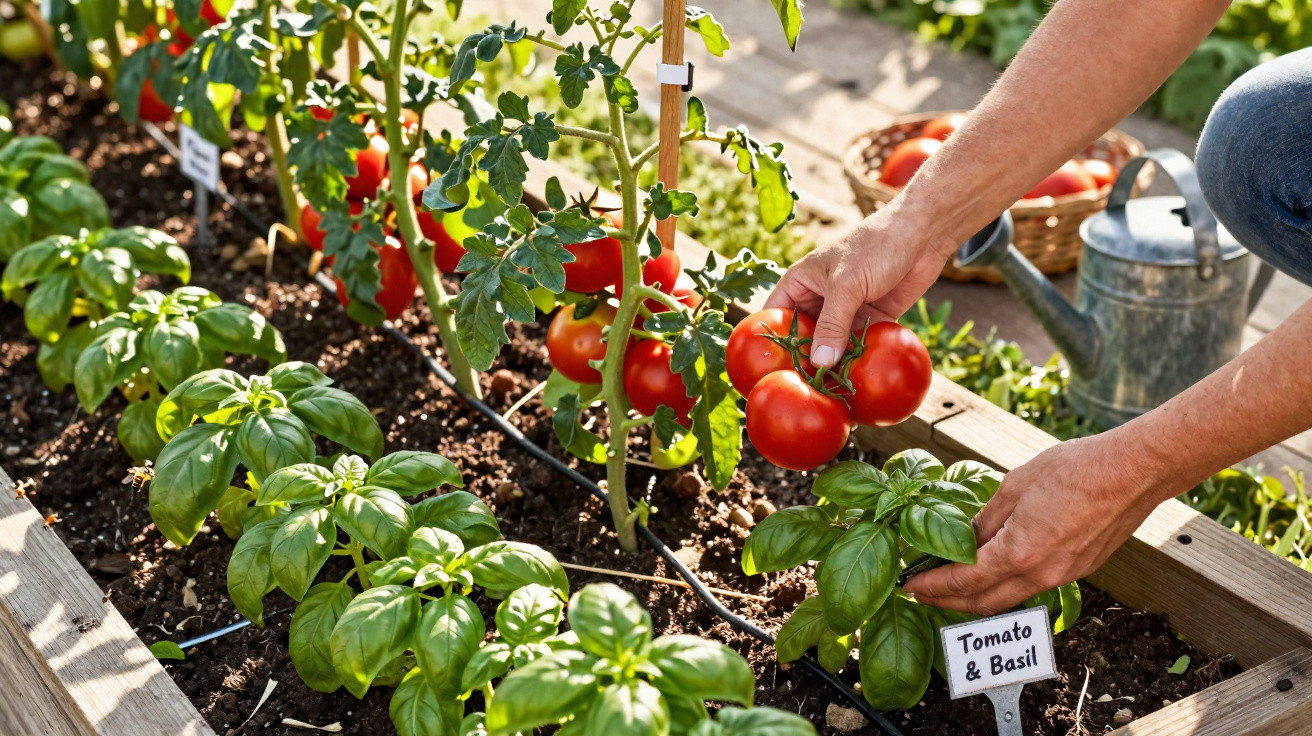
In the vegetable garden, a neighbouring plant can help tomatoes cope better with summer and ripen under favourable conditions.
Gardeners know the situation well: tomato plants look healthy, watering is kept up, and the fruit finally turns red… yet tasting it can still feel disappointing. The variety matters greatly, as do sunshine and picking time. However, the plant's immediate surroundings can also have an influence. Among the most popular pairings, basil is often grown beside tomatoes.
Basil, a valued companion in the vegetable garden
Tomatoes and basil thrive in similar conditions: plenty of light, fertile soil, mild temperatures and regular watering. Growing them together is therefore straightforward, whether you have a large garden or just a few containers on a balcony.
This method is known as companion planting. It involves growing plants side by side when they have comparable needs or can benefit one another. In this particular pairing, basil fills the open space around tomato stems without competing too heavily, provided it is kept well trimmed.
“Basil does not, by itself, alter a tomato's composition, but it can help create better growing conditions around the plant.”
Its foliage releases a particularly strong scent. Gardeners and horticulturists have observed that this aroma may disrupt certain insects found in vegetable gardens, especially aphids and whiteflies. No plant provides a perfect barrier against pests, but a plant under less attack can devote more energy to growing and ripening its fruit.
Why less-stressed tomatoes may taste better
A tomato's flavour is shaped by several factors: the variety selected, sunlight, soil quality, the amount of water it receives and its ripeness at harvest. A tomato picked while still firm and pale to withstand transport will not have the same aroma as fruit harvested deep red from the vine.
Basil may have an indirect role. Its leaves provide light cover over the soil, slowing excessive drying on hot days. The soil can therefore remain cooler between waterings. This steadiness limits fluctuations in moisture, which are often linked to split fruit, uneven growth or less balanced flavour.
Perceptions of improved flavour are still largely based on gardeners' experience. There is no guarantee that every tomato grown near basil will be sweeter. The value of this pairing lies mainly in several small benefits: slightly better-protected soil, beneficial insects drawn by flowers and easier monitoring in a more diverse vegetable garden.
Possible support for pollinating insects
When a few basil stems are allowed to flower, they attract bees, bumblebees and other insects. Tomatoes are capable of self-pollination because their flowers contain the necessary organs, but vibrations created by bumblebees can sometimes improve fertilisation.
Well-pollinated flowers produce more evenly shaped fruit. This effect depends on the weather, the variety and whether insects are actually present in the garden. On a high balcony, where pollinators rarely visit, results may not match those in an open vegetable garden.
- Basil shares tomatoes' need for warmth and sunshine.
- Its foliage helps cover the soil at the base of the plants.
- Its flowers can attract beneficial insects when a few are allowed to open.
- Its scent may disturb certain pests without eliminating them entirely.
The right spacing to prevent competition
To make this planting work, avoid crowding everything together. Tomatoes need air to circulate around their leaves. Excessively dense growth holds moisture after rain or watering and encourages disease.
In open ground, leave roughly 50 to 60 centimetres between tomato plants. Plant one basil every 30 to 40 centimetres, preferably along the edge of the row or between plants that are spaced far enough apart. This arrangement gives basil sufficient light while maintaining airflow.
“One basil plant per position is often enough: too many plants in a confined space will eventually deprive one another of light and water.”
In a container, allow a 40- to 60-litre pot for one tomato plant with one basil plant. The container must have drainage holes. Standing water damages roots and can turn foliage yellow. A layer of clay pebbles is not essential when drainage holes work properly; rich compost and controlled watering matter more.
Care throughout the summer
Basil is sensitive to cold. Wait until the risk of frost has passed before planting it outdoors, often from May onwards depending on the region. In cooler areas, it will benefit from shelter beside a sunny wall.
- Water at the base, without unnecessarily wetting tomato leaves.
- Mulch the soil with straw, dry leaves or thoroughly dried grass clippings.
- Regularly pinch out basil tips to encourage branching.
- Remove damaged tomato leaves or leaves touching the ground.
- Pick tomatoes when they are fully coloured and slightly soft.
Pinching basil is simple: cut the end of a stem just above two small leaves. The plant will then produce new shoots and remain compact. If it quickly starts flowering, it will make fewer tender leaves. Allowing a few flowers for insects while cutting off the others provides a balance.
Watch for blight: basil is not a replacement for prevention
Companion planting does not automatically protect against blight. This disease develops mainly when leaves remain wet and nights are cool. The best approach is to space plants properly, water the soil rather than the foliage, and promptly remove any parts showing suspicious spots.
Borage can complement this pairing in larger vegetable gardens. Its flowers attract many insects, while its roots help aerate the soil. It quickly takes up space, so it is best planted a little away from tomatoes to avoid shading them.
At the table, the benefit is immediate. A few basil leaves picked that day naturally complement a sun-ripened tomato, with a drizzle of oil, a pinch of salt and toasted bread. Their proximity in the garden does not guarantee sweeter fruit, but it above all encourages harvesting at the right time, when the tomato finally reveals all its aroma.


Comments
No comments yet. Be the first to comment!
Leave a Comment