
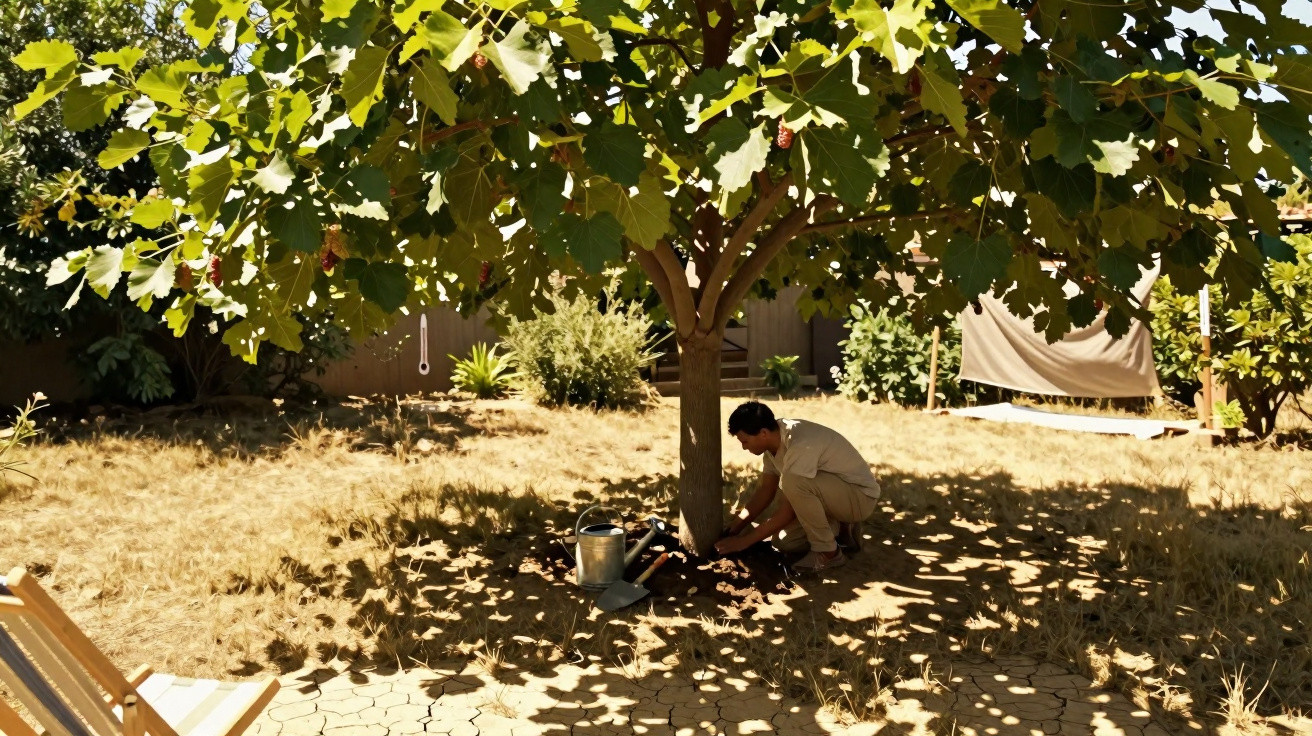
One July afternoon, the garden thermometer reads 34°C and the patio suddenly feels far too white, far too hard and mineral. You hunt for shade by shifting a chair a few centimetres; the children come indoors sooner, and the dog lies flat against the cool wall of the house. Then your eye settles on that large, dense canopy barely stirring: beneath the plane-leaved mulberry, the air seems different. It is not icy, of course, but it becomes bearable again. Still unfamiliar to many gardeners, this tree grows quickly, spreads a generous crown and copes well with intense heat once properly established. Its presence is simple, almost self-evident, yet it changes how outdoor spaces are used. It deserves closer attention.
The plane-leaved mulberry: living shade when the garden overheats
We all know the point when a garden becomes unusable between midday and 5 pm, even with a parasol. The plane-leaved mulberry, often sold as a mulberry with plane leaves, offers a different solution: broad, shifting, natural shade. Its large, thick leaves filter sunlight without closing in the space, while its canopy forms a green ceiling that is particularly welcome beside a patio, dining area or children's play space. Even at 35°C, it will generally keep growing provided the soil retains some moisture at depth. It is not an air conditioner, but the difference is genuinely noticeable.
A young tree that establishes well can put on between 50 centimetres and one metre of growth each year, and sometimes more in fertile, free-draining soil. Within a few seasons, its outline will already be creating a genuine refuge: the place where you can drink a mid-morning coffee without squinting. So-called sterile varieties are especially sought after near patios, as they prevent fruit from staining paving, cars or outdoor cushions. Depending on how it is trained, its wide spread can reach 6 to 10 metres, which is significant.
This cooler feeling is not caused by shade alone. Like all trees, the plane-leaved mulberry releases water through its leaves; this process, known as evapotranspiration, helps moderate the air immediately around it. Its dense foliage also slows the radiation that heats the ground, walls and outdoor furniture. Mulched soil, which becomes less scorching and less dry, holds on to its moisture for longer. The result is very tangible: a patio shaded by a mature tree absorbs less heat than an area left in full sun. A cool island often starts with a single well-chosen planting.
Planting it well to benefit quickly from its protective foliage
The right position should be decided before you buy, much as you would choose the location of a future living area. Allow at least five or six metres between the tree and the house frontage, vulnerable pipes, and any patio you do not want completely shaded in ten years' time. The plane-leaved mulberry enjoys sunshine, reasonably deep soil and a location where its roots can establish without competing with paving or compacted ground. When planting, dig a generous hole, loosen the base and water thoroughly. A tree that gets off to a good start needs less help when dry summers arrive.
The first two or three years matter enormously. During hot spells, a slow, generous watering once a week is preferable to a small daily amount that only dampens the surface. Spread a mulch of leaves, shredded prunings or woodchips around the base, without allowing it to touch the trunk: it reduces evaporation and gradually feeds the soil. Let us be honest: nobody really does this every day. The aim is not to become a slave to the watering can, but to support the tree while it develops the root system that will make it resilient later on.
Pruning is the other point not to overlook, particularly in a small garden. Some owners want a parasol-shaped form, with a clear trunk and branches trained horizontally, whereas others favour a looser, more natural and cooler-looking silhouette.
“The best time to plant a tree was twenty years ago. The second best time is now.” - Chinese proverb
Before choosing your tree, keep these simple guidelines in mind:
- choose a sterile variety if the tree will shade a patio or driveway;
- avoid repeated hard pruning, which exhausts the tree and creates weak new growth;
- maintain a circle of mulched soil around its base, especially during very dry summers;
- ask a nursery for advice on the variety best suited to your region and the available space.
A garden choice that goes beyond simply finding shade
Planting a plane-leaved mulberry is not solely about creating a cool spot for future summer meals. It also means accepting that the garden will become a little more alive: birds stop by, insects find shelter among the foliage, and changing light makes the days feel less uniform. It drops its leaves in winter, allowing the sun in when it becomes valuable, then greens up with almost spectacular abundance in spring. Many families appreciate this rhythm, even if it means a little leaf clearing in autumn. A perfectly tidy garden is rarely a particularly living one.
It is also necessary to face reality: this tree is not suitable for every plot. In a tiny courtyard, beside a covered swimming pool or two metres from an old wall, its growth may become restrictive. Yet in a medium-sized garden, with a little distance and a planting plan considered from the outset, it provides what many people want without always putting it into words: an outdoor space where they can remain when the town, house and ground all seem to hold on to the heat. One mature tree can sometimes be better than several costly pieces of equipment.
As periods of hot weather become more frequent, planting choices take on a very everyday importance. This is not only about landscaping or decoration, but about a bench that can be used in August, a lunch that does not have to end early, or a window less exposed to afternoon sun. The plane-leaved mulberry will not erase a heatwave, and it will need water during its early years too. Even so, it offers a reassuring reminder: the garden can once again become an ally against the heat, provided it is given time to grow. Perhaps now is the right time to look at the shade already there, and then at the shade you would like to see tomorrow.
| Key point | Detail | Added value for the reader |
|---|---|---|
| Recommended tree | The plane-leaved mulberry, particularly a sterile variety, provides very dense foliage and rapid growth. | Create a pleasant shaded area within a few years, without messy fruit near the patio. |
| Heat resistance | Once rooted, it copes well with high summer temperatures when the soil is protected with mulch. | Reduce the feeling of overheating in outdoor living spaces. |
| Decisive action | Water deeply during the first years and allow sufficient space before planting. | Achieve a more self-sufficient, long-lasting tree suited to a family garden. |



Comments
No comments yet. Be the first to comment!
Leave a Comment