
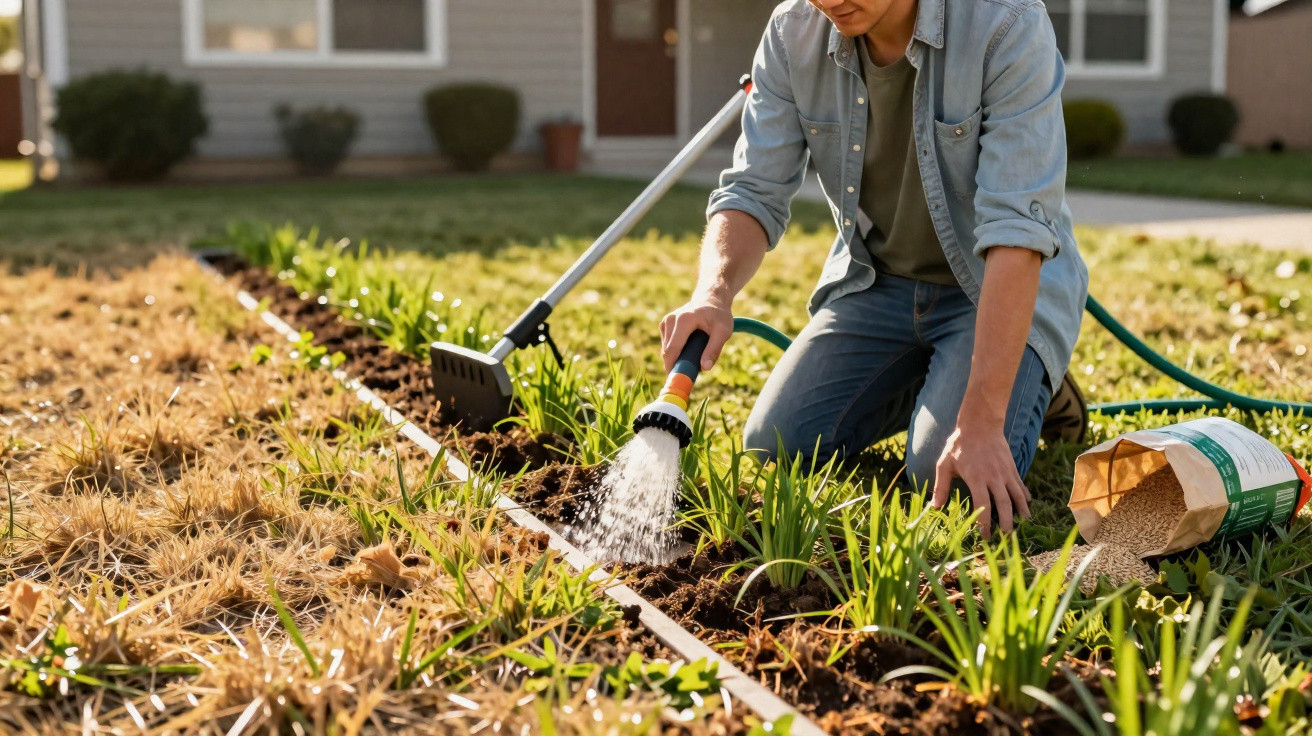
After weeks of heat and drought, a yellowed lawn can still recover with a few simple, patient measures.
By late summer, the sight is all too common: dry blades, hardened ground and brown patches that make a garden look neglected. When faced with such parched soil, many people immediately consider expensive fertilisers or replacing the entire lawn. That response is often too hasty. In many instances, the grasses are not dead; they have simply slowed down to survive the lack of water.
A brown lawn is not necessarily beyond saving
During an extended dry spell, grass drastically reduces its activity. Its leaves turn yellow and then brown, while the roots try to retain the little moisture still available. This dormant period safeguards certain grass varieties, which can begin growing again once water gradually returns to the soil.
Before reseeding or buying lawn-care products, inspect the lawn carefully. An area that still has a few flexible blades, or remains slightly green at the base, has a good chance of recovering. Conversely, patches that are completely bare, brittle and dusty may need more substantial treatment.
“The first priority is not feeding the lawn, but allowing water to reach its roots.”
Aerate the ground before watering
Soil exposed to sunshine for several weeks becomes compacted. During the first watering sessions, it may even repel water: it runs off, creates puddles or flows towards the edges without properly moistening the roots. This is where a very simple tool can make a real difference: a garden fork.
Push it vertically into the driest areas at regular intervals, without turning over the entire lawn. Gently levering it backwards creates small cracks in the ground. The aim is not to dig the soil over, but to make channels for water and air.
This also helps the roots access soil that is less deprived of air. On a small lawn, the task can be completed quickly. For a larger area, work in strips over several days to avoid excessive trampling of the weakened grass.
- Choose a garden fork with sturdy tines;
- Preferably work towards the end of the day;
- Push the fork into compacted areas every 15 to 20 centimetres;
- Do not work on ground that is already waterlogged;
- Water immediately after light aeration.
Water slowly to reach the roots
The most common mistake is watering for a few minutes every evening. This approach dampens only the top few centimetres of soil. Roots remain deeper down, where coolness lasts longest. A lawn accustomed to receiving tiny amounts of water also develops shallow roots, leaving it more exposed during the next heatwave.
Following a drought, it is better to choose long, steady and regular watering. Water needs to soak into the ground gradually. A sprinkler set to a moderate flow is often more effective than a powerful jet, which can compact the soil or cause run-off.
As a general guide, a very dry lawn may require around 10 litres of water per square metre for one deep watering session. That is roughly 1,000 litres for 100 square metres. This figure varies according to soil type, temperature and the lawn's actual condition.
Adjust the amount for the soil type
Sandy soil allows water to drain down quickly. It is best watered in several sessions a few minutes apart to reduce losses. Clay soil holds moisture more effectively, but its surface can seal over when extremely dry. This makes prior aeration particularly useful.
| Soil type | Common reaction after drought | Recommended action |
|---|---|---|
| Sandy | Water drains quickly and is retained poorly | Water in several moderate sessions |
| Clay | Hard surface, possible run-off | Aerate, then water slowly |
| Loamy | Good balance, with a risk of compaction | Monitor infiltration and avoid excess |
Why fertiliser can wait
A brown lawn naturally creates the urge to give it an immediate boost. However, fertiliser is not an instant remedy. While grass is suffering from lack of water, it absorbs nutrients poorly. Some applications may even increase root stress if the ground remains dry.
It is wiser to wait for the first signs of recovery: new shoots appearing, green areas returning and blades becoming more flexible. At that point, a moderate seasonal application can support regrowth. Fertiliser that is too high in nitrogen encourages rapid leaf growth without always strengthening the root system in the long term.
“After drought, a lawn mainly needs consistent moisture, oxygen in the soil and a few weeks of respite.”
Signs that overseeding a lawn is necessary
Even with well-managed watering, some sections will not turn green again. Grass has its limits, particularly after prolonged intense heat. If large patches remain bare after several weeks of more favourable conditions, overseeding may be required.
This involves sowing seed over thin or bare areas. It should be done once the soil has become cool and sufficiently moist again, often at the beginning of autumn. Mild temperatures encourage germination, while rainfall reduces watering needs.
Prepare bare patches
First, remove dead grass and debris using a rake. Lightly scratch the soil to a depth of a few millimetres, spread the seed and then gently firm it with the back of the rake or a light roller. Keep the surface moist until the young shoots emerge.
Avoid mowing too short while the lawn is recovering. A height of around 6 to 8 centimetres shields the soil from the sun and slows evaporation. Letting the grass grow slightly taller also provides natural shade for the roots. Combined with less frequent but deeper watering, this practice helps the garden cope better with future periods of high heat.





Comments
No comments yet. Be the first to comment!
Leave a Comment