
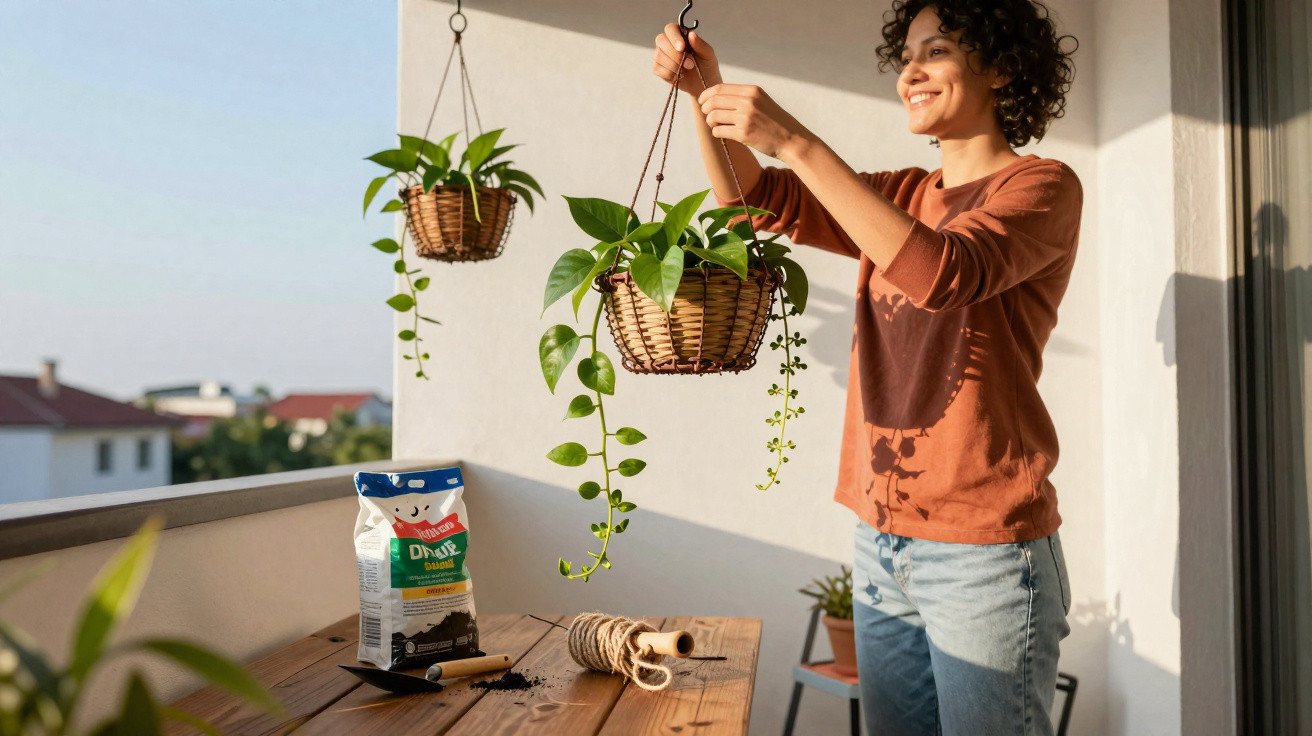
Plenty of households still have an old wooden or wire fruit basket tucked away somewhere - one that hasn’t seen an apple or orange in years. Throwing it out feels wasteful, but finding a genuinely good use for it often doesn’t happen either. That’s exactly where a home trend currently doing the rounds on social networks comes in: retired fruit baskets are being turned into decorative, floating plant islands - ideal for small flats and anyone who likes a bit more green at home.
Why an old fruit basket is ideal for hanging plants
If you browse charity shops, car boot sales or the loft, you’ll keep coming across old baskets: slightly weathered wood, metal with a patina, wire baskets straight from your gran’s era. To some, they’re just clutter; to plant lovers, they’re ready-made raw material.
A fruit basket already has several features that work brilliantly with plants:
- Open sides – perfect for letting shoots and trailing stems spill out naturally
- Generous shape – room for several pots, or a single planted liner
- Sturdy construction – designed to carry weight, so it can cope with compost and plants too
- Character – scuffs and wear create the much-loved vintage look
“With very little effort, an old fruit basket becomes the focal point of a vertical décor corner - a real space-saver, especially in small rooms.”
Instead of taking up surface space on a chest of drawers or a windowsill, your plants move up to the ceiling or sit beneath a shelf. The floor stays clear, hoovering and mopping are easier, and the room feels more open.
Preparation: getting the basket ready for planting
Before you reach for a drill or some rope, your second-hand find needs a quick refresh. In particular, used pieces should be clean and structurally sound before any plants move in.
Checklist: is the basket still usable?
- No deep cracks in the wood
- No metal that’s rusted through
- No black mould stains that have really set in
- Firm handles or a frame that can hold weight
If you’re unsure, it’s safer to pick a different basket than risk it falling later. If it’s basically in good condition, start with a simple clean:
- Mix a mild soapy solution with warm water
- Scrub the basket thoroughly with a brush or sponge
- Rinse well
- Let it dry completely - right into the corners
If you want, you can also give it a visual update: a thin coat of wood stain, coloured metal paint or a clear protective lacquer can freshen the look and help protect it from moisture when watering.
Materials: what you need for a floating mini garden
This is a straightforward conversion and doesn’t require specialist tools. Most items are available from a DIY shop - or you may already have them at home.
- Cleaned fruit basket (wood, metal or wire)
- Strong rope (e.g. hemp or cotton) or a decorative chain
- Hooks or rings for hanging (with or without drilling)
- Fleece, coco fibre or jute to line the basket
- Lightweight potting compost and expanded clay pebbles (LECA) or a similar drainage layer
- Plants for filling it, ideally trailing or cascading varieties
- Tools: scissors, pliers, and optionally a drill to add extra holes
“What matters isn’t high-end kit - it’s a solid hook and a suspension that will hold long term, because wet compost weighs more than most people expect.”
Hanging without hassle: keeping the plant basket safely in the air
Once the basket is clean and prepped, you can build the hanging setup. Start by lining the inside with fleece, a coco liner or jute. This keeps compost from trickling out, while still allowing excess water to drain.
Plan the suspension properly
To keep the basket level, you’ll want several hanging points. Three or four strands work well:
- Attach rope or chain evenly at three or four points
- Bring all strands together at the top into a ring or a single knot
- Choose a length that still lets you reach the basket comfortably for watering
If you’re working with a solid wooden basket, you can drill small holes if needed to thread the rope through. Wire or mesh baskets usually provide plenty of natural fixing points.
Before you add compost and plants, do a safety test: hang the basket in its intended spot, press down gently with your hands, give it a slight wobble, and check the hook and all knots. Only when everything feels secure should you move on to planting.
Where a hanging garden looks best
These spots tend to work particularly well:
- In a corner above an armchair or reading chair
- Beside a window, without blocking the glass completely
- Under a sturdy shelf
- From an exposed beam or a visible ceiling feature
If you’d rather not drill, you can use hooks that hang over a rail, a door or an exposed ceiling brace - similar to the over-the-rod hanging organisers used in wardrobes.
The best plants for a striking hanging basket
To make the basket look genuinely impressive, plant choice matters. Trailing and cascading varieties are especially effective.
| Plant | What makes it suitable | Best position |
|---|---|---|
| Pothos (devil’s ivy) | Fast-growing, easy to care for | Bright, indirect light |
| Ivy | Dense, classic trailing stems | Part shade to bright light |
| Tradescantia (e.g. “inch plant”) | Colourful, patterned foliage | Bright light, away from harsh midday sun |
| Philodendron with long stems | Large, decorative leaves | A bright, warm spot |
| Indoor strawberry plants | Edible fruit, playful look | Very bright, ideally close to a window |
A mix of different leaf sizes and colours looks particularly dynamic - for example, variegated pothos paired with dark-green philodendron and finer trailing varieties. The result is a “plant waterfall” effect that really shows off the basket’s open structure.
Watering, drainage, checks: keeping your hanging garden looking great
Hanging planters usually dry out faster than pots on the floor. Especially in the first few weeks, it pays to keep a closer eye on them.
- Water slowly and in small amounts: pour carefully until the first drops appear underneath.
- Use drainage: a layer of expanded clay pebbles at the bottom helps prevent waterlogging.
- Watch the leaves: limp growth or brown edges can point to watering problems.
- Check the fixings: inspect knots, chains and hooks at regular intervals.
“If you water in small portions and give the compost time to absorb it, you avoid overflowing cascades of water onto the floor.”
One more consideration is weight. Wet compost is significantly heavier than dry. Factor that in when choosing hooks, wall plugs and the ceiling or wall fixing point. If in doubt, ask in the DIY shop which set is suitable for the load you need.
More than decoration: upcycling, room impact and styling combinations
This repurposed fruit basket doesn’t just look good. Upcycling saves resources, reduces waste and gives old items a clear new purpose. Rather than buying a brand-new hanging basket, you use something that already exists - an argument that matters to many conscious consumers.
It gets even more interesting when you combine the basket with other elements, such as:
- Several baskets at different heights to form a “plant cloud”
- A blend of real plants and lightweight dried flowers to reduce upkeep
- A small LED light string around the outside for gentle evening lighting
- A second basket as storage for gardening gloves, a mister and fertiliser
If you’re not particularly confident with plants, the same approach works with tough succulents in individual pots placed loosely inside the basket. That way, you can swap out single plants easily if they start to look tired or would do better elsewhere.
If you’ve ever wondered why vertical greenery makes such a difference: hanging plants pull the eye upwards. Rooms feel taller, and corners look lively rather than like dead space. In small city flats especially, one well-positioned plant basket can noticeably change how the room feels.
Comments
No comments yet. Be the first to comment!
Leave a Comment