
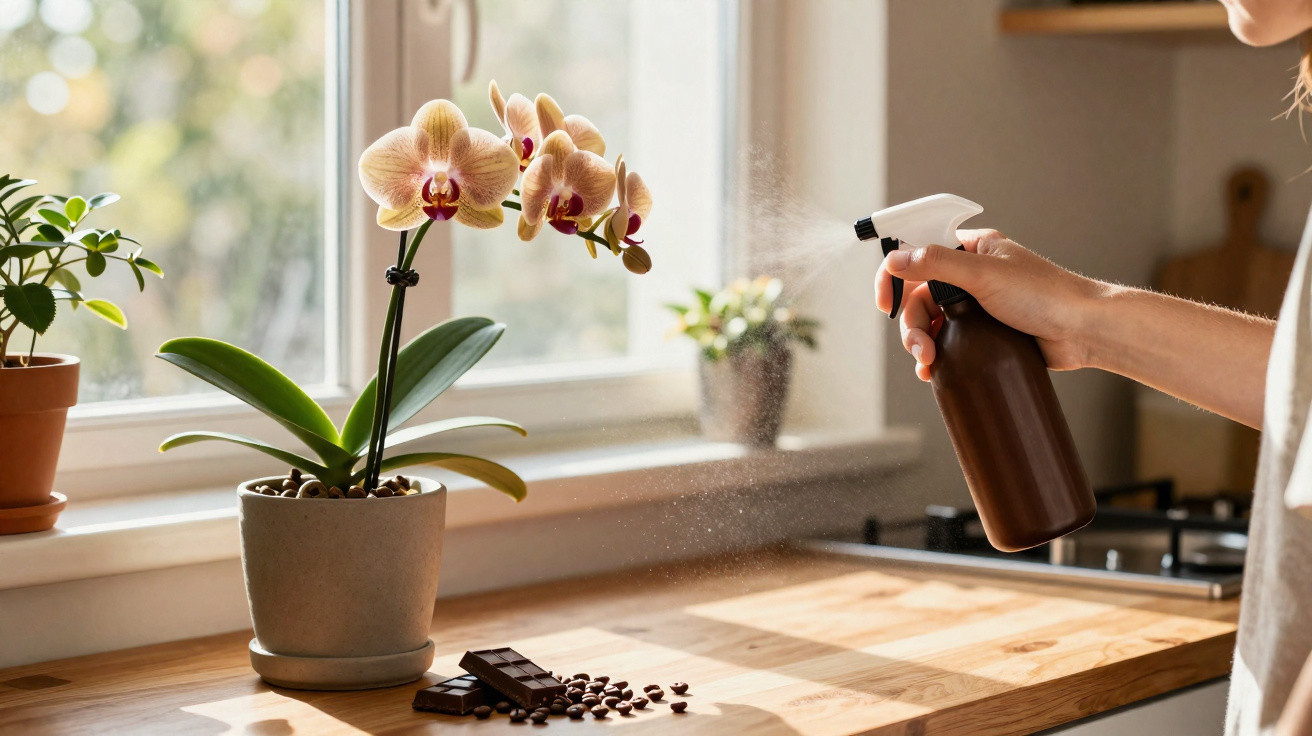
The Espresso orchid, botanically Oncidium Sharry Baby, can feel like a small diva on the windowsill: a heavenly fragrance, but very clear expectations around light, watering and humidity. If you understand those basics and tweak a couple of routines, you’ll be rewarded with dense sprays of flowers and regular blooming – often more than once a year.
What makes the espresso orchid so special
This cultivar comes from a cross within the Oncidium group and is especially popular indoors because of its scent. Many owners describe it as a blend of chocolate, cocoa and vanilla. The flowers are typically deep burgundy with lighter speckling, carried on long, branching sprays.
"If you meet the Espresso orchid’s needs, you get a fragrant firework of blooms instead of a fragile prima donna on the windowsill."
Compared with the widely grown Phalaenopsis orchids, success with Oncidium types depends far more on getting the balance of light, temperature and humidity right. Even small mistakes with the watering rhythm or placement can quickly show up in flower initiation and overall leaf health.
The ideal spot: keeping an eye on light and temperature
Bright light – but no harsh midday sun
The Espresso orchid likes bright conditions, but it needs protection from strong direct sun. An east- or west-facing window with plenty of indirect light is usually ideal. Brief direct sun in the early morning or late afternoon is often tolerated well, while intense midday sun can quickly cause scorching.
- Leaves that are a fresh, light green: the light level is about right.
- Dark green, soft leaves: too little light, and fewer flowers.
- Yellow patches or brown edges: too much direct sun.
In darker homes, LED grow lights can help. Position them roughly 30 to 45 cm above the leaves and run them for 10 to 12 hours a day. This is particularly useful in winter to make up for limited daylight.
Temperature swings as a flowering boost
In daytime, the Espresso orchid is comfortable at around 18 to 26 °C. At night it can be noticeably cooler; ideally the night temperature is 10 to 15 °C lower than daytime. This day–night difference helps the plant to initiate flower spikes.
"A noticeably cooler ‘sleeping spot’ for the orchid often acts like a natural start button for new flower sprays."
Avoid locations directly above radiators, next to air-conditioning units, or by draughty windows. Constant draughts or sudden temperature shifts commonly lead to bud drop and weaker growth.
Moisture – not just in the pot, but in the air
Oncidium Sharry Baby originates from regions with comparatively humid air. Indoors, it tends to do best with 40 to 70% relative humidity. During the heating season, humidity often drops sharply, which can result in dry leaf tips and stressed roots.
- Place a tray of pebbles and water under the pot, ensuring the pot base is not sitting in water.
- Group several plants together to create a more humid microclimate.
- A small humidifier near the window can stabilise levels reliably.
Misting with a spray bottle only works if the foliage can dry quickly. If water lingers on leaves or collects in leaf axils, the risk of fungal problems increases.
Watering correctly: don’t drown it “out of love”
Most issues with the Espresso orchid can be traced back to watering. Too much water is almost always more dangerous than too little.
When does the plant need water?
A simple check is to push a finger about 2 to 3 cm into the growing medium. If it feels almost dry, it’s time to water. If it’s still slightly damp, wait.
- During active growth: watering about once a week is common.
- In the quieter winter period: every 10 to 14 days is often enough.
Hard tap water with lots of limescale can damage roots over time. Filtered water or rainwater is kinder to the medium and helps prevent mineral build-up.
How to water the right way
The goal is thorough watering without leaving the plant constantly wet. The easiest method is at the sink: soak the potting medium until water runs freely from the bottom. Then let it drain completely before placing the inner pot back into its decorative outer pot.
"Standing water in the cachepot is the surest route to root rot."
Watering in the morning is helpful because leaves and the medium can dry by evening, lowering the chance of fungal disease.
Feeding using the “little, but regularly” principle
The Espresso orchid doesn’t build up a large nutrient reserve. For that reason, small doses more frequently work better than occasional “fertiliser shocks”.
| Growth phase | Fertiliser concentration | Rhythm |
|---|---|---|
| Active leaf and shoot growth (spring to early autumn) | Orchid fertiliser, roughly quarter strength | With almost every watering |
| Flowering period | Quarter strength, ideally with a slightly higher phosphorus proportion | About every two weeks |
| Rest period | Very weakly dosed or briefly not at all | About once a month |
A well-known rule of thumb among orchid growers is “weakly, weekly” – in other words, dilute feed applied more often. This helps prevent overfeeding, which can otherwise cause burnt roots and a salty crust on the potting medium.
Repotting: when the espresso orchid needs a new home
After about 18 to 24 months, the bark in the pot starts to break down, holds too much water and allows less air to reach the roots. At that point, a fresh medium becomes important. The best time is spring, when new growth begins but before flower spikes appear.
The right medium and the right pot
- Coarse orchid bark as the base.
- Add perlite or expanded clay for improved aeration.
- A small amount of activated charcoal helps absorb odours and reduces the risk of rot.
Choose a new pot only slightly larger than the old one. Too much extra space keeps the medium wet for longer and reduces airflow. Terracotta or plastic pots with plenty of drainage holes help prevent waterlogging.
Step by step when repotting
- Gently remove the old medium without tearing healthy roots.
- Trim soft, hollow or brown root sections using clean, disinfected scissors.
- Soak the new bark for a few hours in advance, then let it drain well.
- Position the plant so the newest growths are not pressed directly against the pot rim.
- Fill in the medium loosely and press only lightly so air channels remain.
For the first few weeks after repotting, water moderately and rely more on light misting until you see new, strong root tips. Only then return to your usual watering amount.
Spotting and containing pests early
A quick weekly check prevents many problems. In dry indoor air, Oncidium types are more likely to attract spider mites, scale insects and mealybugs.
- Fine webbing and speckled leaves can indicate spider mites.
- Hard brown or white “shields” point to scale insects.
- Cotton-like clumps in leaf axils are typical of mealybugs.
Small infestations can often be managed by wiping down with a soft cloth and then treating with neem oil or soft soap. Make sure you thoroughly wet the undersides of leaves and tight gaps. It’s best to isolate affected plants so pests don’t spread to other orchids.
How the espresso orchid blooms regularly
If you keep the key environmental factors stable, you can expect several flowering cycles a year. The most important elements are sufficient light, a clear day–night temperature difference, and a brief “breather” after flowering finishes.
After flowering comes the next flowering
Once the last flower has dropped, it’s worth inspecting the spike closely. The plant often produces side branches from lower nodes.
"Don’t cut the flower spike off completely straight away – trimming back to the second or third node can trigger a second flush of blooms."
You can remove spent individual flowers gradually so the plant focuses energy on remaining buds. During flowering, avoid letting it dry out too much, as energy use is high at this stage.
After a heavy flowering, give the Espresso orchid a slightly quieter spell for about 4 to 6 weeks: a little less water, a little less fertiliser, but keep the location the same. This mini-rest signals a “change of season” and supports the formation of new flowering potential.
Typical mistakes and how to avoid them
Many issues repeat themselves for beginners. A quick checklist helps you spot problems early:
- Wrinkled pseudobulbs: usually underwatering or damaged roots – review your watering schedule and check the roots.
- Soft, mushy roots: a clear warning sign of waterlogging – replace the medium and reduce watering.
- No flowers, only leaves: insufficient light or a missing day–night temperature difference.
- Buds drop just before opening: avoid moving the plant, draughts, or sudden dry spells.
A few extra tips for better success with orchids
The Espresso orchid is a good stepping stone into more demanding orchid care. If you learn to read its signals – leaf colour, root condition and pseudobulbs – you’ll quickly understand other species better too. Many growers keep a small notebook or phone list to record watering days, feeding and blooming times, making it easier to adapt routines to their home and the seasons.
If you have several plants, it can be useful to try different placements: an east window with a light curtain, a bright but cooler stairwell window, or a spot under an LED grow light. By comparing results, you’ll soon see which conditions make the Espresso orchid most willing to push new flower spikes and produce its signature chocolate-like fragrance most intensely.



Comments
No comments yet. Be the first to comment!
Leave a Comment