
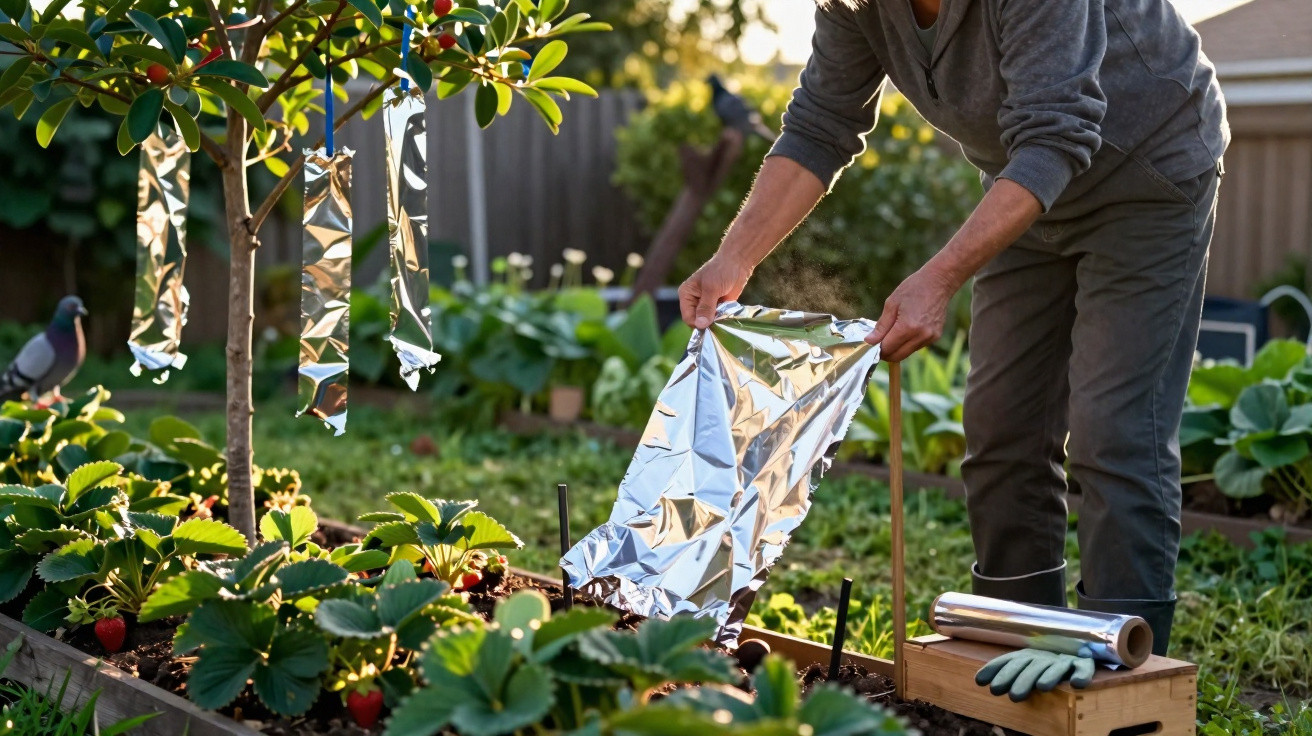
Many people spend hours grafting in the garden-sowing seeds, planting out seedlings-only to find, a few days later, that their veg patch has been turned over. City pigeons and wood pigeons are often to blame, treating beds, balcony planters and patios as both buffet and resting spot. Rather than reaching for pricey spikes or poison, gardening professionals are now recommending something most households already have in a kitchen drawer: ordinary aluminium foil.
Why pigeons are raiding gardens right now
As soon as the weather begins to warm up, pigeons move into breeding season. At that point, they’re mainly looking for three things: plenty of food, safe places to land, and sheltered corners they can use to navigate and settle. Gardens and balconies provide all of this perfectly.
Typical springtime magnets include:
- freshly dug beds with loose, open soil
- young lettuces, spinach, strawberries and other tender plants
- railings, window ledges and pergolas used as perches and lookouts
- bird baths or small water sources
Pigeons are creatures of habit. Once they decide a spot feels “safe”, they’ll return day after day-often bringing others with them. And it isn’t only plant damage that starts to build up.
"Pigeon droppings are highly acidic, attack wood, stone and metal, and can attract further pests such as rats."
If you move the birds on early in the year, you can avoid months of nuisance, repair bills, and an area that stays permanently dirty.
What aluminium foil actually does in the garden
Garden experts recommend aluminium foil for three reasons at once: it flashes in the light, it shifts easily in a breeze, and pigeons find the surface distinctly unpleasant. Combined, that’s often enough to keep them away long-term-without harming them.
Light reflections act as a warning signal
Birds are sensitive to sudden glints of light. If you scrunch aluminium foil into small balls, or cut it into strips and hang it so it can move freely, three things happen:
- sunshine (or even daylight) creates restless, flickering reflections
- the wind keeps the foil gently moving almost all the time
- to pigeons, it reads as an unfamiliar object that could indicate danger
The result is simple: the birds avoid the area, or don’t even attempt to land there.
An unpleasant feel on beak and feet
Aluminium foil doesn’t only work when it’s hanging up-you can also lay it on the soil or around plants. Pigeons prefer to peck for food on firm, stable surfaces they can properly grip and feel. When they encounter smooth, crackly foil instead, many stop foraging and move on.
"Aluminium foil puts pigeons off without injuring them-an obvious advantage over hard metal spikes or harsh deterrents."
In veg beds or among young transplants, that discomfort is often enough to drive them away.
How gardeners use aluminium foil in a targeted way
For this trick to work, placement matters-and it helps to be a little inventive. If you simply toss a scrap of foil into a bed, you’re unlikely to see much difference.
1. Block the landing spots
Start by watching where pigeons most like to sit. Common favourites are railings, window sills, roof edges, pergolas, or a particular beam above a bed.
Quick, low-effort deterrents for those places include:
- threading small aluminium-foil balls on to a string and stretching it across a railing
- cutting wider strips and letting them hang loosely from a pergola or balcony frame
- taping one or two foil strips to window ledges so they wobble in the wind
These first perches matter. If pigeons can’t settle there, they often choose a different territory straight away.
2. Protect beds and strawberries
Next, focus on the “feeding zone”. Fruit and veg beds draw pigeons in like a laid table. Here, a combination of flashing reflections and ground-level protection tends to work best.
Popular approaches include:
- running shiny bands between rows of strawberries or lettuces
- pushing short strips lightly into the soil so part of each piece sticks up
- laying a loose ring of foil pieces around especially vulnerable plants
If you like, pair aluminium foil with simple wooden canes or bamboo sticks to create a homemade, silver-sparkling bird scarer.
3. Prepare trees and shrubs
Cherry trees, berry bushes and young fruit trees in particular can suffer once birds start pecking. It pays to act early-before fruit begins to ripen.
Practical ideas:
- hanging small foil balls as a “garland” in the outer branches
- draping longer strips through the canopy like tinsel
- for low shrubs, fastening individual strips to bamboo canes and pushing them into the ground all the way round
"The more varied, gently moving reflection points you hang in a tree or shrub, the less appealing it becomes as a food source."
What a typical foil set-up looks like in the garden
| Area | How to use aluminium foil |
|---|---|
| Vegetable bed | Strips between rows, small pieces just under the soil surface |
| Strawberries | Rings of foil strips around each bed, hanging bands on canes |
| Balcony | Hanging garlands on the railing, foil strips attached to plant pots |
| Fruit trees | Foil balls around the outer edge of the crown, occasional strips within branches |
| Window ledges | Short, lightly moving strips fixed to the front edge |
How long does the effect last?
Pigeons aren’t foolish. If a shiny spot never leads to anything genuinely threatening, they can become accustomed to it over time. That’s why it’s not enough to put aluminium foil out once and then forget about it.
Small changes every one to two weeks are worthwhile:
- shift the position of strips or balls slightly
- vary lengths, add new pieces, remove older ones
- replace anything damaged after prolonged rain or strong winds
By keeping the stimuli unpredictable, you make it harder for the birds to settle. Many will eventually abandon the garden and look for somewhere quieter.
Environment, recycling, and the limits of the method
Aluminium foil has a poor reputation when it’s wasted for no reason. If you’re using it as a deterrent outdoors, it makes sense to do so responsibly. One helpful approach is to reuse clean, already-used foil from the kitchen, then gather it up again at the end of the season.
Key points to follow:
- don’t shred the foil into tiny pieces, so it can be collected easily later
- remove all remnants in autumn so you don’t leave litter in the soil
- where possible, dispose of foil via your local recycling collection
Aluminium foil won’t replace every other measure. With very heavy pigeon pressure, you may also need nets over beds or fine-mesh barriers on balcony railings. For many hobby gardeners, though, the “foil trick” in spring is enough to prevent the worst of the damage.
More simple tricks for pigeons and other unwelcome visitors
Aluminium foil is most effective when the overall space is made less inviting to pigeons. That starts with basics: don’t leave food scraps uncovered on the patio, offer seed for songbirds in a targeted (and as pigeon-proof as possible) way, and clean water sources regularly.
Similar reflective items can also deter other nuisances such as blackbirds or sparrows-sometimes bright ribbons or old CDs will do. The key is always movement and novelty. If you rehang and vary these aids regularly, you’ll protect plants far more effectively without turning your garden into a fortress.
To many hobby gardeners, using aluminium foil can sound a bit makeshift at first. In practice, though, it often proves that a few shiny strips-put up in the right place at the right time-can be the difference between nibbled lettuces and a harvest that actually reaches your plate.
Comments
No comments yet. Be the first to comment!
Leave a Comment