
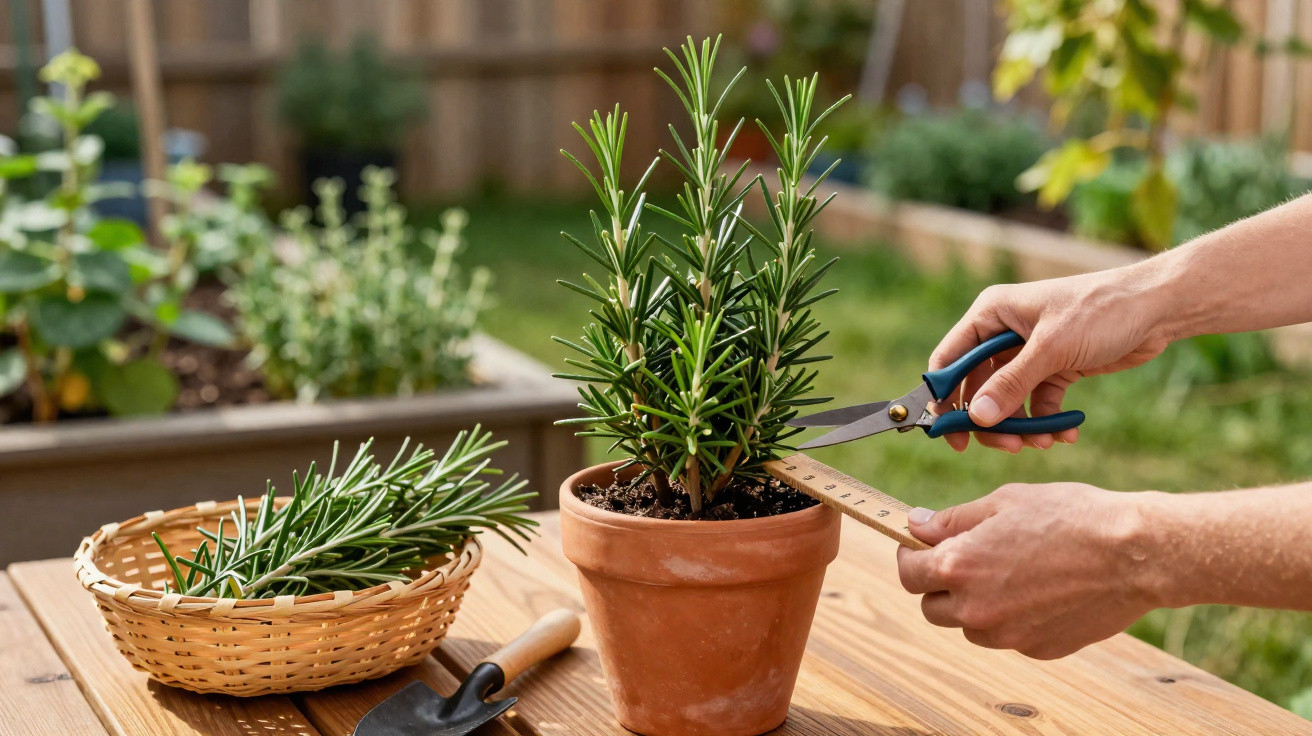
Many hobby gardeners are surprised every year: the rosemary has certainly grown, yet the flowers now sit only right at the top, while the lower shoots turn woody and look rather forlorn. At exactly this stage, a well-timed prune in March determines whether the shrub keeps thinning out - or develops into a compact, aromatic, richly flowering bush.
Why rosemary needs a trim specifically in March
In early spring, rosemary shifts into growth mode. Between March and April it produces fresh shoots and closes pruning wounds far more quickly than it would in autumn or winter. If you pick up the secateurs now, you channel the plant’s energy into young shoots that are more willing to flower.
If you simply let the shrub do its own thing, it mainly extends long stems upwards. The base becomes bare, the wood turns thick and grey, and the blooms end up only at head height. The plant looks tired, and insects find fewer young, nectar-rich flowers within easy reach.
"A prune in March keeps rosemary young, encourages more flowers and helps it grow as a compact bush rather than a scruffy broom in the bed."
In cooler areas, it pays to wait until after the last harder frosts. If you prune straight after a cold snap, the fresh cut surfaces can be damaged and the shrub may get going more slowly for the season.
The ideal pruning height: how much rosemary can you remove?
The best guide is the so-called one-third rule. It helps keep the shrub healthy and keen to flower without weakening it.
"Rule of thumb for gardeners: never remove more than one third of the total height in a single pruning session."
So a shrub that stands at around 60 centimetres can handle a cut-back of roughly 20 centimetres. If you take off significantly more than that, the plant needs longer to push new growth and flowering will be noticeably lighter this year.
How much to cut back - what’s realistic by age
- Young rosemary (new plants, small bushes): Shorten only the soft, green growth by around 5 to 10 centimetres. This encourages branching and shapes a dense, rounded shrub.
- Mature rosemary in a bed (about 80 cm to 1 m): Remove 10 to 15 centimetres from the still-leafy tips. This keeps the height pleasant, helps the shrub stay stable, and spreads the flowers across the whole plant.
- Rosemary in a pot or tub: Keep it a touch more compact than in the bed. Shorter shoots put less strain on the roots and the plant is less likely to topple over in wind.
- Very old, heavily woody rosemary: Cut only within the green, living growth. Don’t cut back into the fully brown, bare wood, as it is slow to reshoot.
If your rosemary has been neglected for several years, spread the reduction over two to three years. That way the shrub can rejuvenate step by step without failing altogether.
The key moves for the perfect March prune
Before you start, it’s worth checking your tools briefly. A blunt or dirty cut does more harm than good.
- Work with sharp, clean secateurs, ideally disinfected beforehand with alcohol.
- Choose a dry, mild day so the cut surfaces can dry quickly.
- Find the green, flexible section with leaves - that’s where you should cut.
- Position the blades just above a small side shoot or a developing bud.
- Shape the shrub into a gently rounded form, trimming slightly lower at the sides so light can reach the centre.
Each cut stimulates new side shoots at that point. These young shoots later carry particularly large numbers of flowers and give the plant a fuller look. Over the season, this builds an evenly dense, aromatic cushion.
Common mistakes that weaken rosemary long term
Most problems don’t come from too little pruning, but from pruning in the wrong way.
- Cutting too far into old wood: Brown, hard wood with few leaves reshoots only reluctantly. If you shorten heavily there, you can be left with gaps and dry branches.
- Pruning in autumn or during frost: Late cuts encourage fresh growth that then meets cold weather and is easily damaged by frost.
- Not pruning for years: The shrub becomes increasingly bare and eventually collapses outwards. The older the wood, the harder rejuvenation becomes.
"If you shape it lightly every March, you avoid drastic rescue jobs and keep rosemary vigorous year after year."
How the right prune noticeably improves flowering
Rosemary flowers most strongly on vigorous shoots that are one to two years old. These are exactly the shoots you create with a targeted March prune. Instead of a few flower clusters at the tips, many smaller flower buds form along the new branching.
The result is that the whole shrub looks as if it has been wrapped in delicate blue or violet blooms. Insects can find nectar not only at the top, but across multiple levels. For wildlife-friendly gardens, that is a clear benefit, as rosemary is one of the valuable food plants for wild bees.
At the same time, the leaves on young shoots are especially aromatic. If you like using rosemary in the kitchen, you gain twice: more flowers for garden display and more flavoursome sprigs for roast potatoes, slow-cooked dishes or Mediterranean marinades.
Practical examples of the right pruning height
| Starting height of the shrub | Recommended cut-back | Result |
|---|---|---|
| 40 cm (young, freshly planted) | 5–8 cm off the green tips | Dense, bushy structure, strong side shoots |
| 80 cm (established bed shrub) | 10–15 cm from the shoot ends | Stable shrub with abundant flowering throughout |
| 1 m, heavily woody | Only in the green growth, max. 20–30 cm | Slow rejuvenation, better foliage lower down |
More care tips around pruning
After pruning, take a moment to reassess the site. Rosemary loves sun and free-draining soil. Waterlogging slows growth more than a slightly over-enthusiastic cut. On heavy soils, a layer of grit or coarse sand around the root area helps water drain away.
Go easy on fertiliser too. A light boost with an organic herb feed in spring is enough. Too much nitrogen produces long, soft shoots that topple easily and taste less aromatic.
What you can do with the cuttings
The trimmed-off shoots don’t have to go straight on the compost. If you haven’t treated the rosemary with pesticides, you can put the cuttings to good use:
- Fresh sprigs for seasoning meat, fish or vegetables
- Dried stems to store for winter
- Small bundles as fragrant décor in the kitchen or living room
- Aromatic herb salt by mixing the needles with coarse salt
That creates an extra incentive to care for the shrub consistently each March - the pruning delivers an immediate culinary bonus.
Avoiding risks and benefiting in the long run
If you have a very old rosemary in the garden that has lost its shape, take a gradual approach. A drastic cut back into old wood can stress the shrub so much that whole sections dry out. Better: each March, go a little deeper while staying in the green growth, and watch how the plant responds.
Over time, this gentle strategy pays off. Rosemary can remain in the same spot for many years if it is pruned regularly but moderately. The shrub then stays not only decorative, but also a reliable source of aromatic sprigs and a magnet for bees and butterflies.





Comments
No comments yet. Be the first to comment!
Leave a Comment