
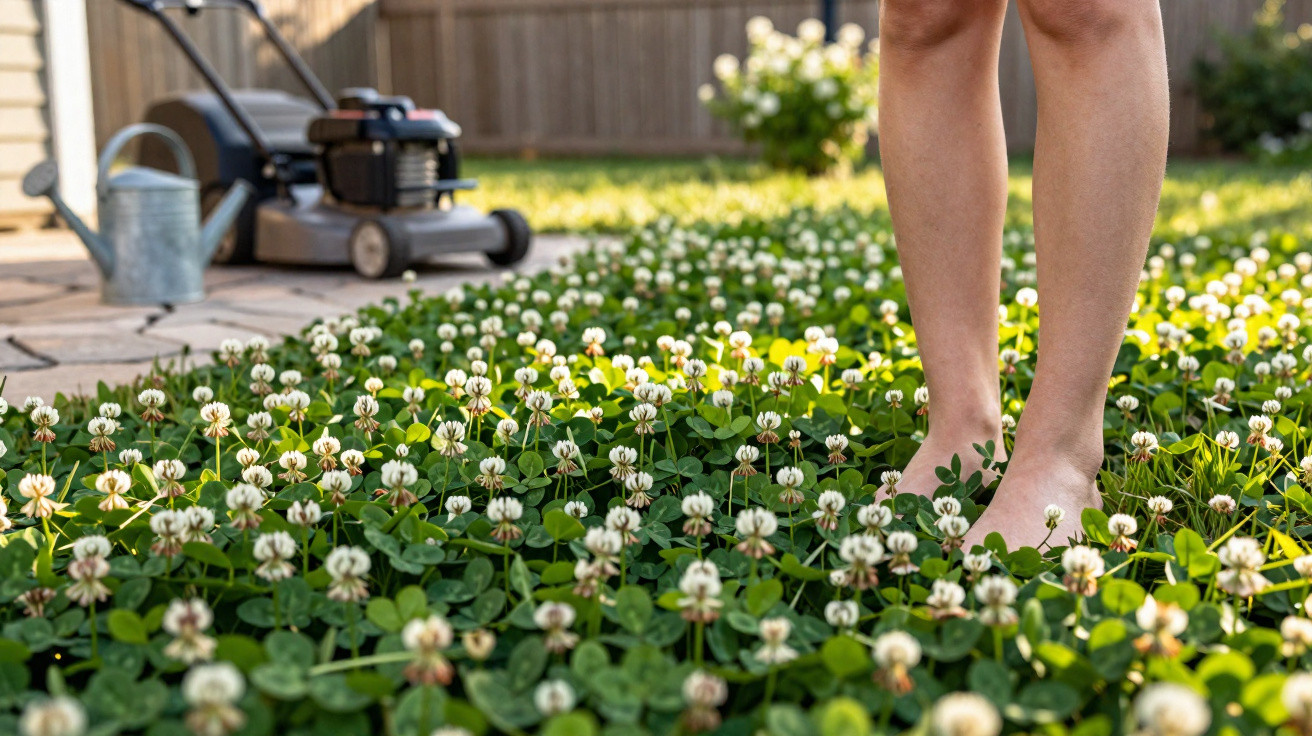
As lawns scorch in the height of summer and the lawnmower is out non-stop, an unassuming plant is emerging as a serious alternative: low white clover, often sold as micro-clover. It spreads quietly, is being championed by garden professionals, and could replace many traditional lawns over the coming years - with far less effort and expense.
Why the traditional lawn is becoming a problem
For a long time, the classic ornamental lawn was seen as the gold standard for a well-kept garden. But with hotter summers and rising water bills, its downsides are becoming harder to ignore. Anyone who wants that consistently deep-green finish pays heavily for it - in both money and time.
- Regular watering, often daily during dry spells
- Ongoing fertiliser applications to keep the turf reasonably healthy
- Weekly lawnmower runs throughout the growing season
- Yellow, scorched patches appearing after only a few days of heat
More and more amateur gardeners now admit they can’t keep up with this pace. Environmental authorities and landscaping organisations have, for some time, been urging people to consider alternatives that guzzle less water while still providing a green surface you can walk on.
"In summer, a classic lawn can need up to twice as much water as alternative ground covers - and still often responds with brown patches."
The quiet star: low white clover instead of lawn
Against this backdrop, a plant is moving into the spotlight that used to be fought as “a weed” in lawns: low white clover. Special, particularly small-leaved varieties - commonly marketed as micro-clover - stay roughly between 5 and 15 centimetres tall and form a dense, springy carpet.
Walk across it barefoot and you notice the difference straight away. It feels soft yet resilient, and it’s comfortable underfoot without giving that manicured golf-course or football-pitch vibe.
What makes clover a true lawn competitor
- Stays green in heat: While conventional grass dries out in summer temperatures, clover holds its colour for a long time.
- Tolerates foot traffic: Children, garden furniture, barbecues - a clover carpet bounces back remarkably well.
- Closes gaps on its own: Bare patches usually fill back in without help; overseeding is rarely needed.
- Fixes nitrogen: As a legume, clover captures nitrogen from the air and improves the soil.
"Low white clover more or less fertilises the soil by itself - many gardeners can cut out mineral fertiliser altogether."
Low-maintenance like almost no other ground cover
The biggest advantage shows up in your diary. Where “lawnmower” once appeared every week, a clover lawn suddenly leaves large stretches of time free.
Less watering, hardly any mowing
Practical experience from local councils, landscaping firms and private gardens points in the same direction:
- up to 20–50% less watering than a standard lawn
- instead of weekly cutting, only one or two trims per year
- no regular fertiliser required, because clover supplies the soil with nitrogen
This is a noticeable relief for large areas - blocks of flats, forecourts, municipal verges. But even in a typical terraced-house garden, the change is quickly felt: less noise, less petrol or electricity, and far less hauling watering cans around.
The impact on your wallet
Compare the ongoing costs and the difference can be surprising. For many lawns, yearly spending on fuel, fertiliser and water easily reaches three figures. Initial calculations from real-world trials show:
| Item | classic lawn (per year) | clover area (per year) |
|---|---|---|
| Mowing (petrol/electricity) | 60–80 Euro | 5–10 Euro |
| Fertiliser | 40–70 Euro | 0–10 Euro |
| Watering | 50–100 Euro | 20–50 Euro |
Overall, maintenance costs for many areas drop from around 150 Euro to below 15–70 Euro per year, depending on location and size. The money saved often ends up going on garden furniture, a barbecue, or the holiday budget.
How to switch successfully to a clover carpet
If you don’t want to rebuild the whole area from scratch, you can start small. Many gardeners trial clover first along borders or in the most troublesome spots that turn yellow again and again.
Step-by-step approach for beginners
- Choose the area: Sunny to partially shaded positions work best.
- Prepare the ground: Mow the grass short, scratch through moss and thatch, loosen the surface and, if needed, apply a light layer of sand.
- Sow: Scatter clover seed evenly, lightly rake in, then roll or tread down.
- Water in: Keep evenly moist for the first few weeks until the carpet has closed.
- First cut: After a few months, mow once to encourage dense, branching growth.
If you prefer a more radical route, you can remove the old lawn completely or rotavate it and then sow the entire area with clover. It takes more effort at the start, but you get a more uniform look sooner.
Ecological effects: more than looks
The shift towards clover isn’t happening by chance. Landscaping organisations and environmental bodies see alternative ground covers as a way to significantly reduce water use and chemical inputs. Clover also brings a few ecological advantages of its own.
- More insects: Flowering white clover attracts wild bees and other pollinators.
- Healthier soil: Thanks to nitrogen fixation, the soil regenerates and microorganisms benefit.
- Less noise and exhaust: Reduced mowing cuts noise pollution and emissions, especially with petrol mowers.
"By converting part of the garden to clover, you’re effectively creating a small refuge for insects - without having to plan colourful perennial borders."
Where clover reaches its limits
Despite its many strengths, clover won’t replace every type of lawn. On heavily used sports surfaces, intensely played-on areas, or in very shady corners, it can struggle. In those situations, a tough grass mix often remains the better option.
People with severe allergies to bee or wasp stings should also think it through: flowering clover brings more insects closer to ground level. If that’s a concern, you can mow once before the main flowering period, or choose mixed solutions such as clover strips rather than a full area.
Real-world examples from gardens and local councils
In many new-build areas, some homeowners are now deliberately moving away from the uniform lawn. Instead, they establish areas of clover, herb mixes or hardy wildflower turf. Low white clover is often used as the “hard-wearing centre”, while the edges are designed to look wilder.
Councils, too, are trialling clover areas along roadside verges, on central reservations or in front of public buildings. Especially where upkeep has been expensive and awkward, the benefits are clear: fewer mowing runs, hardly any reseeding, yet still a tidy-looking green.
What garden owners should know before switching
Letting go of the perfect lawn carpet sometimes takes a bit of courage. Many people are used to a uniform look and need time to adjust to a surface that feels more natural and may flower more noticeably through the year.
If you sow clover, expect the following:
- At first, the area can look uneven until the carpet closes.
- Flowers attract insects - usually a positive, but not everyone enjoys it.
- Micro-clover stays low; other varieties can grow taller and look more meadow-like.
Even so, for many people the advantages outweigh the trade-offs: more free time, less maintenance, lower costs, and a garden that copes with heat spells far more calmly. Anyone who battles scorched grass every year will find low white clover to be a genuinely practical alternative.
Combined with shade-giving trees, mulched sections or planted beds, it helps create a robust, modern garden that adapts better to new climate conditions and reduces day-to-day hassle - including an almost work-free green area you can walk on barefoot, without needing to fire up the lawnmower first.




Comments
No comments yet. Be the first to comment!
Leave a Comment