
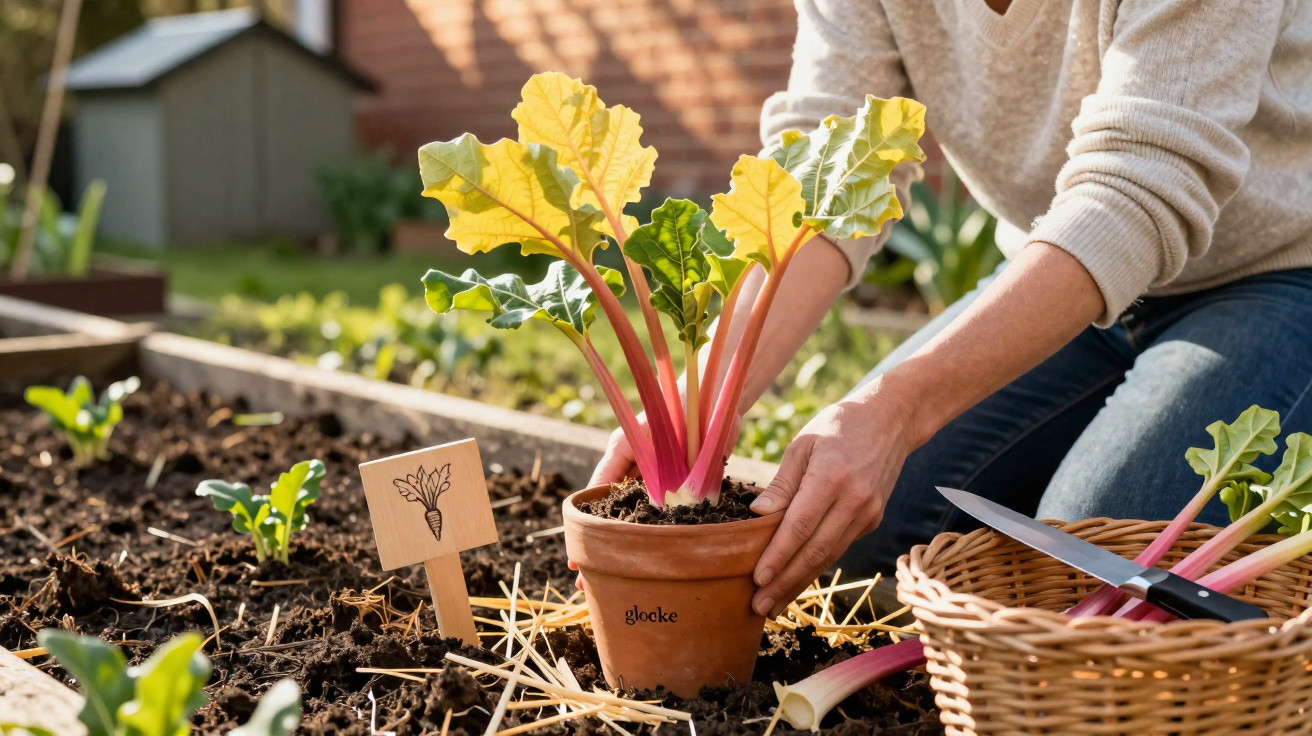
A straightforward trick from the veg patch can bring your rhubarb harvest forward by weeks - and the stalks turn out noticeably more tender and sweeter than usual.
Plenty of home gardeners simply accept that rhubarb only really appears on the plate in spring. If you give the plant a gentle nudge, you can start cutting much earlier and, at the same time, improve the quality of the stalks. The key is an old, almost forgotten method: forcing rhubarb in the dark.
Why force rhubarb? Benefits at a glance
In the UK climate, rhubarb normally gets going properly from April. You can harvest up to June; after that, oxalic acid levels rise sharply and the stalks are generally considered no longer fit to eat. Forcing brings the starting line forward.
"Forced rhubarb produces especially early, long, tender and mild stalks - ideal for cooking and presentation."
Gardeners who deliberately grow rhubarb in darkness keep reporting the same results:
- Earlier harvest: depending on the weather, two to four weeks ahead of the usual season.
- Milder flavour: less acidity and noticeably fewer bitter compounds.
- More delicate texture: hardly any fibres, making the stalks easier to prepare.
- Attractive colour: vivid rose to pink stalks, very decorative in desserts.
- Longer enjoyment window: starting earlier often means you can harvest for longer overall.
If you like baking cakes, making crumble, stewing fruit or cooking jam, the softer, milder stalks are a real advantage. Many people say forced rhubarb tastes more like a refined fruit than a classic vegetable.
How forcing rhubarb works
The technique sounds almost too simple: you keep the plant in complete darkness for several weeks. With no light, the plant draws on its own stored reserves and pushes up long, pale stalks.
The darkness trick
Under normal conditions, rhubarb uses its leaves to make energy from light - a process called photosynthesis. When you cut off the light, that energy supply stops immediately.
In response, rhubarb tries to reach light as fast as it can. It draws on nutrients stored in the rhizome (the knobbly, thickened rootstock) and elongates the stalks. The result is long, delicate shoots with very little green growth.
"Forcing makes rhubarb live off its roots - the energy goes straight into the stalks."
Because the leaves produce hardly any chlorophyll in darkness, the stalks stay paler, often with an intense pink tone. At the same time, fewer acids and bitter substances build up. That is why forced rhubarb tastes gentler and feels much less “sharp” on the tongue.
Which cover is suitable for forcing?
In traditional cottage gardens, people used dedicated rhubarb forcing bells - tall terracotta covers with a small removable lid on top. If you can get hold of one, it will do the job nicely, but it is not essential.
Suitable containers from around the house
Anything that is dark and tall enough to cover the emerging shoots can work, for example:
- a large terracotta pot turned upside down
- a black bucket or a mortar tub
- a metal bucket without holes
- a small water butt or a sturdy plastic barrel
- an old compost bin, as long as it is light-tight
What matters is that the container does not have gaps that let in a lot of light. A small hole at the top for ventilation is fine; wide splits down the sides are not. If you are unsure, you can darken the outside further with a sack or tarpaulin.
One practical bonus: a heavier cover holds a little warmth and creates a milder microclimate around the crown. That can speed up the first growth, especially in late winter.
The right time to force rhubarb
Getting the timing right determines how well the plant copes with the process. The best window is the shift from winter into early spring.
When should the bell go over the crown?
A good rule of thumb is late winter to very early spring - often between late February and mid-March, depending on where you are. The ground should no longer be deeply frozen; the plant is either still dormant or only just starting to break.
Signs you are in the right period:
- last year’s dry, old stalks have already been removed
- small reddish buds or tiny leaf tips are pushing up through the soil
- the longer-range forecast no longer shows days of hard, continuous frost
If you place the cover much later, once the leaves are already large, the crown is put under far more stress because the foliage suddenly loses its light.
Step-by-step: how to force rhubarb properly
- Prepare the site: remove old leaves and dead stalks from last year, and lightly loosen the soil around the plant.
- Add nutrients: place a layer of well-rotted farmyard manure or compost around the rootstock, but not directly on the plant’s crown.
- Hold the warmth: cover the area with a thick mulch layer, such as leaves or straw.
- Put the container in place: set a light-proof pot or bucket over the entire crown and press the edges firmly into the soil.
- Leave it alone: keep the plant covered for about three to five weeks and avoid constantly lifting the cover to check.
- Harvest: once the stalks under the cover are about 20 to 30 centimetres long, lift the cover carefully and pull the stalks free with a twisting tug at the base.
- Remove the cover: after harvesting, take the container off completely so new leaves can grow normally.
"Use forcing help only for a limited time - afterwards the rhubarb needs light again to rebuild its reserves."
Do not keep the plant in darkness for the whole season. The crown would be exhausted, and next year’s crop could be poor - or the plant might fail altogether.
What to bear in mind with forced rhubarb
A very early, intensive harvest is hard work for rhubarb. A few simple habits help keep the planting healthy in the long term.
How much can you harvest?
Only take some of the stalks and always leave a few shoots on the crown. After the dark period, the plant should be allowed to grow on quietly for the rest of the season. In many gardens, a strong crown is forced only every other year to give it a recovery break.
If you have several plants, you can rotate: force a different crown each year and leave the others to grow normally.
Oxalic acid and health
Forced rhubarb still contains oxalic acid, but the level is usually lower early in the season. As summer goes on, it increases. Rhubarb is therefore not suitable for people who are very prone to kidney stones or have significant issues with oxalates.
A few sensible rules:
- Always peel the stalks and cut away leaf ends generously.
- Never eat the leaves; they are very high in oxalic acid.
- After June, it is better to stop harvesting so the plant can build strength.
What to cook with forced rhubarb
Anyone who has cooked with forced rhubarb notices the difference straight away. The stalks break down faster, taste gentler and are easier to balance in recipes.
Popular uses include:
- rhubarb cake with meringue, without the topping tasting overly sharp
- very smooth stewed rhubarb that needs less sugar
- rhubarb jam with strawberries or raspberries
- delicate chutneys for cheese or barbecued meat
- syrup and spritzers with a light rhubarb note
Because the fibres are softer, forced rhubarb even works well in layered desserts in glasses where pieces are used raw or only briefly cooked. This is where the reduced acidity really shines.
Common forcing mistakes - and how to avoid them
When you try the method for the first time, a few typical pitfalls come up again and again. Three points are especially common in gardening forums:
- Too much light: a transparent or cracked container weakens the effect; the stalks stay shorter and turn greener.
- Forced for too long: leaving the cover on for many weeks beyond the recommended period can seriously weaken the crown.
- Soil too wet: under sealed plastic barrels, moisture can build up quickly in rain, increasing the risk of rot and slugs.
If you keep those points in mind, the method usually delivers good results even in the first year. Rhubarb is generally tough and tends to forgive small mistakes.
Why forcing is worth it in small gardens
In many urban gardens and on balconies, there is only room for a single rhubarb crown. If that plant produces especially early, the space pays for itself twice over. The effort is minimal: one container, a bit of mulch and a little patience.
At the same time, the technique has a pleasant side effect: paying close attention to how your plants grow gives you a better feel for your garden’s rhythms and needs. For many home gardeners, that observation and experimentation is the most enjoyable part - with an early rhubarb cake as the tasty reward.



Comments
No comments yet. Be the first to comment!
Leave a Comment