
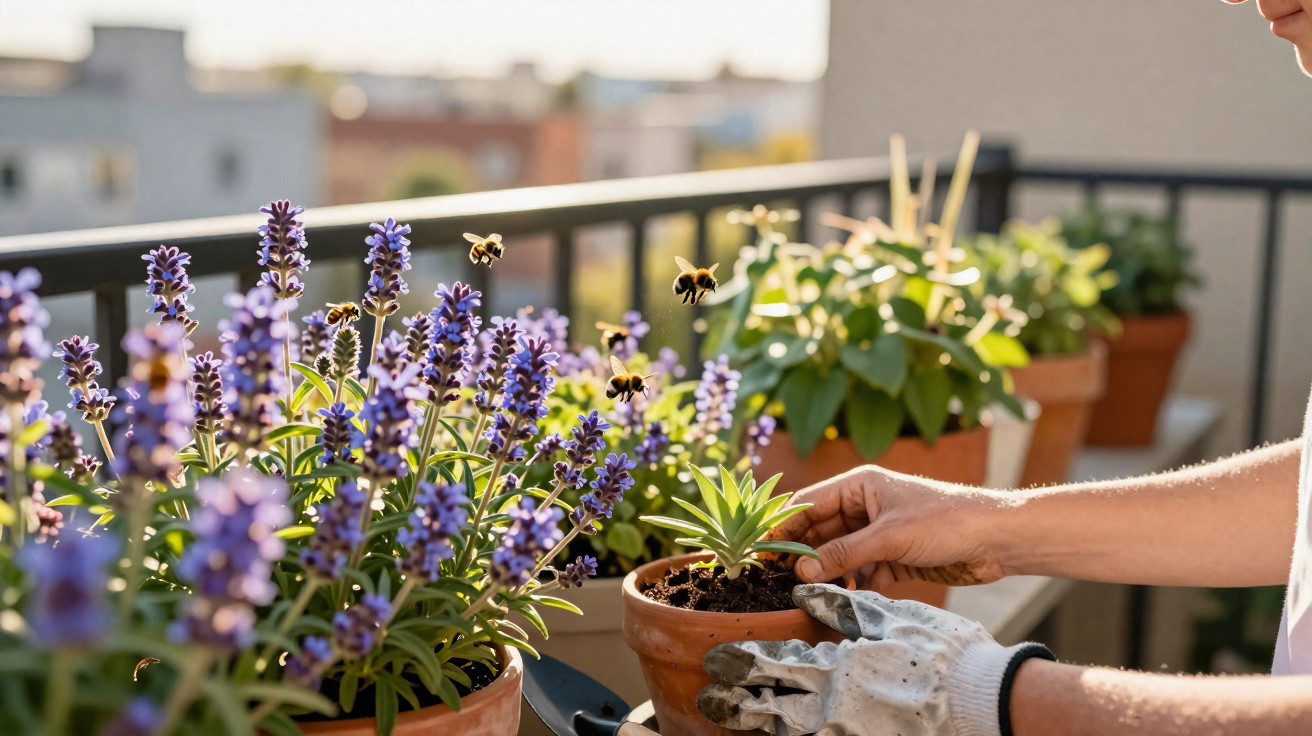
Anyone looking to brighten up a balcony or garden in spring often reaches for lavender almost without thinking. A touch of the Mediterranean, pretty flowers, a pleasant scent - job done. Yet there’s another plant that offers all of that and, in many ways, does it even better: it’s tougher, flowers for longer, and is noticeably more bee-friendly. That’s exactly why this perennial is now catching the eye of hobby gardeners who are tired of fussy plants that collapse at the first frost or the first heatwave.
The surprising alternative to lavender
What the name catmint really means
The plant in question is Nepeta × faassenii, part of the catmint group. Many people only know catmint as something bought for house cats. What’s often overlooked is that there are varieties that work brilliantly as ornamental plants - and can turn beds and borders into a genuinely buzzing stage.
This perennial forms dense, mound-like clumps with grey-green foliage and countless flower spikes in shades from blue through to violet. Visually it resembles a looser, softer take on lavender, but it’s far more forgiving if you’re not perfect with care.
Nepeta × faassenii combines fragrance, masses of flowers, toughness and bee-friendliness in one remarkably easy-going plant.
A fragrance that quickly carries
Brush your hand over the leaves and catmint releases an aromatic scent that’s lightly mentholated and pleasantly spicy. It isn’t overpowering, but it is clearly noticeable - especially on warm days near a patio or seating area.
Unlike many other scented plants, it doesn’t need Provence-level heat to perform. Even mild spring temperatures are enough for it to scent the garden gently. Ideal for anyone who enjoys balmy evenings among borders and balcony planters, without having to replant year after year.
A magnet for bees, bumblebees and butterflies
Why the flowers are constantly surrounded
As soon as the first blooms open, the show begins: bees, bumblebees and butterflies visit catmint again and again. Per square metre, it becomes a real help-yourself counter for pollinators.
There are several reasons for this:
- lots of small flowers packed closely together
- a long flowering period with a steady supply of fresh nectar
- flowers that are easy to access for different insect species
- a position that’s usually sunny and warm - ideal for pollinators
If you want to support biodiversity in your garden or on your balcony, this perennial is an excellent choice. It provides food for many weeks, without constant replanting or repeated feeding.
Catmint turns any bed into an all-season buffet for pollinators - with hardly any effort.
Surprisingly unfazed by frost, heat and drought
Hardy through double-digit sub-zero temperatures
Plenty of Mediterranean plants look irresistible in a catalogue but fail to make it through a proper winter in a pot or border. Catmint operates on a different level. It’s considered very hardy and can cope with temperatures down to around -20 °C.
In winter, the top growth dies back, while the rootstock waits it out in the soil. Come spring, it reliably shoots again - without fleece, wraps, or hauling pots into the garage.
A drought performer in high summer
Once it has established well, this perennial manages extended dry spells with little fuss. The foliage is slightly hairy, which helps reduce water loss. While other plants can look limp during hot summers, catmint often stays surprisingly fresh in the border.
For people working full time who don’t want to spend every evening watering, that’s a major advantage. Missed watering - especially when you’re away - is usually tolerated, as long as the soil is free-draining and not permanently waterlogged.
A flower display from spring to late autumn
Up to seven months of colour with minimal effort
While many perennials only put on their main display for four to six weeks, catmint keeps going. In good conditions it flowers from roughly April through to October.
A simple trick can extend this even further: after the first big flush in mid-summer, give the plant a light cut back. It will push fresh growth and produce another strong wave in late summer and autumn.
The result is an almost continuous ribbon of colour that brings structure to borders, rock gardens, path edges and balcony planters for months on end.
Where the perennial looks best
With its bushy, slightly arching habit, Nepeta × faassenii suits a wide range of uses:
- as a soft edging along garden paths
- between shrub roses as a relaxed blue carpet
- in rock gardens or on dry-stone walls
- in larger balcony planters or pots in full sun
- as edging around vegetable beds
Depending on the variety, the colour range runs from pale lavender-blue through to a deeper violet-blue. Combined with white, yellow or pink flowers, it creates lively yet harmonious planting schemes that evoke southern landscapes - without needing a specialised Mediterranean microclimate.
Planting made easy
The best time to get started
A great planting window is from late March to May, once the ground is no longer frozen and is beginning to warm up. Young plants then have enough time to establish roots before summer heat arrives.
If you plant later in the year, water a little more often for the first few weeks so the perennial can settle in properly. In pots, planting works for most of the season, provided frost nights aren’t on the horizon.
Site, soil, care - how little you need to do
The basics for healthy, vigorous catmint are refreshingly straightforward:
- Choose the position: as sunny as possible; light partial shade can also work.
- Improve the soil: free-draining and on the lean side rather than overly rich; on heavy soils, work in sand or fine grit.
- Dig the planting hole: about twice the size of the root ball.
- Set the plant in place: briefly soak the root ball, then plant it at the same depth as in its pot and firm the soil.
- Water in: water thoroughly straight after planting so the soil settles around the roots.
| Care aspect | What catmint needs |
|---|---|
| Watering | regular only at first; later mostly only in extreme drought |
| Feeding | hardly necessary in normal garden soil; fertilise sparingly |
| Cutting back | once after the first flush; then close to the ground in late winter |
| Winter protection | not needed in borders; in pots, protect mainly from waterlogging |
To fail with this plant, you’d have to try - it’s astonishingly generous about drought, cold and forgotten feeds.
Added value for your garden, your back and the environment
Less weeding, less work, fewer chemicals
Once established, catmint can cover larger areas densely. That leaves weeds less space and less light. Planting it strategically can significantly reduce weeding and makes it easier to avoid herbicides.
It’s also a real benefit for anyone with back problems or limited time: once planted, beds can run largely on autopilot - while you simply enjoy the flowers and the constant hum.
Practical tips for balcony and city gardeners
In pots and balcony planters, the plant needs a larger container with drainage holes and a free-draining compost mix with some sand or expanded clay. Avoid waterlogging at all costs; it copes better with short dry spells than with consistently wet roots.
If you have children, these plants also work well as a living learning aid: even a few pots on a city balcony quickly show how fast insects arrive when there’s suitable food. It builds awareness of biodiversity without any finger-wagging.
Cat owners should be aware that some cats react strongly to certain catmints. Nepeta × faassenii is usually less tempting than dedicated “cat toy” catmints, but it’s still worth checking whether your own cat is likely to rough it up. If that happens, a small barrier - or a separate cat-only plant - can help.
If you love lavender, you don’t need to banish it. Combining both plants adds structure, gives slightly different flowering rhythms, and extends the season for insects. But if you want a low-stress, extremely robust addition or alternative, Nepeta × faassenii is a perennial that handles many modern gardening challenges - from climate swings to lack of time - with impressive ease.

Comments
No comments yet. Be the first to comment!
Leave a Comment