
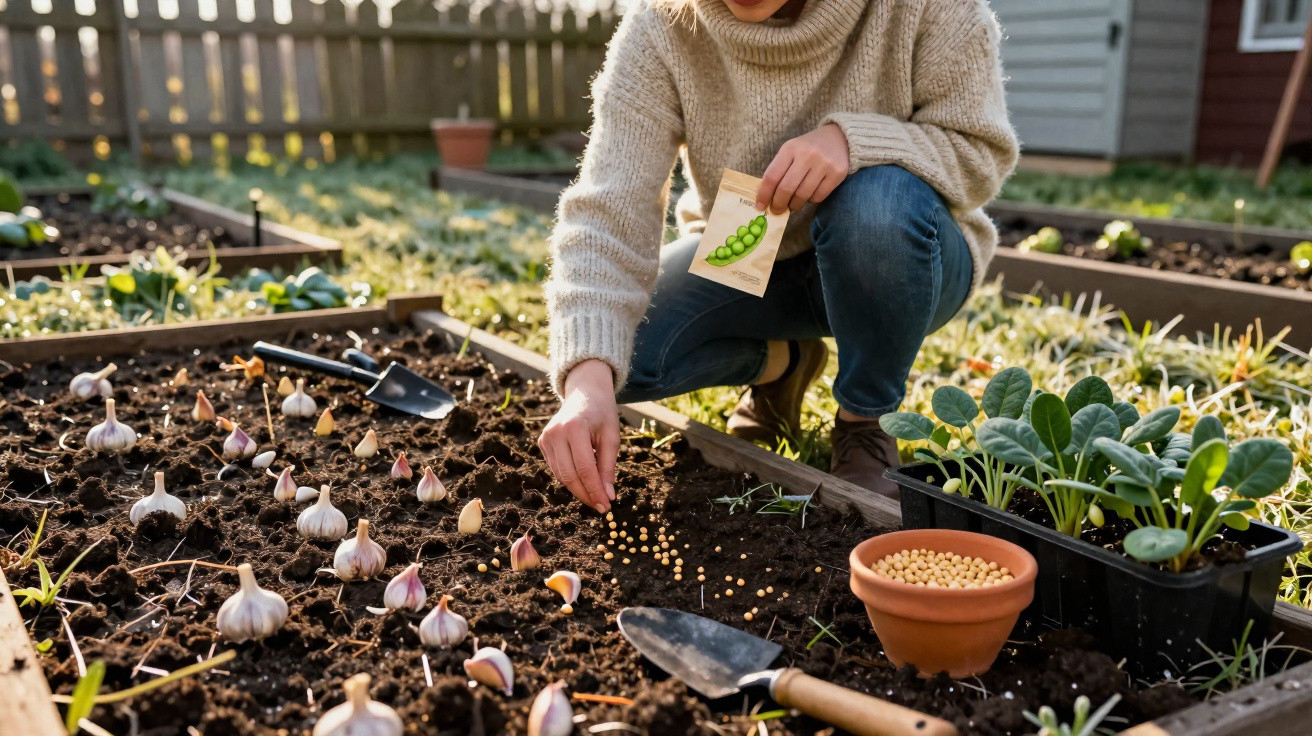
January can give the growing year a quiet but valuable reset, even though many gardeners put their tools away until March. A handful of tough crops and straightforward protection can transform an empty plot into a productive winter workspace.
Why mid-January is not a dead month in the garden
Throughout large areas of the UK and US, January means saturated beds, frost-covered dawns and exceptionally brief daylight hours. It is easy to believe that a vegetable plot has nothing to offer at this time of year, but that is only partly right. Although growth is slower, it has not ended. Roots continue developing whenever the ground can be worked, while hardy seeds can wait in the soil before racing away once temperatures increase.
Starting a few crops in midwinter shifts your entire harvest calendar forward by several weeks, sometimes more.
Broad beans, peas, garlic and spinach are four vegetables that cope exceptionally well with winter. They require neither a heated greenhouse nor specialist equipment: good soil, some shelter from severe weather and a gardener prepared to spend half an hour outside in the cold are enough.
Broad beans: hardy workhorses for cold plots
Why sow broad beans in January?
Although broad beans are commonly treated as a spring crop, they benefit greatly from an early start. Their substantial stems and robust root systems withstand low temperatures far better than many people expect. In mild or temperate areas, midwinter sowing allows them to establish roots beneath the soil before they grow rapidly as daylight hours extend.
Winter-sown broad beans flower earlier, dodge late-spring heatwaves and usually give a longer picking window.
They offer another, less obvious, advantage too. As legumes, broad beans capture nitrogen from the air and retain it in nodules on their roots. When those roots later decompose, the nitrogen is released for the crop that follows.
How to sow broad beans now
- Clear and loosen the soil: Take out weeds and larger stones, then fork the bed to the depth of a spade. Work in compost if the soil appears depleted.
- Sow straight into the bed: Insert each bean to a depth of around 5 cm. Leave about 20 cm between seeds in each row and approximately 40 cm between rows.
- Guard against severe frost: Covering the row with fleece, a cloche or a low tunnel protects emerging shoots from sharp winds.
Where soil is waterlogged, start several beans in deep modules under cover instead. Set them out once the bed is workable again.
Peas: early sowings for spring bowls
Why sow peas in January?
Sowing peas early is a smart way to use an otherwise quiet period in the garden. While beds would normally remain vacant, pea seeds can be planted in ridges or gutters beneath cover. Cold conditions make germination slow, yet the roots become established and plants quickly respond once the weather improves.
Compact varieties and round-seeded peas are most suitable for winter sowing. They tolerate cooler soil and consistent moisture more reliably than tender sugar snap or mangetout varieties.
Where and how to sow peas
- Select a suitable position: In mild urban or coastal locations, peas may be sown directly outdoors. In colder areas, grow them in an unheated greenhouse, cold frame or mini-tunnel.
- Plant at a sensible depth: Sow seeds 2–3 cm below the surface and allow about 10 cm between them. Keep 30 cm between rows to provide access for weeding and supporting plants.
- Add support straight away: Place short netting or twiggy sticks at sowing time, rather than risking root damage by installing them later.
Peas dislike waterlogged soil more than low temperatures, so drainage matters more than warmth in winter sowings.
If standing water is a problem in your garden, make a low ridge or use a raised bed. Sow along the top, where rainwater drains away more quickly.
Garlic: planting cloves for summer bulbs
Why plant garlic in January?
Garlic performs best with a lengthy, cool season of growth. In fact, many types need a period of cold to produce proper bulbs instead of one large clove. January planting still provides several cold months, followed by gradual and dependable spring growth.
Provided the soil is neither frozen solid nor prone to standing water, garlic can still be planted now in much of Europe, the UK and temperate regions of North America.
How to plant garlic for strong bulbs
- Choose a sunny bed with good drainage: Do not use dips in the ground where water collects. For clay soil, mix grit or sharp sand through the upper 10–15 cm.
- Separate rather than peel: Divide the bulb into cloves immediately before planting, leaving their papery skins in place.
- Set cloves with the point facing up: Plant each clove 3–4 cm deep and space them 10–15 cm apart along the row. Allow 25–30 cm between rows.
- Water sparingly: Slightly damp ground encourages roots to form, but waterlogged soil promotes rot, particularly during winter.
Avoid growing garlic where you recently had onions, leeks or shallots to reduce the risk of soil-borne diseases.
A light mulch of straw or leaves suppresses weeds and protects the soil from freeze–thaw cycles that may force cloves upwards.
Spinach: soft leaves from a frosty bed
Why sow spinach in January?
Spinach grows particularly well in cool weather. During mild winters, a basic cover can even keep it growing through the coldest period. January-sown plants tend to remain fairly static initially, before accelerating in early spring and producing delicate leaves ahead of the warmth that causes bolting.
Spinach grown over winter often has a sweeter flavour than summer-grown plants because cold stress causes it to store extra sugars in its tissues.
Simple steps for winter spinach
- Sow outside or beneath cover: In protected, mild parts of the country, sow directly into the open bed. In more severe climates, use a cold frame, tunnel or large containers placed close to the house.
- Plant seeds shallowly: Sow into drills about 1 cm deep. Leave roughly 10 cm between plants, giving every rosette sufficient space to expand.
- Maintain lightly moist soil: Excess water in cold conditions encourages mould. Allow the surface to dry a little between gentle waterings.
Cold-tolerant varieties such as ‘Winter Giant’ or similar hardy lines hold better through fluctuating temperatures.
Use scissors to pick the outer leaves first. Frequent harvesting, even in modest quantities, maintains productivity and postpones bolting as spring arrives.
General January vegetable garden tactics
Alongside planting these four crops, January is well suited to lower-profile jobs that deliver benefits for months to come.
- Shield young plants: Fleece, temporary tunnels and homemade cloches made from cut bottles can soften the effects of wind and sudden cold spells.
- Build better soil structure: Apply compost or well-rotted manure to empty beds. Earthworms will gradually draw it into the soil, reducing the digging needed later.
- Map out crop rotations: Plan where each plant family will grow next season. This helps interrupt pest and disease cycles while making good use of nitrogen left by peas and beans.
How these four crops fit into a smart rotation
| Crop | Family | Best follower crop | Main benefit |
|---|---|---|---|
| Broad beans | Legume | Cabbages, broccoli | Adds nitrogen to the soil |
| Peas | Legume | Leafy greens, lettuces | Light feeder follows enriched soil |
| Garlic | Allium | Carrots, beetroot | Leaves soil relatively clean of weeds |
| Spinach | Leaf crop | Tomatoes, peppers (after clearing) | Short cycle frees space early |
Risks to watch this month
January work in the garden has several potential pitfalls. Frost heave may push newly planted cloves or shallow-sown seeds out of the ground. Inspecting beds after freeze–thaw weather gives you the chance to press exposed cloves and seeds back into position. Mice and other rodents can uncover peas and broad beans, but mesh or temporary netting may limit the damage.
Slugs can still be active during milder weather, particularly beneath tunnels and fleece. On dry days, lift coverings and remove dead foliage around young plants to reduce hiding places without depending too heavily on pellets.
Going further: quick indoor tasks for keen gardeners
Gardeners who enjoy getting organised can use short winter days to clean pots, prepare labels and review their seed supplies. Keeping a basic seed inventory prevents accidental duplicate purchases and reveals gaps in the rotation. Some people also sow a few early salad leaves in trays on a bright windowsill, using compost left over from the previous year.
Giving the garden only 15 minutes each week at this time of year can alter the whole feel of spring. The beds will already contain life, there will be fewer weeds, and the first garlic shoots or broad bean tips will emerge while neighbours are only beginning to think about retrieving their tools. This understated early advantage can be what separates a frantic season from one that feels steadily manageable.






Comments
No comments yet. Be the first to comment!
Leave a Comment