
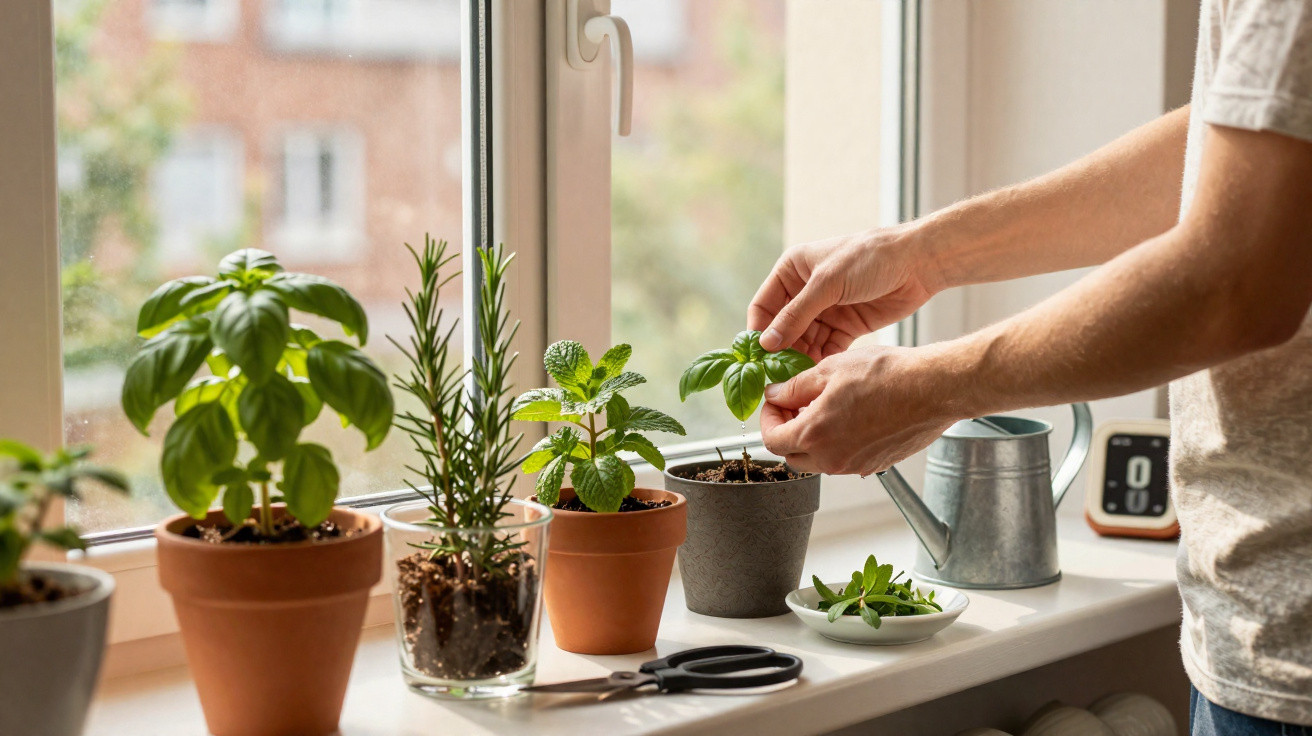
Space is limited, time is even scarcer, and every herb you have attempted to grow appears to complain. There is basil that flowers too soon, rosemary that turns brittle, and mint that acts like it owns the place.
On the first mild Saturday of spring, I saw a neighbour arrange a pile of pots as though she were preparing a magic trick. There were no sweeping flowerbeds: only terracotta pots, a sack of compost, a little hand trowel and the quietly pleased expression of somebody who has found a reliable method. She planted thyme in one container and mint in another, firmed the compost and left it at that. It was not a victory lap, just an everyday task. Soon, her balcony smelled of cooking. So what made the difference? The size of the project, the approach and the routine. The answer is simpler than it seems.
Start small: pots that work, herbs that forgive
Treat pots as miniature landscapes in which you control the conditions. They keep the maintenance contained and orderly, immediately improving your chances of success. Pick herbs that cope well when watering slips your mind, including rosemary, thyme, oregano and chives. These dependable low-maintenance plants developed on exposed hillsides, so they are not demanding about perfect care.
A friend in Leeds began with three 25 cm pots on a sunny step, growing mint, parsley and thyme. She used a mug to water them, nipped out the tips each Sunday and picked only what she wanted for tea and eggs. Within six weeks, the thyme had produced three times as many stems, while the parsley resembled a green fountain. The mint stayed in a separate pot, naturally, because it likes to dominate the conversation.
Containers make a difference because drainage matters enormously. Holes in the base prevent roots from standing in cold, waterlogged compost. Terracotta is breathable and dries more quickly, making it well suited to woody herbs; plastic retains moisture for longer, which can help during summer or on exposed balconies. A self-watering container can even make absent-mindedness work in your favour. This is not farming on a grand scale; it is about creating manageable microclimates.
Planting and care: the five-minute habit
This straightforward approach suits either a windowsill or a patio. Select pots measuring 20–30 cm with drainage holes, then place a handful of crocks or gravel in the base. Combine peat-free compost and horticultural grit in an approximate 70/30 ratio, set each plant at the depth it was growing in its nursery pot, and water once to bed it in. Grouping the pots creates a more humid, sheltered spot away from the wind. A light layer of pea gravel mulch looks smart while reducing evaporation.
Overwatering, restricted roots and unsuitable herb combinations cause most problems. Mint needs a container to itself. Basil enjoys warmth and regular drinks, whereas rosemary would rather dry between waterings. Try the knuckle test: push a finger into the compost as far as the first knuckle; water if it feels dry, but hold off if it is cool and moist. Realistically, hardly anyone checks this daily. Everyone knows the small pang of guilt that comes from noticing a wilting basil plant. Herbs are usually more forgiving than you expect.
Focus on modest actions you can repeat. Remove the growing tips to promote bushier plants, harvest regularly in small amounts and turn pots so growth remains balanced. This is when the garden begins to feel properly yours.
“Sunlight is your main currency,” says a market grower I trust. “Give most herbs six hours, and they’ll pay you back in flavour.”
- pinch, don’t pour - remove growing tips each week; this shapes the plants while providing food
- water in the morning - foliage dries quickly and slugs remain confused
- feed sparingly during peak growth - apply a mild liquid feed every 2–3 weeks in summer
- keep the bullies separate - mint should always be on its own
- sunlight is currency - choose a bright position and bounce light from a pale wall where necessary
From windowsill to weekend ritual
Let your herbs fit naturally into the rhythm of your week. While the kettle is boiling, spend 90 seconds checking them, turn the pots, pick a few sprigs and get on with your day. On Sundays, water more thoroughly and inspect for yellowing leaves or pests. You are not completing paperwork; you are simply improving breakfast. As the seasons change, your containers can change too: grow basil through the warm months, coriander when temperatures are cool, and keep rosemary and thyme going all year. There may be a grazed knuckle, the citrus scent of lemon thyme, or a mint leaf rubbed between your finger and thumb. Before long, you will interpret your plants as easily as the weather beyond the window. Tiny tasks bring substantial flavour, without fuss. Give a bunch to a neighbour and you will both feel as though you have discovered something rather good.
| Key point | Detail | Benefit for the reader |
|---|---|---|
| Suitable containers | 20–30 cm pots with drainage; terracotta dries more quickly, while plastic retains moisture | Fewer root problems, easier watering and stronger long-term growth |
| Effective potting mix | Peat-free compost combined with grit (70/30), topped with pea gravel mulch | Reliable drainage, a neat finish and less mess in rain or wind |
| Simple routine | Water in the morning when dry, pinch weekly and feed lightly in summer | Minimal work, generous yields and regular harvests without stress |
FAQ:
- Which herbs are easiest for complete beginners? Begin with thyme, chives, mint (in a pot of its own), oregano and rosemary. Basil also performs well in warm weather when picked regularly.
- How often should I water herbs in pots? Follow the knuckle test. During warm weather, many containers need water every 1–2 days, while cooler periods may require it only every few days. Water thoroughly and allow the excess to drain away.
- Can I grow herbs indoors without direct sunshine? Yes, provided there is bright indirect light or a compact LED grow light. South- or west-facing windows are most suitable. Turn plants each week.
- What happens in a UK winter? Woody herbs such as rosemary and thyme can remain outdoors in well-drained pots. Bring tender herbs inside or plant them again in spring.
- How can I harvest without damaging the plant? Remove no more than one-third of its growth at once. Cut just above a pair of leaves and do not strip a single side; the plant will respond by becoming bushier.




Comments
No comments yet. Be the first to comment!
Leave a Comment