
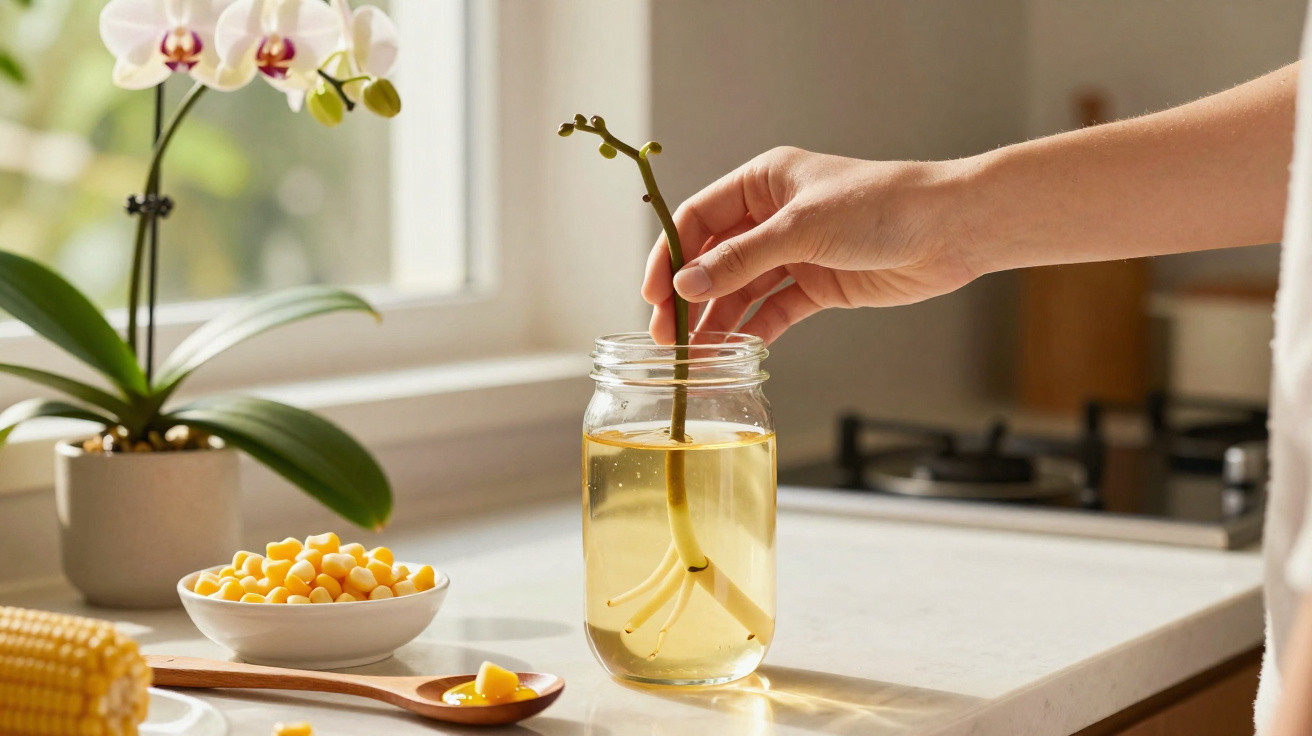
A humble leftover from the kitchen can make orchid roots surprisingly responsive again.
Plenty of hobby growers have seen it: the Phalaenopsis has dropped every last flower, the stems have dried out, and the pot has sat looking unchanged for months. Many people then throw the plant away – completely unnecessarily. With an unremarkable food item that often gets left over in the kitchen, the orchid can effectively hit reset and get itself ready for the next flowering season.
When an orchid stops flowering: what’s really going on?
A Phalaenopsis without blooms is, in most cases, not dead at all – it’s simply in a resting phase. Outdoors in its natural habitat, this is normal; indoors on a windowsill it can look worrying. If you look closely, you can usually tell very quickly what condition the plant is actually in.
- Healthy roots: green or silvery, firm to the touch, with no rotten smell
- Living leaves: still flexible; they may be a little soft, but not mushy
- Just a pause: no flowers, possibly dried flower spikes – the plant is building reserves
- Warning signs: brown, mushy roots, a foul odour, yellowing or shrivelled leaves
If the roots have brown, soft patches and the potting mix smells unpleasant, waterlogging is usually the culprit. In that case, no clever kitchen hack will fix it: the orchid first needs emergency care with fresh growing medium.
First aid for root damage
To rescue a weakened orchid, work through the steps in order:
- Carefully ease the plant out of its pot.
- Remove the old medium (bark chips and fibres).
- With clean, sharp scissors, cut away any mushy, brown roots.
- Let the root ball air-dry briefly.
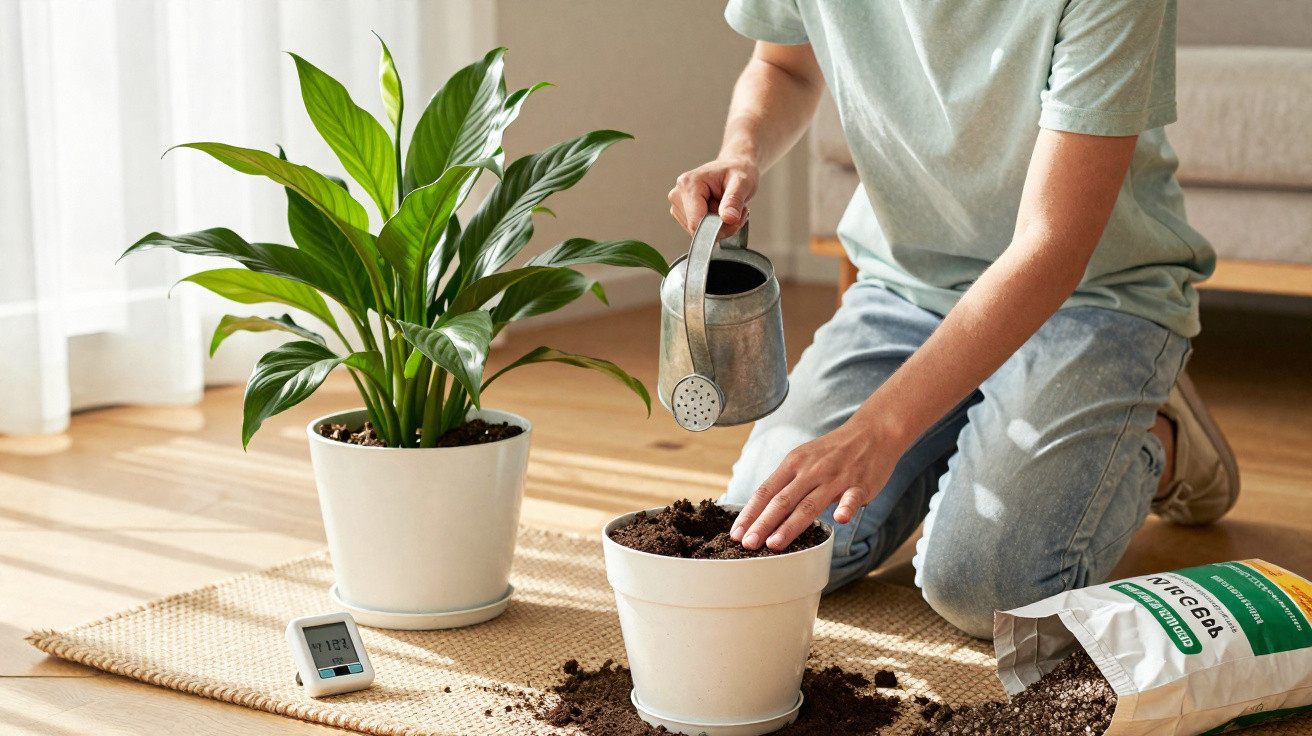
- Repot into fresh, bark-based orchid compost, taking care not to crush the roots.
First, the roots need to be healthy again before a gentle nutrient kick from the kitchen is worth trying. On a diseased root system, any fertiliser tends to act more like stress.
Moisture and climate: how to keep a Phalaenopsis happy
Many orchids don’t suffer from a lack of nutrients, but from air that’s too dry or a poorly chosen spot. Specialist growers often recommend a humidity level of around 50 to 70% for Phalaenopsis. In a heated living room, it can quickly drop below 40% – far too dry for tropical epiphytes.
A straightforward way to improve the microclimate on the windowsill:
- Place the pot on a saucer filled with expanded clay pellets or pebbles.
- Add a little water to the saucer – the pot must not sit directly in the water.
- Choose a bright position, but avoid harsh midday sun.
To encourage new blooms, the orchid also benefits from a small temperature difference: roughly 18 to 22 °C during the day, and 4 to 8 °C cooler at night. This subtle “day–night signal” nudges it to set buds again.
The surprising kitchen helper: why cooked maize benefits the roots
The real trick isn’t on the leaves, but down in the pot. Leftover cooked maize can be used as a very mild, natural root booster. The kernels contain fibre, antioxidants and, above all, starch. That starch isn’t fed to the plant directly – it feeds the microorganisms in the growing medium.
Inside an orchid pot, fine fungi and bacteria live alongside the roots, including so-called mycorrhizae. They form a partnership with the plant: the fungi help make nutrients available, and the orchid supplies sugar compounds in return. When this “pot life” gets a small dose of starch, the activity around the root zone can pick up again.
The maize trick isn’t a classic fertiliser with NPK values; it’s more like a stimulator for the pot’s microclimate – like a gentle energy bar for the root environment.
Among orchid enthusiasts, rice water is used in a similar way, as it also contains starch and trace elements. The perceived results: stronger roots, improved resistance to disease and, over time, a better chance of fresh flower spikes – provided light, humidity and temperature are right.
How to prepare the maize root feed correctly
For the leftover to help rather than harm, preparation matters. Start with cooked maize with no salt or seasoning – for instance, kernels left over from the day before.
Recipe for the maize root booster
To make a simple home mix:
- Put 100 g cooked maize kernels and 1 litre of lukewarm water into a blender.
- Blend thoroughly until there are no large pieces left.
- Strain the liquid through a very fine sieve or a coffee filter so the bark in the pot doesn’t get clogged.
- Store the extract in the fridge and use it within 24 to a maximum of 48 hours.
If the smell turns sour or a film forms, it’s best poured down the sink. Fermented or mouldy liquid will do more harm than good.
Applying it to the roots: less is more
The maize mix is an add-on, not a replacement for sensible watering and feeding. Use it gently as follows:
- Lightly moisten the medium first; the orchid should not be bone dry.
- Apply 1 to 2 teaspoons of the maize extract directly onto the medium; do not pour it into the crown.
- Frequency: every 3 to 4 weeks during the growing period, mainly spring and summer.
- Water normally in between – ideally by a brief soak every 10 to 15 days using low-limescale water.
The unsalted cooking water from maize can also be used very sparingly. Once fully cooled, apply small amounts to already moist medium no more than once or twice a month. If the cooking water was salty: avoid it entirely – orchids won’t tolerate that.
When the trick is worth trying – and when it’s better not to
If your Phalaenopsis is generally healthy but refuses to bloom, you can experiment with the maize boost. Early signs the plant is responding well include:
- new, pale-green root tips
- firmer, glossier leaves
- fine new aerial roots developing on the stem
If there is severe root loss or visible fungal disease, the priority is stabilisation: fresh medium, adjusted watering, and the right location. In that stage, any additional nutrients are more likely to burden the plant. The kitchen trick should only be used once the orchid has visibly recovered.
Risks, limits and sensible additions
As with any home remedy, using too much or applying it too often can backfire. Excess organic matter in the pot can quickly trigger mould or fermentation. If you notice a slightly sweet, musty smell coming from the medium, pause the treatment and let the plant rest for a few weeks with plain water only.
A few practical habits reduce the risk of problems:
- always use small quantities
- never use salted or seasoned maize leftovers
- keep the liquid fresh and dispose of it in time
- never leave the pot standing in water permanently
Alongside this home trick, a conventional orchid fertiliser (specifically formulated and used at a much reduced strength) remains a sensible option – alternating with plain watering. Combining both approaches often works best: a professional baseline feed plus gentle support for the pot’s microbial life via kitchen leftovers.
Beginners may find it helpful to understand terms such as “epiphyte”: in nature, Phalaenopsis often grow perched on trees, with aerial roots hanging freely in the air. That’s exactly why they react so badly to waterlogging in a pot and do best in a loose, bark-based medium. Keeping that natural lifestyle in mind makes it clearer why an airy root zone – and the occasional light, organic extra from the kitchen – can sometimes be the nudge that leads to the next flush of flowers.

Comments
No comments yet. Be the first to comment!
Leave a Comment