
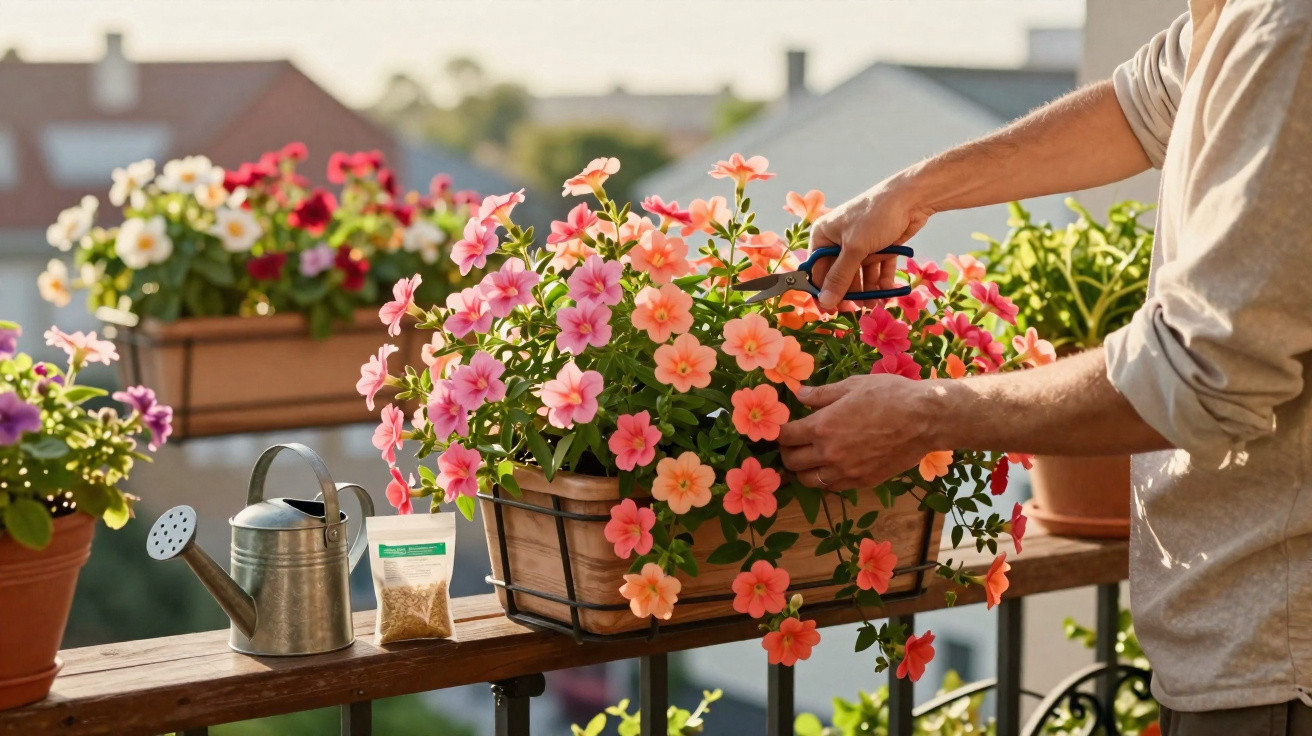
With the right trailing plant, that will not happen.
Anyone planting up their containers in spring hopes for months of clouds of flowers rather than sad, dried-up remains by high summer. One little-known plant delivers exactly that: delicate in appearance, tough in cultivation and ideal for anyone who loves colour but lacks green fingers.
The overlooked summer powerhouse for balcony boxes
The plant in question is Diascia. Garden centres sometimes sell it under its English name, “Twinspur”, although Diascia is increasingly the name used across Europe. It looks rather like a miniature snapdragon, but has a noticeably more delicate and contemporary appearance.
Diascia originally comes from southern Africa. In the UK, it is generally grown for one season, like a traditional summer bedding plant. It can become perennial in areas with mild winters. Its naturally gently trailing to cushion-forming habit turns window boxes and hanging baskets into cascades of flowers.
“Diascia fills gaps in a window box, trails elegantly over the edge and flowers from spring into autumn – with minimal effort.”
Flower colours range from apricot and soft pink to rich raspberry pink, salmon orange and white. The plant usually reaches 25 to 40 centimetres in height, while spreading up to 60 centimetres wide – perfect for making containers look full quickly.
Where Diascia looks its best
Thanks to its growth habit, Diascia is particularly suited to:
- window boxes in sunny or partially shaded positions
- hanging baskets, where it spills over the rim
- larger planters on a patio or roof garden
- bed edges and rock gardens, where it creates small cushions
Diascia is especially appealing in mixed displays. It combines well with:
- petunias and verbenas for vivid colour
- tarragon or lemon thyme for fragrance and texture
- double miniature dahlias as a focal point in the centre
- silverleaf or santolina for calm, grey foliage
Diascia needs sunshine, but it is only moderately tolerant of fierce midday heat on a confined city balcony. A spot with morning or evening sun is ideal. On south-facing balconies, provide light shade during the hottest part of the day, for example with an awning or taller container plants behind it.
When to plant Diascia
Plant Diascia only once the risk of frost has genuinely passed. In most areas, late April to mid-May is suitable. Anyone who prefers not to take risks should wait until the traditional late spring cold spell has passed.
For sowing your own plants, begin indoors or in a greenhouse as early as March or April. Sow the seeds in a shallow tray of fine seed compost at around 15°C. Young plants should not go outside until night-time temperatures are safely above freezing.
| Container width | Recommended number of plants |
|---|---|
| approx. 30 cm window box | 3 Diascia plants |
| 50–60 cm window box | 6 Diascia plants (or 4 + 2 companion plants) |
| 80 cm window box | 8 plants, depending on the mix |
This creates a dense-looking display quickly without cramming the plants together. Planting too closely eventually encourages fungal issues and tired-looking foliage.
The ideal compost for months of flowers
Diascia prefers a light, open, humus-rich growing medium. Standard compost for balcony plants is usually sufficient, provided it is not too heavy or prone to waterlogging. If your compost is more loam-based, mix in:
- a little sand to improve drainage
- well-rotted compost for nutrients
- a few handfuls of expanded clay or lava grit to increase air around the roots
A slightly acidic to neutral pH, roughly 6 to 7, is suitable. That matches most commercially available potting composts. Good drainage is essential: drainage holes in the container are non-negotiable, and a thin layer of expanded clay at the base will do no harm.
Watering Diascia without drowning it
Overwatering is the most common mistake with Diascia. It likes compost that remains evenly and lightly moist, but it does not tolerate waterlogged roots.
A practical rule for window boxes:
- Test with a finger – water when the upper layer of compost feels dry.
- Always water the compost directly rather than the flowers.
- In hot weather, water less often but thoroughly, instead of giving frequent small amounts.
- Water in the early morning or evening to reduce evaporation.
Compost in hanging baskets dries out particularly fast. On very hot days, a second watering may be necessary. Waterlogging quickly causes root rot – one reason why so many balcony plants die off miserably in August.
How much feed Diascia actually needs
Diascia is one of those plants that often looks worse when overfed. Its shoots become soft and leggy, while flowering declines. A restrained but regular feeding regime is better.
Two approaches work well:
- Slow-release feed when planting: Mix a slow-release fertiliser for container plants into the compost once in spring. It will nourish the box for several weeks.
- Liquid feed at a moderate rate: Add a standard liquid fertiliser at a low dose to the water roughly once a month.
“Too much fertiliser encourages leaves, not flowers. Those who feed sparingly will be rewarded with a genuine firework display of blooms.”
The trim that changes everything in summer
One small care technique determines whether the container still looks fresh in August or has already begun to flop: timely pruning.
Remove faded flowers regularly
Simply pinch off spent flower sprays with your fingers, or cut them away with small scissors. It takes only minutes, but tells the plant that producing more buds is worthwhile.
A midsummer haircut to prevent fatigue
When the plant slows down in high summer, its cushions become sparse in the middle or the flowers get smaller, give it a firm trim:
- Shorten every shoot by about one third.
- Water thoroughly straight afterwards and, if necessary, give a light feed.
- Be patient for a few weeks – Diascia will then produce fresh new growth.
Lightly pinching out the tips of very long shoots early on creates a more densely branched, rounded plant that trails more attractively.
How to propagate Diascia easily
Anyone who becomes fond of this plant can propagate it without much effort. Cuttings are the simplest method:
- In spring or autumn, cut non-flowering shoots around 10 centimetres long.
- Remove the lower leaves so that no foliage rots in the water.
- Insert them into seed compost or specialist cutting compost and keep it lightly moist.
- Overwinter autumn cuttings frost-free at 10–15°C.
This method lets you keep favourite-coloured varieties for the following year, especially if the garden centre no longer stocks them the next spring.
What Diascia dislikes – and how to avoid problems
There are a few conditions this balcony plant handles poorly. Knowing them helps prevent disappointment:
- Prolonged rain and waterlogging: cause fungal diseases and root rot.
- Intense midday sun combined with high humidity: makes plants look drained of energy. Afternoon partial shade helps.
- Long dry spells: lead to brown leaf edges and lost flowers.
- Overcrowded boxes: encourage competition and disease.
Pests usually appear only once plants have already been weakened. Aphids and spider mites can generally be controlled with a strong jet of water followed by removing affected growth.
Creative ideas for bold-coloured balcony displays
For those wanting more, Diascia can be used deliberately to create particular moods:
- Pastel balcony: apricot and pink Diascia with white lobelia and pale green grasses.
- Summer fire: orange Diascia alongside red verbenas and dark-leaved sweet potato plants.
- Romantic evening balcony: white-flowering Diascia with sweet alyssum and lavender, atmospheric in warm evening light.
Anyone with little time for maintenance can pair Diascia with equally undemanding plants such as Bidens or calibrachoa. The result is a low-maintenance but long-flowering window box that copes with hot cities too, provided it is watered regularly.
Diascia is particularly suitable for beginners because it forgives common mistakes, such as brief spells of dryness, relatively well and does not require daily deadheading. Especially in urban settings, where a balcony is often the only available “garden space”, it bridges the gap between decoration and proper gardening: little effort, great impact – from spring through to autumn.



Comments
No comments yet. Be the first to comment!
Leave a Comment