
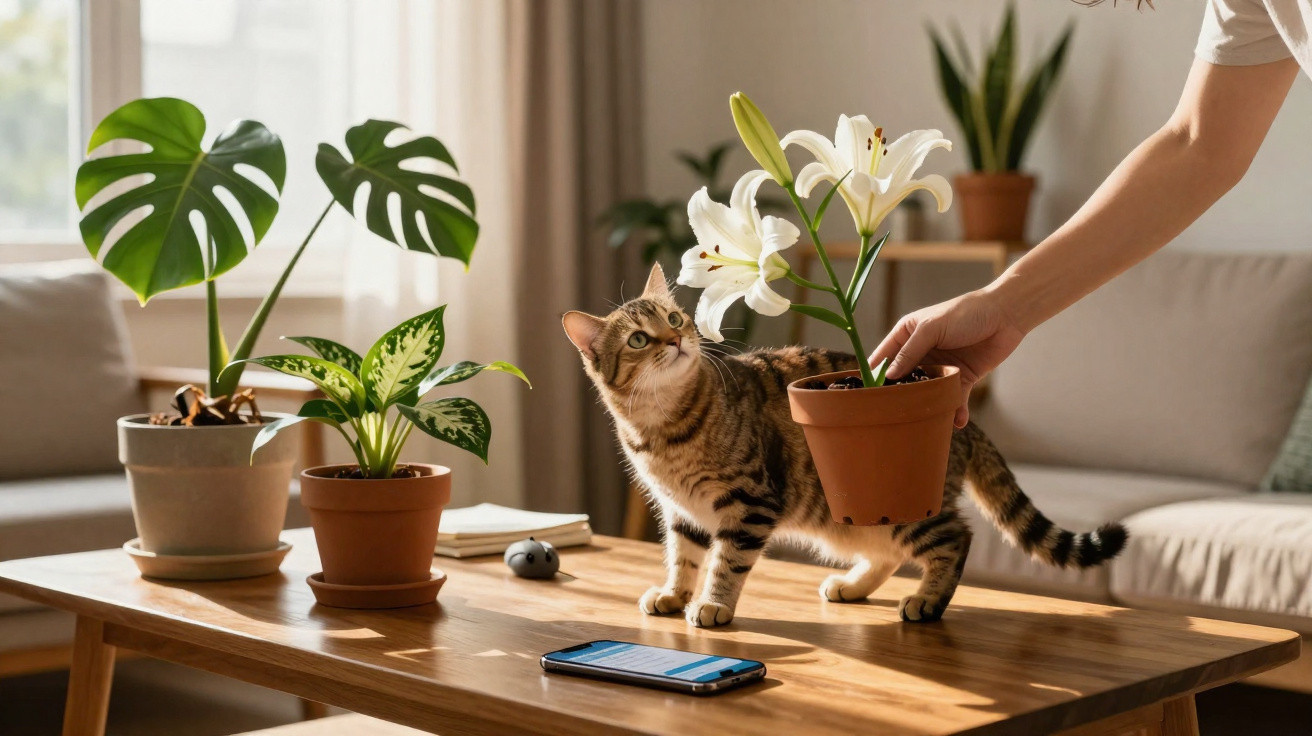
Keeping plants at home is a lovely way to add life and beauty to your surroundings. However, if you have cats, it is essential to take care: some plant species are highly toxic to felines and can lead to anything from mild irritation to serious health problems, including poisoning and even death.
If you love plants and share your home with a cat, see below for a list of the most dangerous plants for cats and how to keep your pet safe.
Plants highly toxic to cats
1. Lily (Lilium spp. and Hemerocallis spp.)
The lily is among the most toxic plants for cats. Every part of the plant is hazardous, including the water in its vase. Ingestion can result in acute kidney failure within just a few hours. Even a small lick of a leaf or pollen may be fatal.
Symptoms: vomiting, lethargy, loss of appetite, kidney failure.
2. Dumb cane (Dieffenbachia)
Commonly kept indoors, this plant contains calcium oxalate crystals which, when chewed, cause severe pain, excessive drooling and difficulty swallowing.
Symptoms: swelling of the mouth, vomiting, breathing difficulties.
3. Snake plant (Sansevieria trifasciata)
Although it is hardy and easy to look after, the snake plant is toxic to cats. If eaten, it can trigger gastrointestinal irritation, as well as drooling and vomiting.
Symptoms: nausea, diarrhoea, lethargy.
4. Flamingo flower (Anthurium)
An ornamental plant widely used in home décor, the flamingo flower also contains calcium oxalate, which causes intense burning in cats’ mouths, tongues and throats.
Symptoms: difficulty swallowing, vomiting, heavy drooling.
5. Azalea (Rhododendron spp.)
Highly valued in gardens, azaleas contain a toxin called grayanotoxin, which can be fatal to cats. Even small amounts can cause serious cardiac and neurological complications.
Symptoms: vomiting, diarrhoea, tremors, arrhythmia, coma.
6. Swiss cheese plant (Monstera deliciosa)
Popular in interior design schemes, this plant contains irritating substances that can cause oral burning, swelling and vomiting when ingested by cats.
Symptoms: mouth pain, drooling, difficulty eating.
7. Calla lily (Zantedeschia aethiopica)
Like the flamingo flower, the calla lily contains calcium oxalate, leading to severe irritation of cats’ oral lining and digestive systems.
Symptoms: pain when chewing, drooling, vomiting, difficulty swallowing.
What should you do if your cat eats a toxic plant?
If you suspect that your cat has bitten or eaten any part of a toxic plant:
- Take them to a vet immediately.
- Bring a sample of the plant or take a photograph to help with diagnosis.
- Do not induce vomiting, and avoid giving home remedies or medicines without professional advice.




Comments
No comments yet. Be the first to comment!
Leave a Comment