
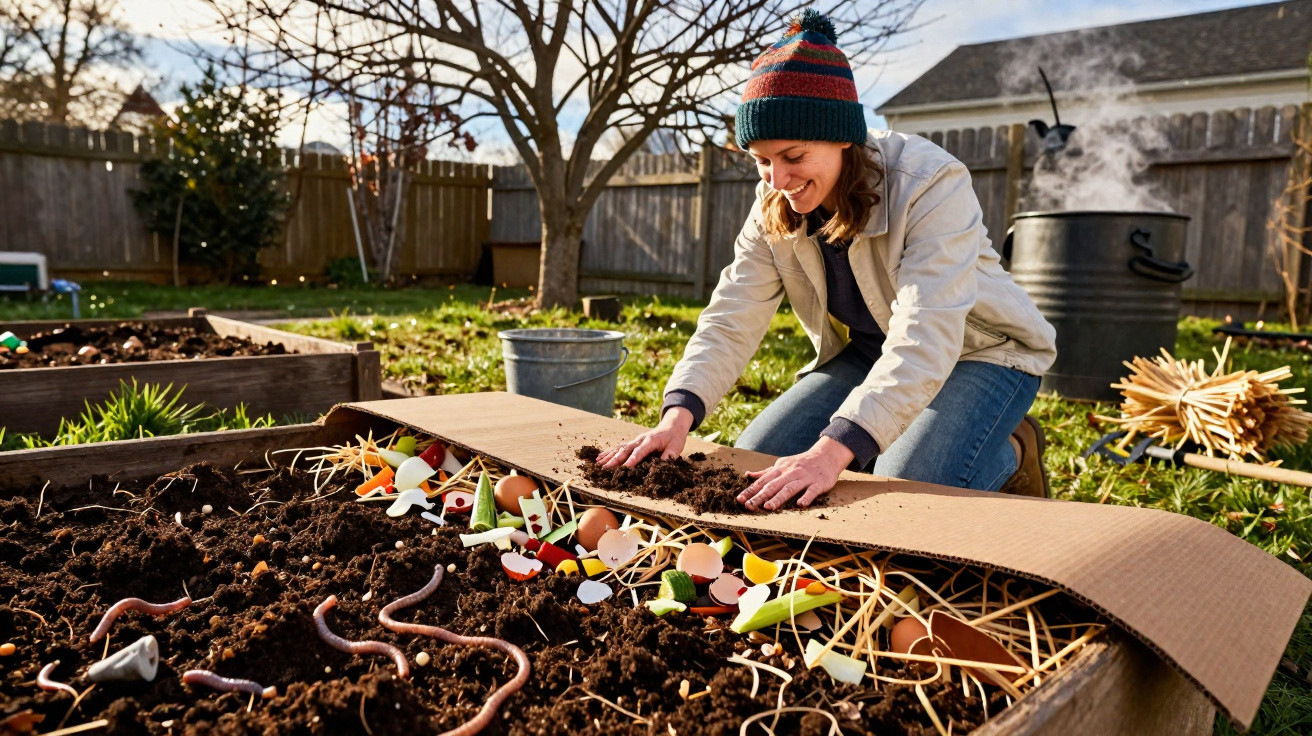
At the end of winter, when the garden still appears dormant, one straightforward approach is changing how gardeners get the ground ready for spring.
Rather than digging, turning over the soil and spending hours working with a hoe, more and more gardeners are laying ‘layers’ of organic waste straight onto a lawn or an old bed. Known as lasagna gardening, this method relies on natural decomposition and makes late winter the most strategic time of year to create a deep, fertile bed with far less physical effort.
No more backache: build the garden upwards, not downwards
The sight of a gardener bent over, turning heavy clods of soil in the cold at the end of winter, remains familiar. However, it is gradually becoming less common. Lasagna gardening works on one basic principle: instead of disturbing the soil, you build on top of it. There is no need for a mattock or a rotavator. Layers of organic matter break down over time, forming a new layer of loose, dark soil above the original surface.
“When you adopt lasagna gardening, micro-organisms and earthworms work the soil instead of your back.”
This makes a real difference for anyone with limited physical strength, back problems, advancing age or simply no desire to spend a weekend breaking up hard ground. The approach also fits the growing trend for ‘lazy gardening’: achieving good yields with less strain and more observation than brute force.
Living soil: why leaving the ground unturned makes sense
There is another good reason to move away from the old habit of digging everything over: soil life. Whenever soil is heavily turned, whole communities of bacteria, fungi, insects and earthworms are displaced. Organisms that need oxygen are pushed downwards, while species suited to deeper layers are brought to the surface, where they dry out. Earthworm tunnels are destroyed too.
With lasagna gardening, that ecosystem keeps its structure. The organic layers decay from the top down, feeding underground life without breaking apart its existing architecture.
“Soil with a crumbly structure and active life works like a sponge: it lets water infiltrate more effectively, breathes more freely and nourishes roots more efficiently.”
Woodlands and native forests offer the clearest example. No one ploughs them, yet the ground is covered with humus, decomposing leaves and immense biodiversity. Lasagna gardening aims to reproduce that exact process on a smaller scale, whether in a back garden or a vegetable patch.
Lasagna gardening recipe: layers that feed the soil, not the table
The name ‘lasagna’ is no accident. The technique consists of placing different materials in alternating layers. In simple terms, it works like this:
- first layer: cardboard or brown paper placed directly over grass or bare soil
- next layer: ‘brown’ material rich in carbon, such as dry leaves, straw or untreated sawdust
- ‘green’ layer: damp, nitrogen-rich material, including vegetable scraps, coffee grounds or freshly cut grass
- repeat brown and green layers until the desired height is reached
- final cover: a thin layer of soil, finished compost or even shredded leaves
The essential point is balancing carbon with nitrogen. ‘Brown’ materials provide structure, air circulation and a long-term food source. ‘Green’ materials bring quick energy and moisture, speeding up bacterial activity.
Slightly compressed by rainfall and their own weight, these layers begin a process of ‘cold composting’. Temperatures rise only modestly, but microbial communities keep working steadily. Within a few weeks, the layers start turning into dark, pleasant-smelling soil that is rich in organic matter.
Household waste becomes fertiliser: an open-air mini recycling station
Waste is another reason the technique has become so popular. Materials that once went into rubbish bags or garden-waste collections can instead become a useful resource.
| Common waste material | Use in lasagna gardening |
|---|---|
| Plain brown cardboard boxes without printing | First layer, a weed barrier and carbon-rich base |
| Dry leaves from the garden | ‘Brown’ layers that improve structure and aeration |
| Vegetable and fruit peelings | ‘Green’ layers and a quick nitrogen source |
| Coffee grounds | Adds nitrogen and attracts earthworms |
| Freshly cut grass | Very nitrogen-rich and should be applied in a thin layer |
By building a lasagna bed, gardeners make fewer trips to the recycling centre, save fuel and plastic sacks, and keep large amounts of organic material out of unsuitable waste streams. The vegetable garden becomes a small integrated composting station, without the need to turn a compost bin, fork over a heap or wait months for material to rot down in a forgotten corner.
Why the end of winter is the ideal time
Many people ask why the end of winter has become the preferred period for starting lasagna gardening. The answer comes down to three things: time, weather and the planting calendar.
First, decomposition takes several weeks. Creating the layers in February or early March provides a useful window before the first spring planting begins in March and April. Even in colder areas, that period gives the materials time to settle, shrink in volume and form an even growing bed.
Second comes moisture. Late-winter rain and frequent drizzle act as a free irrigation system. The cardboard becomes soaked and soft, then is quickly colonised by fungi and bacteria. If the same lasagna bed were assembled at the height of a dry summer, it would need constant watering to prevent the process from stopping.
“At the end of winter, the sky takes on the hard work of watering while the gardener watches the quiet transformation beneath the layers.”
Finally, there is the gardening calendar. By moving this work into the garden’s quieter period, the grower has more freedom in spring to sow, transplant young plants and manage crops. Preparation no longer becomes a last-minute rush.
Earthworms at work: the ‘invisible team’ behind the magic
Once the lasagna bed has been assembled, the best approach is to step back and let the soil do its work. The abundance of food draws in earthworms and many other small organisms. They rise to feed on fresh material before moving down again, creating vertical channels that act as genuine nutrient lifts.
These tunnels greatly increase rainwater infiltration and gas exchange between the soil and the atmosphere. Earthworm castings, known as humus, are exceptionally rich in plant-available nutrients, especially nitrogen, phosphorus and micronutrients.
The result is a bed that retains moisture more effectively through summer, requires less watering and reacts more steadily to climatic extremes.
Fewer weeds, more time to tend plants
One of the most practical benefits winning gardeners over is weed control. The first cardboard layer acts as an opaque lid: without light, most seeds and roots already present in the ground cannot sprout.
By the time that cardboard breaks down, the old vegetation beneath it will have lost its vigour. Anything that later emerges is usually weaker and easier to pull out. For anyone tired of spending hours weeding, this can transform the routine in the vegetable patch.
Height is another advantage. Since the finished structure sits several centimetres above ground level, it warms more quickly during the first sunny days of spring. This can bring forward by several days or weeks the point at which tomatoes, peppers and other warmth-loving vegetables can be planted.
How to plant into a finished lasagna bed: a simple step-by-step guide
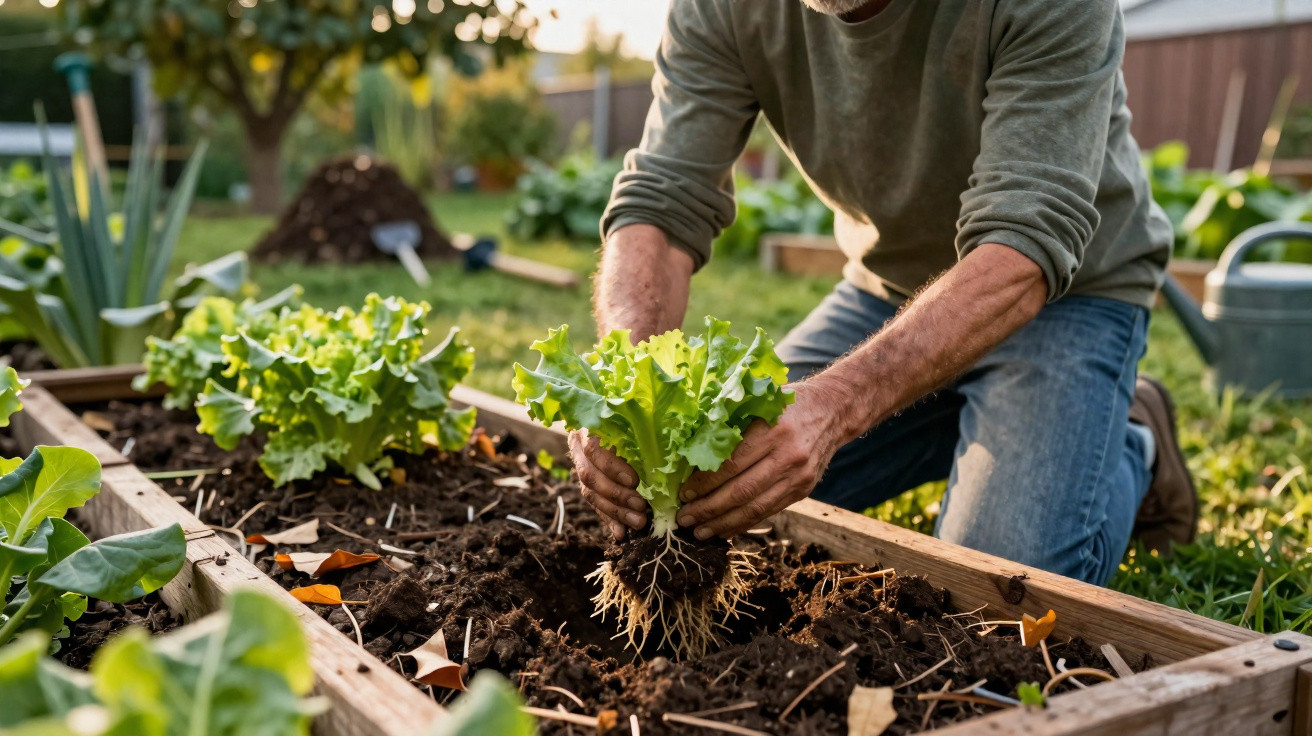
When the material looks more uniform, darker and less clearly divided into layers, the bed is ready to use. There is no need to dig. The method is straightforward:
- make a small hole with your hands or a hand trowel, moving aside the partly decomposed material
- place the young plant in the hole with its root ball intact
- fill around it using the lasagna-bed material itself
- water carefully for the first few days
For direct sowing, such as carrots or rocket, it is worth spreading a thin top layer of sieved soil or mature compost to create a more even seedbed for small seeds. Over time, roots grow through every layer and reach the original soil, which has already been enriched by the process.
A few points gardeners need to consider
Although the method is accessible, a few precautions help avoid disappointment. Plastic-coated cardboard, boxes covered in adhesive tape or brightly coloured printing are unsuitable for a lasagna bed. Plain brown boxes without glossy ink are best. Meat scraps, fats and dairy products should also be avoided, as they may attract unwanted animals and create unpleasant smells.
Gardeners in very wet areas should keep an eye on drainage. A bed that remains saturated can become anaerobic, smell rotten and decompose slowly. The answer is to create thinner layers, add fibrous materials such as shredded twigs and, where necessary, make shallow channels at the sides to carry excess water away.
Useful concepts: what surface composting means
A term often associated with lasagna gardening is ‘surface composting’, also called sheet composting. The principle is simple: instead of gathering all organic material in one heap or enclosed compost bin, it is spread in layers directly where plants will grow.
This approach removes one stage from the traditional sequence: compost first, then carry the finished compost to the vegetable patch. Here, the bed serves both as the compost heap and the planting area, with everything happening in the same place.
A practical scenario: a new vegetable patch without removing the lawn
Imagine a garden with old, compacted grass full of nutsedge. Under the traditional method, the answer would be to remove everything, weed it, dig deeply and sieve the soil. Lasagna gardening takes a different route.
The gardener cuts the grass as short as possible, covers it completely with damp cardboard, then starts adding layers of dry leaves, kitchen scraps, more leaves and a little soil, continuing until the bed reaches around 25 or 30 centimetres high. After that, nature is left to do the work.
A few months later, the grass underneath will be dead and decomposed. The roots of the next tomato or courgette plants will grow through what remains and find deep, loose soil filled with tunnels made by earthworms that arrived to take advantage of the feast.
This type of situation is becoming increasingly common in urban gardens, helping explain why so many gardeners are trying the method at the end of winter. It suits busy schedules, makes use of household waste and prepares the vegetable patch precisely when the landscape outside still appears to be at a standstill.




Comments
No comments yet. Be the first to comment!
Leave a Comment