
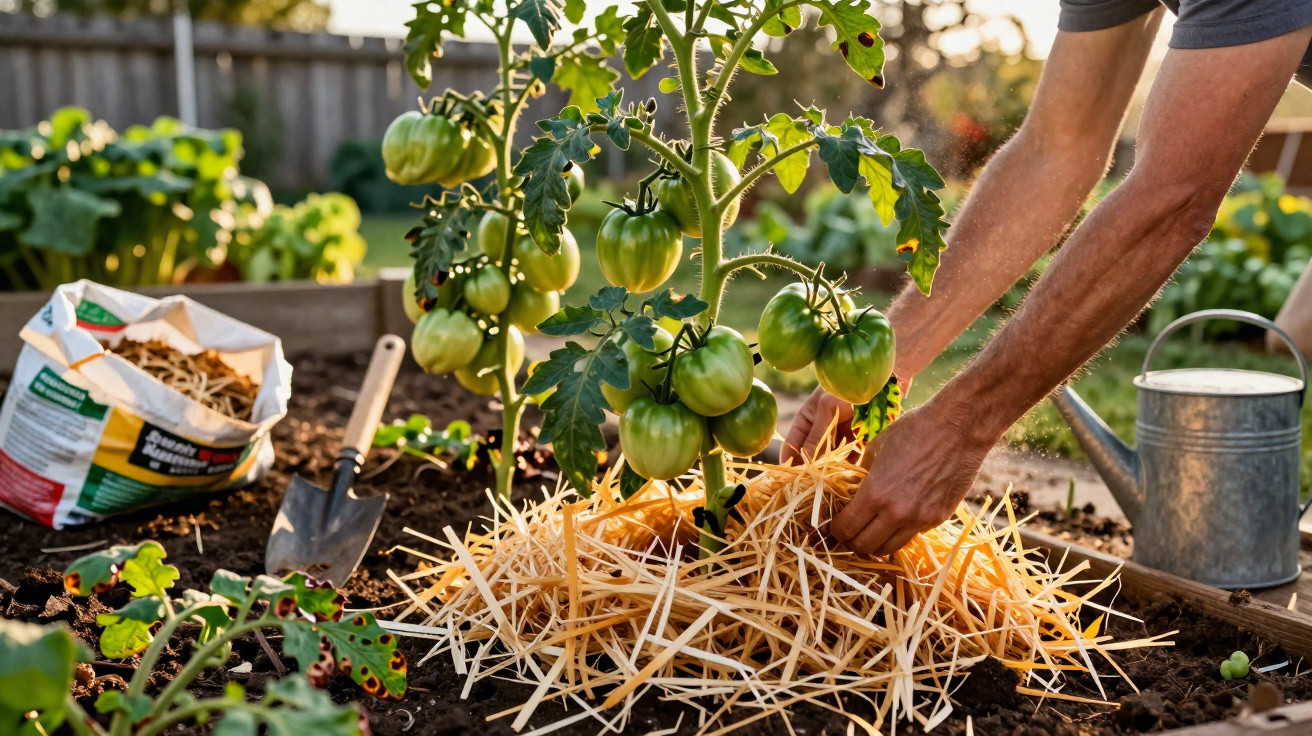
Alternating rain, cool nights and overgenerous watering create ideal conditions for blight, which can affect a plant within just a few days. However, you can greatly lower the risk with one simple step carried out right at the base of every tomato plant.
The threat does not always begin with an infected leaf blown in by the wind. More often, it starts in the soil, when raindrops splash damp earth onto the lowest leaves. Placing suitable protection around the stem helps interrupt this process before brown patches spread to your fruit.
Why soil can infect your tomatoes so quickly
Blight thrives in lasting dampness and the mild temperatures of spring. Following heavy rain or forceful watering, splashes can carry soil particles onto the lower foliage. If that soil contains spores, they have an ideal route into the plant.
The earliest symptoms are often easy to miss: a small yellowish area, a greyish patch or a leaf turning brown close to the ground. The damage then spreads, stems weaken and the tomatoes themselves may develop dark, firm marks. Waiting until the fruit is affected often means losing a large share of the crop.
Mulching creates a barrier against rain splash
Mulching means covering the soil around a plant with a natural or horticultural material. This layer cushions falling droplets, preventing muddy soil from splashing up onto the leaves. It is an unobtrusive measure, yet it blocks one of the main routes of contamination from the ground.
This protective covering also keeps the soil cooler during hot spells and slows down drying between watering sessions. Your tomatoes consequently receive more even moisture, instead of enduring extended dry periods followed by too much water. Such consistency reduces stress on the plants and may lower the risk of blossom end rot on the fruit.
Which material should you place around your tomato plants?
Clean straw remains a practical, light option that is easy to spread. Thoroughly dry fallen leaves, hay with few seeds, ramial wood chips or dried grass clippings can work as well. However, avoid diseased plant matter, already mouldy leftovers and fresh grass clippings laid in a thick layer, as they ferment and stick to the soil.
For effective protection, apply a layer 8 to 10 centimetres deep over a radius of roughly 30 centimetres around each plant. Never press the mulch against the stem: leave a clear 5-centimetre ring so the crown can breathe. This small precaution prevents constant dampness at the base of the plant, a detail that can make all the difference.
- Wait until the soil has warmed up before applying a thick layer.
- Keep a ring of bare soil around every stem.
- Water slowly beneath the mulch, without wetting the leaves.
- Promptly remove any spotted leaves that have fallen onto the ground.
- Watch for slugs, which may shelter beneath the covering.
The right timing prevents your harvest from being delayed
Mulching too early can have the opposite effect to the one intended. At the start of spring, a thick covering can sometimes keep the soil too cold, slowing root establishment and delaying the first tomatoes. Wait until the soil reaches around 12 °C and the plants have had two to three weeks to settle in.
In cooler regions or after a rainy spell, begin with a light layer, then make it thicker once nights become less cold. This approach protects the soil without trapping spring chill around the roots. Should a heatwave arrive, your mulch will already be in place to retain moisture.
Steps that strengthen protection against blight
Mulching does not replace the other essential habits. Space tomato plants sufficiently to allow air to move between them, grow them in full sun and tie the stems to sturdy supports. Foliage that dries quickly after dew is more resilient than a dense, damp mass of leaves.
Remove the lowest leaves when they touch the mulch or soil, but do not strip the plant abruptly. Water preferably in the morning, directly at the base, using a hose or drip irrigation. If you spot suspicious marks, remove the affected parts and do not put them in the compost: this vigilance can save the plants that remain healthy.
With a properly applied protective layer, targeted watering and regular monitoring, your tomatoes will have an environment far less favourable to blight. You cannot control the rain, but you can control splashing, moisture around the base and the condition of the foliage. These are exactly the simple measures that can protect your future red fruit when you had already thought the harvest was lost.





Comments
No comments yet. Be the first to comment!
Leave a Comment