
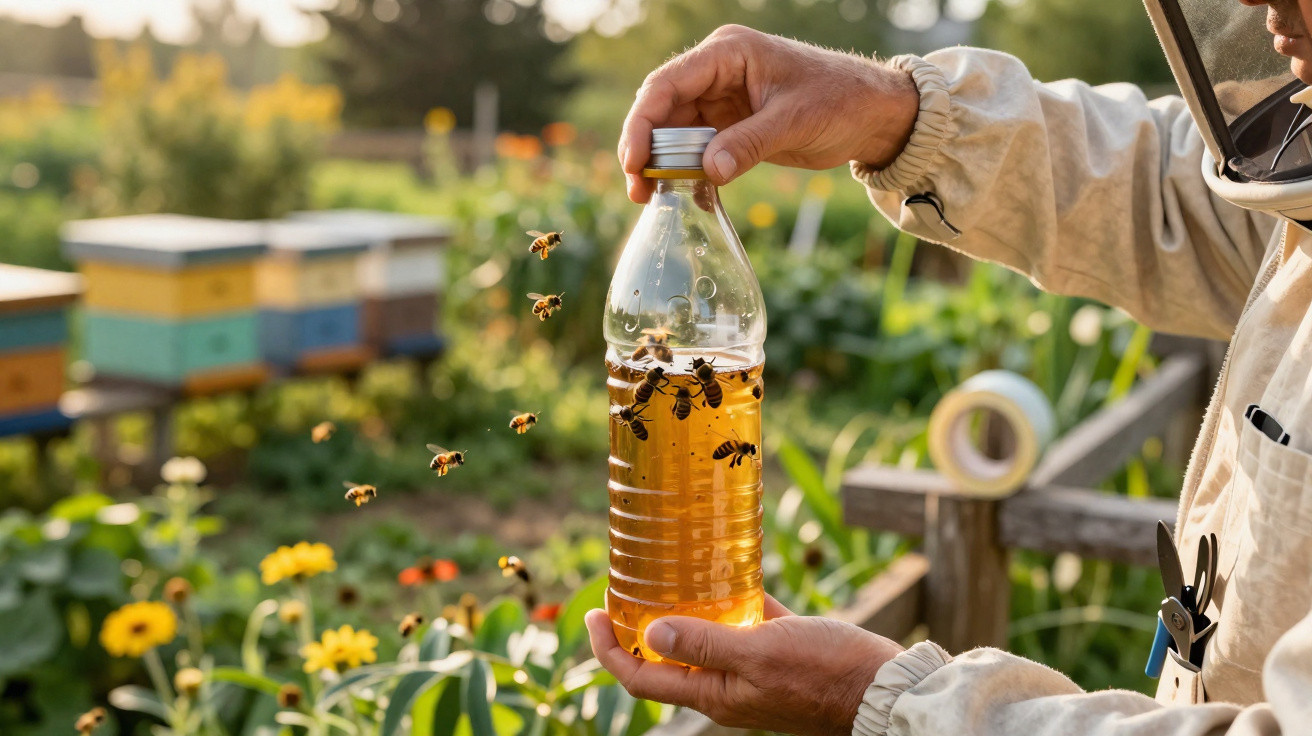
More and more beekeepers and amateur gardeners are raising the alarm: the Asian hornet is spreading rapidly and placing considerable pressure on both bee colonies and people. A simple trick using an empty plastic bottle can significantly reduce the impact of this invasive species - provided it is built correctly and used at the right time.
Why the Asian hornet is so dangerous
In Europe, the Asian hornet is classified as an invasive species. It particularly preys on honey bees, weakening entire colonies and, in turn, reducing pollination in fruit and vegetable gardens. One large nest may contain several thousand insects.
“Those who manage to catch the queens in spring can often prevent an entire summer nest with thousands of workers.”
This is precisely where the simple trap method comes in. It targets the period when queens are travelling alone after winter dormancy and looking to establish a new colony. During this short window, every individual hornet caught can have a substantial effect.
Turning waste into an Asian hornet trap
The basis is remarkably simple: an empty plastic bottle of the type used for water or fizzy drinks. With only a few quick steps, something that would normally be thrown away becomes a trap for Asian hornets, requiring neither specialist equipment nor a large budget.
How the bottle trap works
The method relies on a straightforward funnel effect. Cut off the top section of the bottle, turn it upside down and place it back into the lower part as an entry funnel. Drawn by the scent of the bait, the hornet enters the bottle but later struggles to locate the narrow way out.
- The entrance appears wide and inviting.
- Once inside, the insects lose their sense of direction.
- The small opening leading back outside is difficult to find.
Because of its relatively large wingspan and somewhat clumsy flight, the Asian hornet often fails to find its way back out. It therefore remains inside the trap.
The bait: a mixture that attracts hornets while deterring bees
To avoid attracting every type of beneficial insect, a particular mixture has proved useful. It is aimed mainly at hornets and wasps, while honey bees generally keep their distance.
The recommended mixture consists of:
- one third dark beer;
- one third white wine;
- one third sweet syrup, such as blackcurrant, raspberry or grenadine.
White wine plays a key role because its smell tends to deter bees. This makes the trap more selective for hornets. Small escape holes, around 5 millimetres in diameter, should also be drilled into the bottle wall. Smaller insects can use these openings to escape rather than being caught unnecessarily.
Step by step: build a trap in five minutes
Only a few items are needed, most of which are found in a typical household:
- a plastic bottle with a capacity of 1.5 to 2 litres;
- a craft knife or sharp knife;
- a stapler or strong adhesive tape;
- some sturdy string for hanging it up.
- Neatly cut off the upper third of the bottle.
- Turn this top section upside down so that the neck points downwards.
- Insert it into the lower section and secure it with staples or adhesive tape.
- Drill two or three holes of around 1 centimetre in the sides of the lower section; these are the main entrances.
- Make a row of small holes, roughly 5 millimetres wide, around the bottle neck on the inside to provide escape routes for small insects.
- Add the bait, close the bottle and hang it using the string.
With a little practice, the trap takes only a few minutes to make. Costs are virtually nil, as it mainly uses materials already at hand.
The right location and time for the trap
Success depends entirely on both placement and timing. Hanging traps indiscriminately throughout the summer is more likely to harm native insect life.
The best position in the garden
The trap should be:
- hung 1 to 2 metres above the ground;
- kept in a partly shaded or shaded spot;
- positioned away from routes used by children or pets;
- clearly visible so that it can be checked regularly.
Suitable places include trees along the edge of the property, garden sheds or posts some distance from a beehive.
A short window with a major impact
The period from mid-February to around the end of May is considered particularly effective. At this time, overwintering queens leave their hiding places and search for a location for their first small spring nest.
“Anyone trapping during this period mainly catches queens flying alone - preventing entire colonies before they can develop.”
The situation changes in late spring and summer. More Asian hornet workers are then active, but so are numerous native wasps and European hornets. Traps left out too late catch a disproportionate number of beneficial species.
Experts therefore advise removing most traps around 1 May, or at least reducing their number substantially.
Handling trapped hornets and discovered nests
Some care is required when disposing of a trap. Asian hornets can deliver painful stings, and anyone with an allergy is at particular risk.
- Put the sealed bottle in the freezer for around 24 hours.
- Dispose of the contents afterwards, for example with general waste.
- If required, rinse the bottle, refill it with fresh bait and hang it up again.
Anyone who finds a nest - whether a small “primary nest” in spring or, later on, a large spherical nest in a tree or on a building - should not attempt to deal with it themselves. The insects defend their nest aggressively, and the number of hornets inside is often underestimated.
The recommended approach is to report the find to the relevant local authority or hire a certified pest controller. Many areas already maintain reporting registers to document the species’ spread.
Protect biodiversity: use traps carefully
The Asian hornet is not the only insect attracted to sweet bait. Wasps, flies and beetles in particular may also find the scent appealing. Anyone wishing to avoid turning their garden into an insect trap should limit the number of traps used and keep the deployment period as short as possible.
The 5-millimetre escape holes help beneficial small insects get out again. Even so, every trap interferes with the natural balance. Beekeeping and agricultural associations therefore recommend targeted, time-limited action rather than permanent mass trapping throughout the summer.
Why the effort is worthwhile for beekeepers and amateur gardeners
For beekeepers, more than a little honey is at stake. When a bee colony is weakened by constant pressure from Asian hornets, it becomes more vulnerable to disease and is less likely to survive the winter well. Amateur gardeners also face direct consequences: less pollination and poorer crops of fruit, berries and vegetables.
Just a few homemade bottle traps around an apiary or a heavily flowering garden can noticeably reduce pressure during summer. Ideally, neighbours work together to cover a larger area; this lowers the likelihood of large nests becoming established in the first place.
Practical tips for everyday garden use
If you are unsure whether an insect is an Asian hornet or a European hornet, try to take a photograph and compare it with official identification guides. The Asian species usually appears darker, with distinct yellow-orange markings on its abdomen and legs.
It is also helpful to establish a simple routine:
- Check the trap and bait once a week.
- During periods of intense heat, replace the bait every few days because it spoils faster.
- From the beginning of May, regularly assess whether the trap is still worthwhile or should be removed.
Where children live in the household, it is best to explain early on that they must not touch the trap and should keep a reasonable distance. Clearly visible, firmly secured hanging points reduce the risk of the container being accidentally pulled down.
The plastic bottle method is not a replacement for a comprehensive strategy against the Asian hornet, but it can form one part of it. Combined with nest-reporting systems, vigilance in the garden and better awareness of invasive species, it gradually creates an effective protective shield - not only for bees, but for the entire garden ecosystem.




Comments
No comments yet. Be the first to comment!
Leave a Comment