
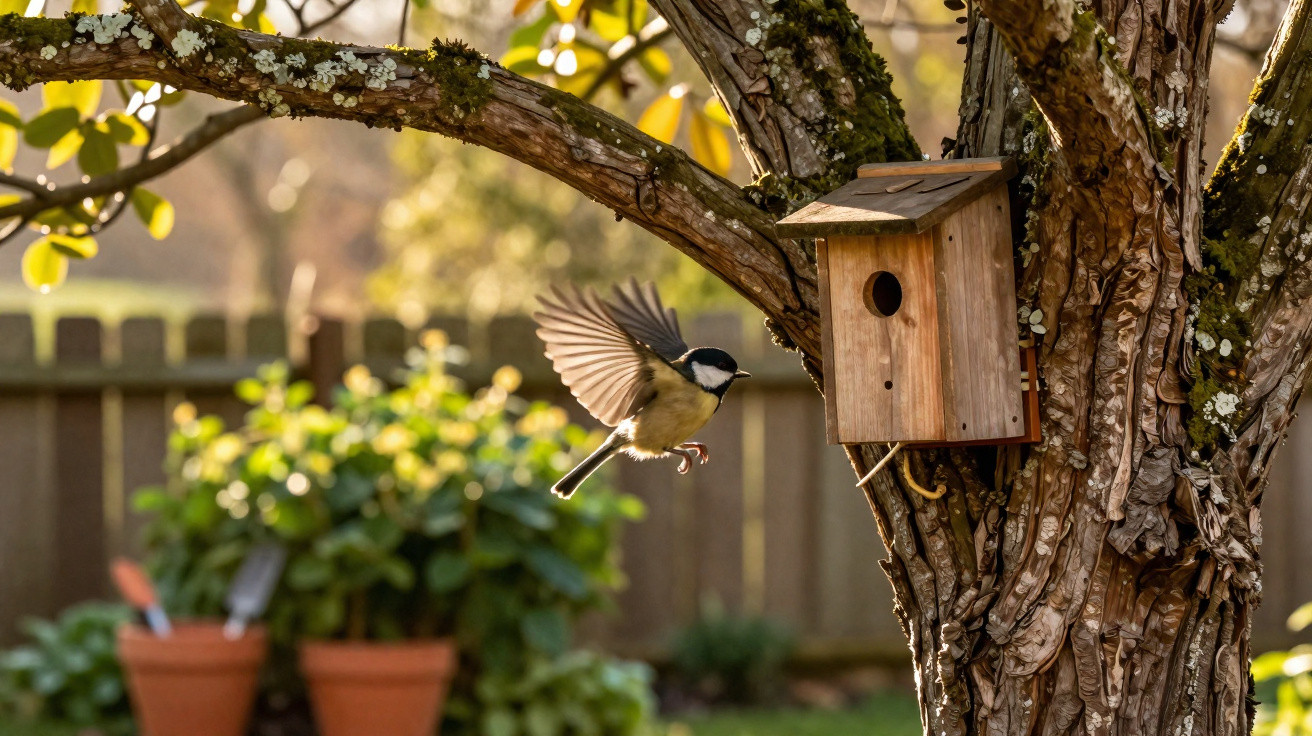
Most gardeners can spot a Great Tit or a Blue Tit at a glance, yet a close relative is often missed: the Marsh Tit. If you understand what it likes and either plant the right tree or simply keep the right one, you can watch this surprisingly confiding little wild bird almost from the patio.
The Marsh Tit: a small bird with a big personality
The Marsh Tit is one of Europe’s smaller tit species. It grows to about 12 cm in length and weighs little more than an envelope. Its plumage can look understated at first: a grey-brown back, pale underside, a black cap and white cheeks.
That very simplicity is why it is often mistaken for a Willow Tit in day-to-day sightings - or overlooked altogether. If you pause and look more closely, its distinct presence quickly becomes apparent.
The Marsh Tit is considered inquisitive, quick through the branches and, with a bit of luck, remarkably unafraid of people.
It likes to dart through dense foliage, inspecting each twig, pecking into bark crevices and then vanishing again a moment later. For anyone who enjoys sitting by the window or out on the patio, it can be a fascinating regular visitor, because - unlike many other species - it often shows itself at eye level.
Why the right tree in your garden is crucial
The Marsh Tit is a classic cavity nester. It relies on older trees with natural holes; without those features, your garden is only ever a place it passes through. So it isn’t enough to have trees - what matters is which ones you have, and their condition.
Older broadleaf trees: the insider’s choice
Mature broadleaf trees with rotten sections or broken limbs are especially appealing. Typical species that can attract Marsh Tits include:
- Old fruit trees (apple, pear, cherry, plum) – ideal in traditional orchards and wildlife-friendly gardens
- Beech and oak – particularly valuable when they have a bit of “character”, such as cracks, cavities and deadwood
- Willow species – especially in damper spots, where wood hollows out more quickly
- Maple and lime – when woodpeckers or decay have already created voids
For Marsh Tits, the priority is not the neatest crown, but what’s inside: natural hollows, fissures or old woodpecker holes that they can line to suit their needs.
Anyone who removes every old tree - or even a slightly decaying one - takes away the most important part of the Marsh Tit’s habitat.
The ideal tree from a Marsh Tit’s point of view
What people may see as a “tree that needs tidying up” because it has deadwood is, to a Marsh Tit, prime real estate. A particularly attractive tree often has:
- A trunk or substantial limbs with cracks, knotholes or woodpecker holes
- A quiet setting, not right next to a heavily trafficked road
- Nearby hedges, shrubs or additional planting for cover
- As little constant night-time lighting as possible in the immediate area
If you have the room, it’s worth deliberately keeping at least one old fruit tree or an older broadleaf tree - even if it doesn’t look “perfect”. Often, that single tree is enough to encourage a Marsh Tit to settle for good.
How the Marsh Tit sets up its nest
This species does not build an open nest on branches; it uses existing cavities and adapts them. It carefully widens smaller crevices, clears out old hollows, and then neatly lines the interior.
Typical nesting materials include:
- Moss and fine plant fibres as a base layer
- Animal hair, for example from dogs, cats or wild mammals
- Feathers from other birds for the warm inner lining
This talent for “interior renovation” makes the bird highly adaptable. A plain-looking knot hole can suddenly become the ideal breeding site. If, during garden jobs, you don’t remove every hollow limb, you give it a genuine chance.
If there’s no old tree: helping out with nest boxes
In many modern gardens, mature trees are scarce. In that case, a well-chosen nest box can take the place of a natural cavity. A standard tit box works for Marsh Tits, as long as the entrance hole is right.
What the right nest box looks like
| Feature | Recommendation for Marsh Tit |
|---|---|
| Hole diameter | approx. 28 mm |
| Box height | around 20–25 cm internal height |
| Material | wood, woodcrete, well insulated |
| Orientation | as sheltered from wind as possible, not due south |
| Mounting height | at least 1.8–2 metres above the ground |
The box should hang firmly, not swing in the wind, and be as hard as possible for cats or martens to reach. A trunk or sturdy branch makes an ideal fixing point.
A nest box can replace a cavity - but only if the location, peace and security are right.
Location tricks that significantly improve your chances
- Put the box near bushes or hedges so fledglings can find cover once they leave the nest.
- Avoid constant disturbance close by: no barbecue area directly beneath the box, and no harsh lighting.
- Give the box a quick clean in late autumn so parasites don’t get established.
More than a pretty sight: its role in the garden ecosystem
Marsh Tits mainly eat insects, spiders and larvae, and will also take seeds in winter. That makes them a practical helper in the garden, as they reduce many pest insects.
In particular, in fruit-growing gardens, a stable tit population can help prevent caterpillars and aphids from getting out of hand. As a result, chemical sprays can often be reduced - or avoided altogether.
Making space for Marsh Tits doesn’t just encourage a charming garden visitor; it also helps build a tougher, more resilient ecosystem.
Legal protection and respectful behaviour
Wild native birds are protected by law. Nests must not be destroyed, breeding birds must not be disturbed or captured, and even well-intentioned attempts to “tame” them tend to do more harm than good.
A wildlife-friendly garden provides food and shelter without making animals dependent on people. Feeding stations can be useful, but the Marsh Tit will decide for itself whether to use them or to keep searching the leaves for insects.
Practical additions for a Marsh Tit-friendly garden
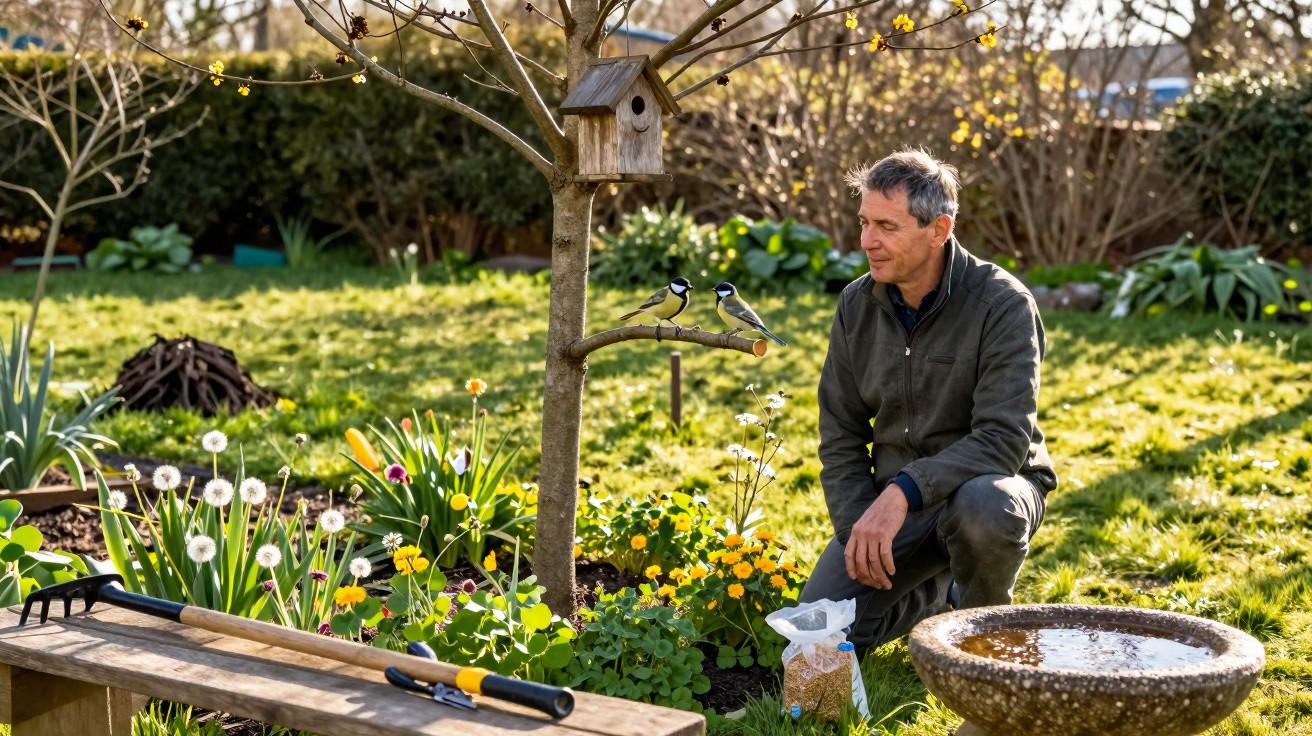
Alongside the right tree and, if needed, a nest box, a few extra steps can help the species feel at home long-term:
- Hedges instead of fencing: Mixed hedges provide cover, support insects and often offer nesting opportunities too.
- Leave some leaves: Under shrubs, a thin layer of leaf litter can stay - it teems with small creatures.
- No year-round heavy cutting back: Prune trees and shrubs only at permitted times and with restraint.
- Less chemistry: Pesticides and insecticides remove the Marsh Tit’s food supply.
If you’re starting from scratch, begin by planting a sturdy broadleaf tree, such as an apple or pear. These species provide fruit for people, blossom for insects and, as they mature, cavities for birds. At the same time, a nest box can bring earlier visitors in the first few years.
Many gardeners only gradually notice how strongly a single old tree can change bird activity. First come the tits, then woodpeckers, and later perhaps nuthatches or bats. The Marsh Tit is often among the first to inspect what’s on offer - and if it stays, that’s a very good sign of your garden’s quality.


Comments
No comments yet. Be the first to comment!
Leave a Comment