
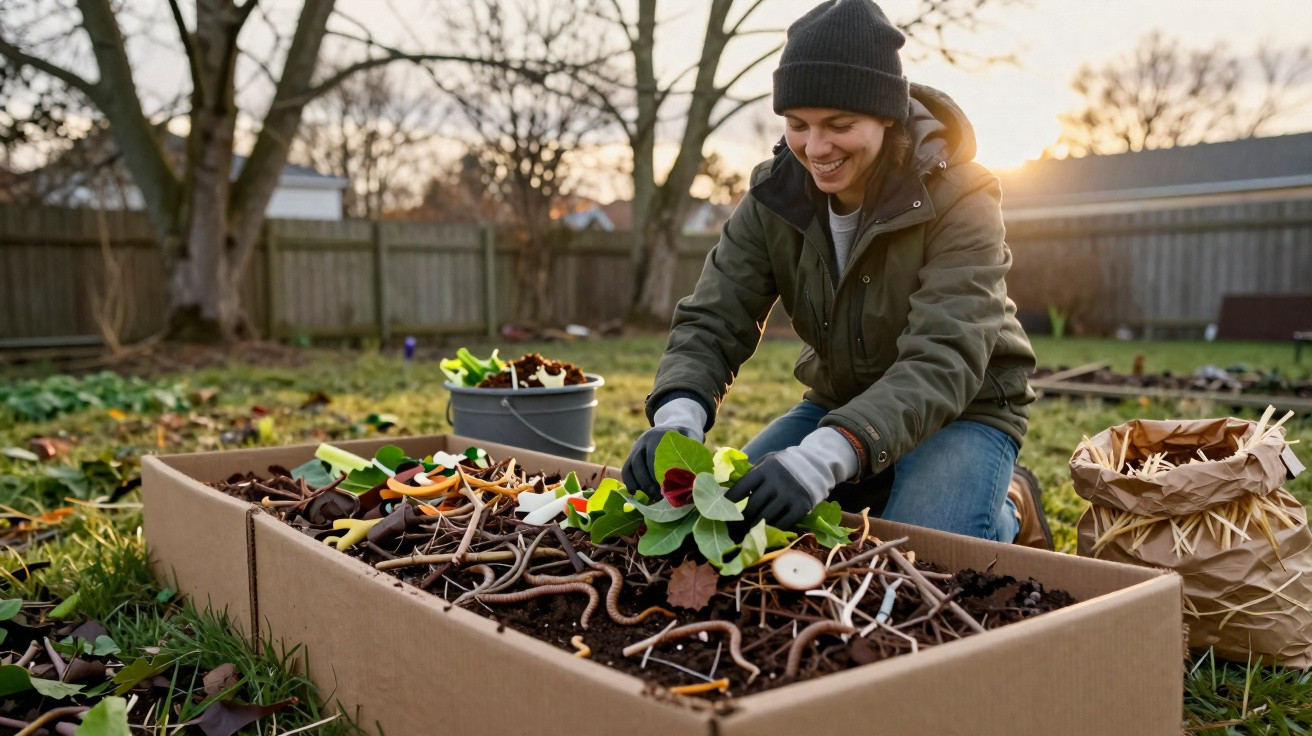
While garden beds often look bleak and rock-hard in January, the mere thought of turning the soil for spring can be enough to make you break a sweat. This is exactly when an alternative approach comes into its own: a method that needs no digging, no powered tools and hardly any muscle-yet can turn your ground into a lively, friable haven for vegetables within a few months.
What “lasagne gardening” is really about
It may sound like something from the kitchen, but the term comes from permaculture. With lasagne gardening, you build up several layers of organic material directly on top of the existing ground. Think of it like an oven bake: a base layer, then alternating “sheets” and “fillings”-only made from cardboard, plant waste, leaves and similar materials.
"Instead of forcing the soil, you build a living compost layer above it, which gradually turns into fertile earth."
The thinking is simple: you don’t feed the plants immediately-you feed the soil first. Microorganisms, fungi and soil-dwelling creatures do the heavy lifting. They break the layers down slowly, right where roots will later grow. Unlike a traditional compost heap, the transformation happens in the bed itself.
This principle mirrors what happens in woodland: leaves, twigs and dead plants accumulate and, over time, form a thick layer of humus. Nobody digs it over, yet growth is abundant. Lasagne gardening brings that natural process into the home garden-just sped up a little.
Why winter is the ideal time to start
January and February can feel pointless from a gardening perspective, but for this method they are genuinely valuable. The thick layers need time to settle and begin rotting down. Cold, rain, snow and then the thaw all help by keeping everything moist and supporting decomposition.
If you start now, by April or May you’ll already have a noticeably changed bed: the stack will have sunk, the original materials will be hard to recognise, and soil life will have been busy for weeks. Heavy clay or a dull patch of lawn can become a surprisingly loose, crumbly planting area.
Cardboard as the secret weapon: stopping weeds without a sore back
The base of the lasagne is humble but crucial: a layer of plain, brown, uncoated cardboard laid straight onto the ground. Whether you’re covering grass, weeds or bare soil, this layer acts as a barrier against competing plants.
"The cardboard blocks light from weeds, adds carbon and attracts earthworms-three benefits in a single step."
Points to get right:
- Use only brown corrugated cardboard with no plastic coating
- Remove all tape, staples and labels completely
- Overlap pieces generously (at least 10–15 cm)
- Water thoroughly afterwards until the cardboard is properly soaked
In the darkness, most grasses and perennial weeds beneath the layer die off and rot where they sit. The cardboard itself contributes plenty of carbon, softens, becomes permeable and turns into a favourite food source for earthworms. They then travel up through it and later help mix the lasagne layers.
Balancing “brown” and “green”: how to layer it properly
Once the cardboard has been watered, the real build begins. What matters is the relationship between carbon-rich “brown” materials and nitrogen-rich “green” materials. Ignore that balance and you’ll either end up with a slimy, smelly mess or a dry, lifeless pile that barely breaks down.
Suitable “brown” materials (high carbon)
- Dry leaves (saved from autumn)
- Straw or hay
- Woodchip, finely shredded prunings
- A little sawdust or untreated paper
- Dried plant stems
Suitable “green” materials (high nitrogen)
- Vegetable and fruit kitchen peelings
- Coffee grounds and tea bags (without plastic mesh)
- Fresh grass clippings (if available)
- Fresh or already-composted farmyard manure
- Young, green plant trimmings
A simple rule of thumb is two parts “brown” to one part “green” by volume. In practice, that looks like this:
- Start with a coarse layer of twigs or straw on top of the cardboard to create air pockets.
- Add a “green” layer (for example, kitchen scraps or manure).
- Follow with a thicker “brown” layer (leaves, straw).
- Repeat this sequence several times until you’ve built a mound around 30–50 cm high.
That height can seem excessive at first, but the pile settles dramatically. By spring, the lasagne often reduces by about half. Lightly moisten the layers now and then so the microorganisms can keep working.
From food-waste caddy to veg bed: cutting rubbish and saving money
Starting lasagne gardening in winter effectively gives you a small, very useful “deposit site” for organic material in the garden. Many things that would otherwise go into the general waste or food-waste bin become valuable building blocks for future harvests.
Typical winter leftovers that work well:
- Peelings from carrots, potatoes and beetroot
- Trimmings from cabbage, squash and leeks
- Apple and pear cores, small amounts of citrus peel
- Dead balcony plants and old potting compost
- Cut-back perennials and raked-up leaves
"What used to be seen as waste becomes a nutrient bomb for tomatoes, courgettes and berry bushes."
Old potting compost, in particular, deserves a second life: it still contains minerals and, more importantly, plenty of microorganisms that help kick-start decomposition in the lasagne. This reduces the amount you throw away, avoids composting charges or trips to the recycling centre, and also cuts down how much bought-in soil and fertiliser you’ll need in spring.
The soil “workforce” gets on with it: earthworms as a free service
Once your lasagne is built and well watered, the hard work is done. From then on, soil life takes over. Earthworms, woodlice, springtails, bacteria and fungi move into the layers because they find both food and protection from the cold.
Earthworms create tunnels between the original ground and the new layers, blend the material and leave behind nutrient-rich castings. These small crumbly deposits-often described as worm humus mounds-are considered higher quality than many shop-bought fertilisers. At the same time, the tunnels improve aeration and water movement through the bed.
As the materials break down, a little warmth develops inside the lasagne. On frosty nights, those few degrees can keep soil life active. In spring, the bed often warms faster than the surrounding ground, which can allow earlier planting.
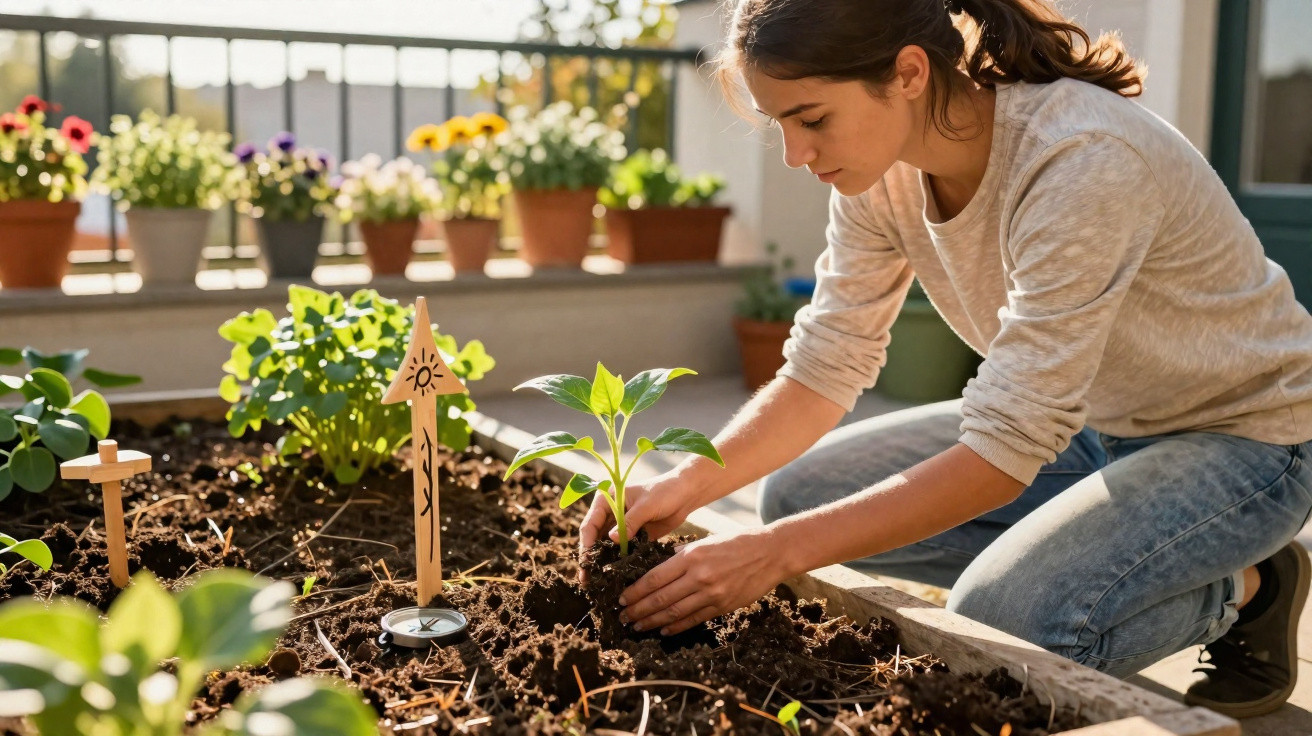
Get going in spring: planting with no digging
After a few months, the change is obvious. What started as recognisable layers of leaves, straw and kitchen scraps becomes a dark, crumbly layer with a pleasant woodland scent. The surface can be moved easily by hand.
"Instead of sweaty digging, in spring you simply push your hands into soft soil-hardly any preparation is needed."
Many people plant like this:
- Gently pull the surface material aside or shape a small hollow
- Add a little fine planting compost or mature compost into the hole
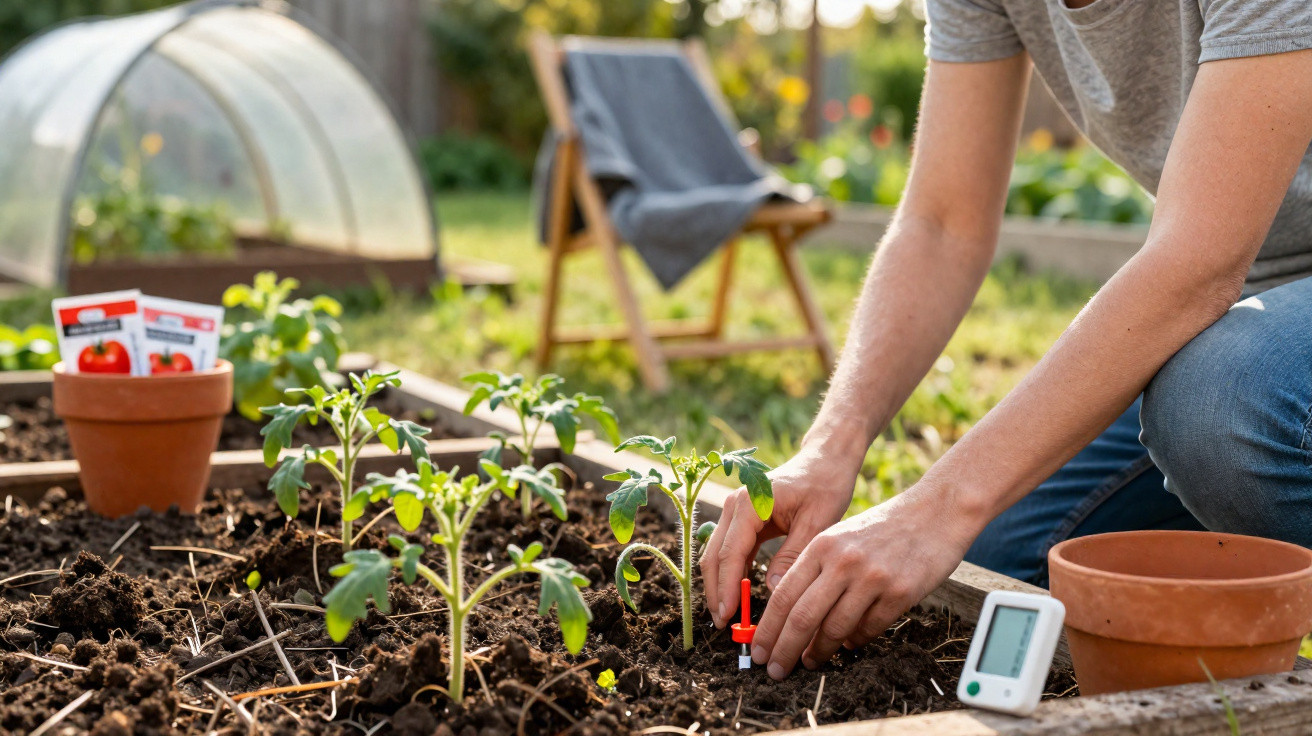
- Set in the young plant (tomatoes, peppers, squash, lettuce, etc.)
- Draw the material back around the plant gently, like a natural mulch
Even if not everything has fully rotted down yet, that isn’t a problem. Ongoing decomposition keeps releasing nutrients and also acts as a long-term mulch layer that holds moisture and suppresses weeds.
Everyday benefits: less watering, less weeding, better yields
Thanks to the high humus content, lasagne beds hold a lot of water without becoming soggy or airless. In hot summer spells, they often need noticeably less watering than traditional dug beds. The cardboard and thick organic layers also block many weed seeds that would otherwise reach the surface.
Common results gardeners report:
- noticeably looser soil after just one winter
- far less weed pressure in the first year
- stronger growth in heavy feeders such as tomatoes or squash
- no need for synthetic fertiliser
Of course, the method doesn’t replace basic vegetable-growing know-how: crop rotation, companion planting, variety choice and correct spacing still matter. Combine those fundamentals with lasagne beds and even small plots can produce surprisingly generous harvests.
Common mistakes-and how to avoid them
The method isn’t risk-free, but most issues are easy to prevent:
- Too much “green”: the pile turns slimy and smells rotten. Fix: add more leaves, straw or woodchip.
- Too dry: materials sit unchanged for months. Fix: water thoroughly during prolonged dry spells.
- Coated cardboard: plastic residues remain in the soil. Fix: use only plain brown cardboard.
- Animal-based kitchen waste: attracts rats. Fix: use plant-based kitchen scraps only.
If you’re unsure, start with a small test area to build confidence. Even a single square metre converted over winter can clearly show how dramatically soil quality can improve.
Who benefits most from lasagne gardening
This technique is particularly well suited to people with heavy soil, limited time, or limited energy for physically demanding garden tasks. It also excels when converting lawn into growing space: no turf cutting, no turning over-just build from the top down.
If you value wildlife-friendly gardening, low costs and reducing waste, lasagne gardening offers a coherent package. The one essential ingredient you can’t buy is patience. Put it in over winter and you’ll be rewarded in summer with productive beds-and soil that becomes more alive year after year.
Comments
No comments yet. Be the first to comment!
Leave a Comment