
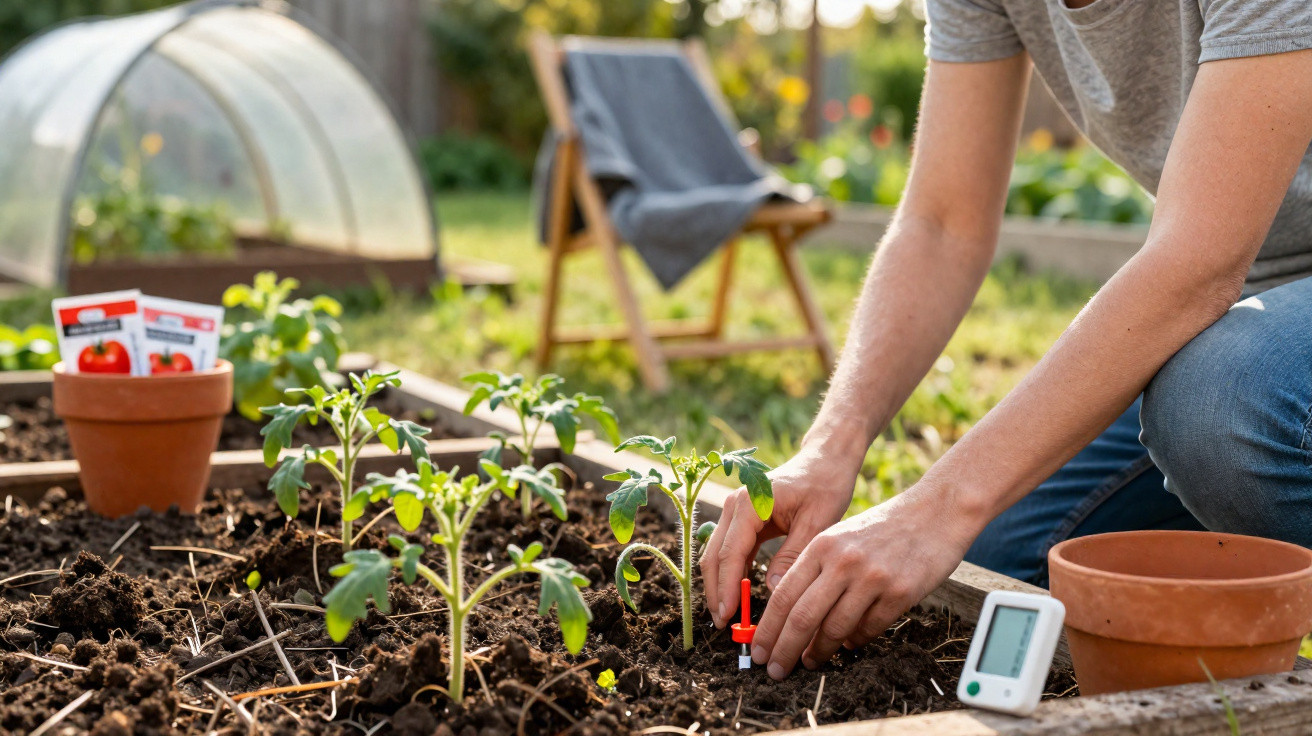
In March and April, many hobby gardeners can hardly wait to get going. The sun already feels pleasant, seed racks are overflowing, and social media is full of people showing off their first plants. This is exactly when the same mistake happens every year: getting tomatoes into the ground far too early - or leaving it far too late. If you understand what this heat-loving crop actually needs, you’ll time things better and harvest noticeably more in summer.
Why the first warm days can be a dangerous illusion
Spring sunshine misleads - the soil is still icy cold
In March or early April it’s easy to think, “Right, the garden season starts now.” Afternoons hit 15 to 18 °C, your jacket stays unzipped, and the surface of the soil can look dry. But if you push a thermometer a few centimetres into the ground, you’ll see what’s really going on: often just 8 to 12 °C.
“Tomato seeds only really get going once the soil is consistently above 15 °C - anything below that slows the plants down right from the start.”
If you sow straight into a bed too early, you’re gambling on:
- slow germination that drags on for days or even weeks
- spindly, unstable seedlings with weak stems
- poorly developed roots that the plant struggles to recover from later
Tomatoes effectively “remember” that poor start. Even when May and June finally bring warmth, growth stays behind schedule and the plant produces fewer flowers and fruits.
A night-time cold shock halts development
Tomatoes originate from warm areas of South America. They have virtually no built-in protection against cold. Temperatures only just above freezing can hit them hard, and a proper frost is often fatal.
A classic pattern looks like this: 18 °C in the day, then 3 to 5 °C at night. That might feel acceptable to us - but for tomatoes it’s pure stress. Movement of sap within the cells slows dramatically and growth stalls. Typical consequences include:
- the plant “freezes in place” and doesn’t grow for days
- leaves change colour, looking dull or slightly purple
- later, a noticeably higher susceptibility to fungal diseases such as late blight
What makes it trickier is that many plants still look more or less fine from the outside - yet they’re weakened internally and deliver a much smaller yield in summer.
The temperatures tomatoes actually need
The magic number: 15 °C soil temperature
Tomatoes don’t work to calendar dates; they respond to temperature windows. The key figure is soil temperature, because it dictates germination, root development, and how strongly the plant gets away.
For sturdy young plants, the rule of thumb is:
- At least 15 °C in the soil for reliable germination
- 18 to 22 °C in the soil for especially strong growth
- below 12 °C: stress, delays, and weak roots
A simple soil thermometer from a garden centre is perfectly adequate. Once you start measuring, it’s often surprising how slowly the ground warms in spring - especially in heavy, clay-rich soils.
Never below 10 °C at night: the second key threshold
Alongside soil warmth, night-time air temperature is crucial. Many gardeners focus on daytime highs, but cool nights can hold tomatoes back even more than a slightly chilly afternoon.
“For outdoor tomatoes, night-time temperatures should stay consistently above 10 °C - anything lower costs the plants energy and yield.”
If that happens repeatedly, you’ll often see familiar warning signs:
- leaves curl slightly or look limp
- new growth stays tiny, with very short internodes (the gaps between leaves)
- early flowers simply drop off instead of setting fruit
As a broad guide in German-speaking Europe, this night-time window usually settles in from mid-May to early June in many locations, and later still in higher or colder areas.
The right point in the year
Why gardeners use the “Ice Saints” as a guide
The old farming rule about the Ice Saints has a very practical basis. The days around mid-May mark, across large parts of Central Europe, the point when dangerous late frosts are usually over. Before then you can certainly get sunny spells - but night-time surprises remain possible.
That’s why, for most regions, the following timing works well:
- Raising plants on a windowsill or in a greenhouse: from March
- Planting out outdoors: after the Ice Saints, once the forecast no longer suggests a sharp drop overnight
- Direct sowing into the bed (uncommon, but possible): also only after this period, and only with warm soil
If you want to be early, it’s far safer to start in pots than to take a gamble by sowing into a cold bed.
Regional differences: coast, city, mountains
A calendar alone isn’t enough. Microclimate often matters more than your postcode. A few examples:
| Type of region | Typical start for outdoors | Special feature |
|---|---|---|
| Mild cities (e.g. the Rhine Valley) | often around 10–15 May | heat islands created by buildings |
| Coastal areas | sometimes 1–2 weeks earlier | the sea acts as a heat store |
| Higher ground / Alpine foothills | more like late May to early June | late frosts are much more likely |
If you’re unsure, track soil temperature and night-time readings for a year or two, or ask experienced neighbours with their own vegetable gardens - they usually know their local cold limits very precisely.
If the weather goes off-script: how to protect your tomatoes
Gradual acclimatisation instead of a cold shock
Putting tomatoes outdoors straight from weeks on a warm windowsill is like stepping from a living room into an unheated garden shed. Plants respond with stress, leaf scorch from sudden sun exposure, and a standstill in growth.
“The solution is hardening off: several days of a controlled switch between indoors and outdoors before it gets serious.”
A straightforward approach:
- Days 1–2: Put the pots outside for 2–3 hours in partial shade, sheltered from wind.
- Days 3–5: Increase outdoor time to 5–6 hours, with the first gentle sunshine.
- Days 6–8: Leave plants outside for almost the whole day; bring them back in overnight, or into a protected shed.
- From day 9: Plant into the bed on a warm day that’s as calm (low-wind) as possible.
This bit of “training” makes plants tougher: leaves become firmer, stems strengthen, and tomatoes cope much better with the occasional cool night later on.
Emergency plan for a cold snap: fleece, cloches, mini tunnels
Tomatoes are already in the ground - and then the weather app suddenly shows 2 °C overnight? At that point, every hour matters. With simple kit, you can often prevent serious damage:
- Horticultural fleece: drape loosely over hoops or directly over the plants; ventilate again during the day
- Tomato cloches or cut plastic bottles: cover individual plants like a bell
- Mini polytunnels: ideal for whole rows; the trapped air layer holds warmth
These covers often add around 2 to 4 °C around the plant. That can be enough to take the edge off a light ground frost. Ventilation remains important as soon as the sun comes out, so you don’t create a damp, overheated pocket under the fleece.
What happens if you leave it too late?
Late sowing doesn’t automatically mean a poor harvest
The opposite mistake - waiting endlessly out of fear of cold - happens too. If you only sow or plant out at the end of June, you risk part of the crop not ripening before autumn. Even so, “too late” is usually less damaging than “too early”.
A slightly later start can even have advantages:
- the soil is much warmer, so roots establish faster
- growth phases run without stop-start setbacks - the plant can “power through”
- later sowings can partly avoid heavy early-season fungal pressure
If you’re behind schedule, it’s better to use strong young plants rather than seed, and, if needed, choose early-maturing varieties that set fruit in a shorter time.
Practical tips for a strong tomato season
Site, soil and neighbours in the bed
Even with perfect timing, the wrong spot is disappointing. Tomatoes thrive with:
- a sunny, airy position with at least 6 hours of sun per day
- humus-rich, well-drained, reasonably loose soil
- protection from rain above - for example, a roof or polytunnel - to keep leaves dry
Less suitable are hollows where cold air pools, and very heavy, waterlogged soils. If that’s what you’ve got, work in plenty of compost and a little sand, or grow in raised beds.
Key terms explained briefly
Many guides refer to “raising plants”, “direct sowing”, and “young plants” - three terms that matter when you’re choosing the right timing:
- Raising plants: sowing into pots or trays indoors or in a greenhouse, weeks before planting outside.
- Direct sowing: placing seed straight into the bed. With tomatoes this is uncommon because they need a lot of warmth and germinate more reliably indoors.
- Young plants: tomatoes that have already been started for you, such as those sold at garden centres - ideal if you’re starting late or don’t have space to raise seedlings.
Keeping these terms separate helps you plan more logically: start early indoors, and only begin outdoors once the climate actually suits the plant.
In the end, success or failure often comes down to a surprisingly small window: the two or three weeks when the soil and the nights are finally warm enough. If you hit that moment well, you avoid a lot of worry - and you’ll be picking far more sun-ripened tomatoes from your plants in high summer.


Comments
No comments yet. Be the first to comment!
Leave a Comment