
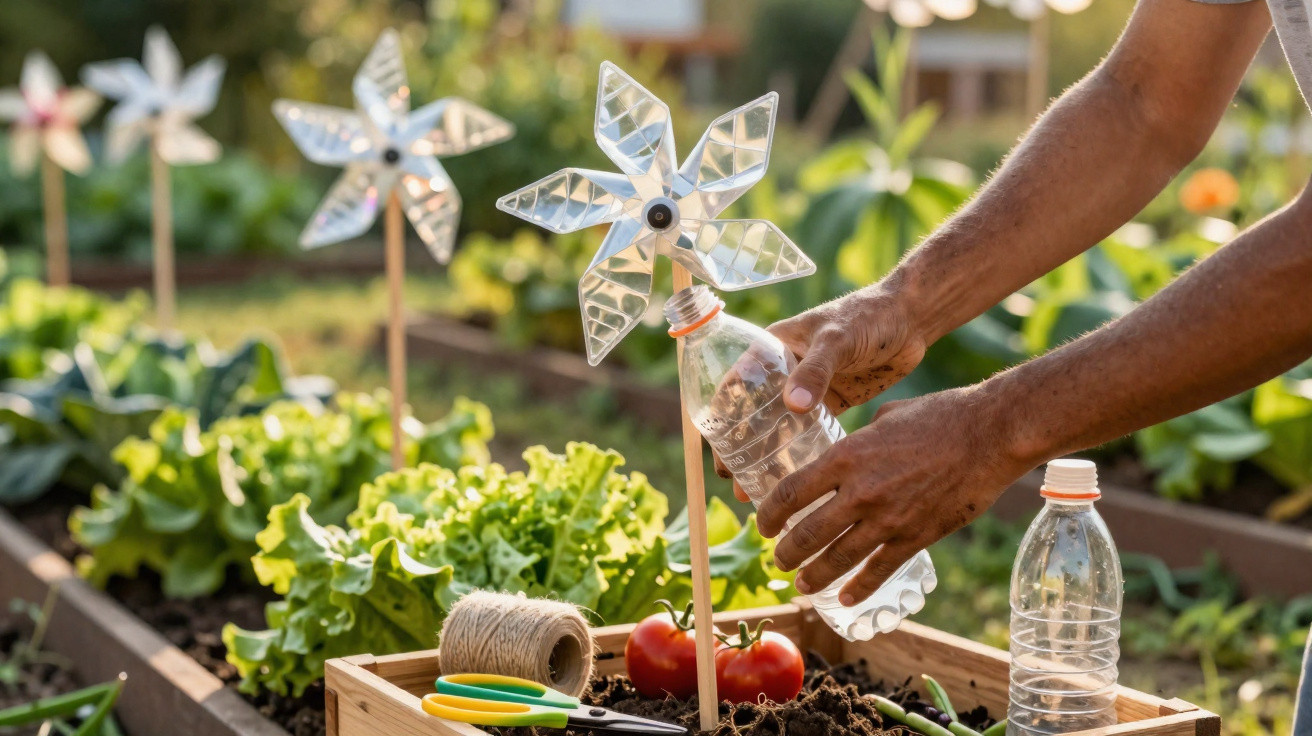
Looking after a home vegetable patch calls for effective ways to stop birds from damaging leaves as they continue to grow. An ingenious use for recycled plastic bottles is an affordable option that encourages sustainable household recycling.
How does a homemade bird scarer work in the garden?
This homemade device operates entirely through the force of the wind, which keeps the structure moving continuously. As air currents strike the cut flaps in the bottle, they cause it to spin quickly, startling nearby flying animals.
The rotating action creates soft, ongoing sounds and visual reflections that prevent birds from approaching the cultivated beds. As a result, delicate vegetables can develop safely, without spending money on expensive products or harmful chemical treatments.
Which plant could increase the value of your home?
Few people realise that selecting the right plants for the garden can considerably raise a property's market value… Read more
What materials are needed for this project?
To make this practical homemade bird scarer, you will essentially need a clean PET plastic bottle and dark insulating tape. These basic materials form the main body of the wind spinner and allow the side lines to be marked accurately.
You will also need sharp scissors to make precise cuts in the flaps, along with a heated piercing tool for the base. A sturdy piece of reinforcing steel will provide the ideal support on which the complete structure can spin freely.
To see how to assemble this recycled item in practice, watch the audiovisual content below. The full guide presented by the Leandra Martini YouTube channel explains the exact step-by-step method for protecting your vegetable garden:
How should the flaps be cut into the bottle?
Begin by sticking strips of insulating tape vertically onto the bottle to mark out the exact area for the fourteen suggested guides. Carefully use a craft knife to make a small initial hole in the plastic, allowing the scissors to be inserted more easily.
Next, cut along the marked lines, following the sideways direction of each guide firmly until reaching the designated end point of every section. Make exactly three well-spaced vertical cuts, creating the openings that capture strong wind.
Essential assembly stages
Preparing the rotating structure
Follow these simple steps to ensure your bird scarer works properly:
- Mark the fourteen strips with insulating tape to guide the cuts.
- Cut out the side openings with very sharp scissors.
- Pierce the base of the PET bottle to insert the metal support.
How do you secure the wind spinner in the vegetable garden?
Once the side cuts are complete and the flaps have been firmly bent by hand, make a centred hole in the bottom base of the bottle. This round opening will hold the wire or reinforcing steel that acts as the rotating axle.
Drive a strong wooden stake into the soil of the chosen bed, then securely tie the metal bar vertically to it using durable wire. Fit the bottle over the support through the hole in its base, keeping the cap closed to maintain the stability of the homemade mechanism.
Installing this sustainable mechanism provides several immediate practical benefits for people growing organic food in urban homes. The main benefits created by the bottles' continuous movement are:
- Immediate deterrence of birds that prey on delicate leaves;
- Intelligent reuse of household plastic waste;
- Production of natural sounds powered by the wind.
What results can you expect from this simple trick?
After putting this eco-friendly solution in place, you should notice a significant reduction in the damage wild animals cause to leafy crops. Its constant spinning motion drives invasive species away without physically harming them, fully preserving the biological balance of the home environment.
In addition, the project offers valuable lessons in practical recycling and the sensible use of materials that might otherwise be improperly discarded with general waste. Your garden will have an efficient, durable, self-operating protector powered entirely by the clean energy of the wind itself.






Comments
No comments yet. Be the first to comment!
Leave a Comment