
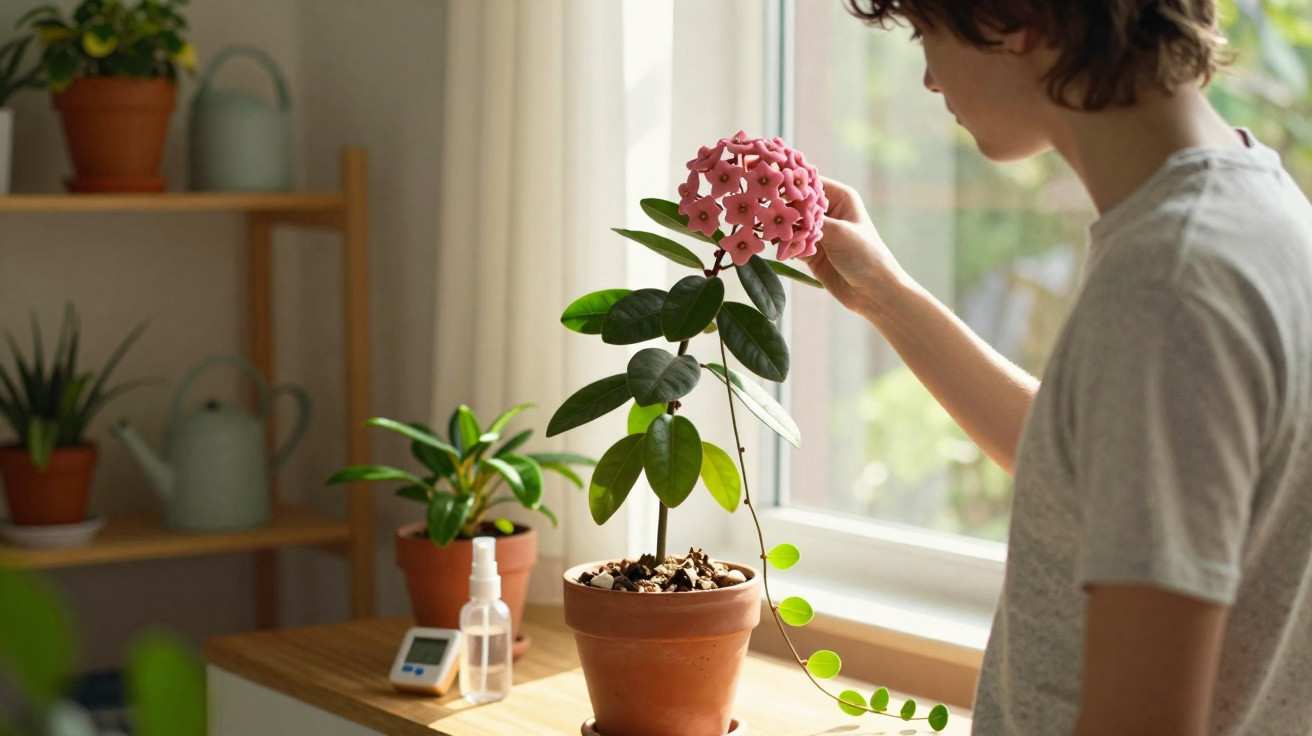
The lovely wax flower is an ideal choice for growing in small spaces at home, evoking fond memories of old-fashioned grandmother’s gardens. This climbing plant is captivating for the exceptional delicacy of its firm leaves and its beautiful clusters of fragrant flowers.
How does Hoya carnosa grow in the wild?
Native to tropical parts of Asia and Oceania, the species scientifically named Hoya carnosa grows as an epiphyte. In other words, it establishes itself on tree trunks or rocks, using aerial roots to anchor itself.
Understanding this natural habit is essential for successfully growing this distinctive plant indoors. Once securely attached in its native habitat, it hangs gracefully from forest branches, creating an impressive green cascade covered with star-shaped blooms.
Discover five remarkable varieties of this plant, each notable for the individual beauty of its foliage:
- Hoya obovata: Features rounded leaves scattered with attractive pale speckles.
- Hoya Red Baton: Stands out for its highly ornamental flowers in darker shades.
- Hoya Bella: Produces dense, trailing stems that resemble a fern.
- Hoya nummularioides: Displays small clusters of flowers with an intense, wonderful fragrance.
- Hoya kerrii: Became famous around the world for its distinctive heart-shaped leaves.
How do you choose the right pot for growing it?
Unlike many other houseplants, wax flowers prefer to grow in snug containers. They can produce lush foliage with very little root space, as they are naturally adapted to narrow crevices in nature.
For this reason, avoid choosing an oversized pot when planting your cutting permanently. Containers that are too large hold excessive moisture and encourage root rot, which can seriously damage the health of this beautiful trailing plant.
Below is a video from the Spagnhol Plantas YouTube channel that explores the points covered in this subject in greater detail:
What is the secret to the ideal Hoya carnosa potting mix?
As epiphytes, their roots need excellent air circulation and efficient drainage of watering water. Never use pure topsoil, as it is likely to compact and retain too much liquid, making it highly harmful to the survival of this species.
Top Tip: Aeration is everything
To recreate the plant’s natural forest environment, make a loose, chunky mix. Coarser, rustic materials prevent compaction and help to keep the roots healthy.
You can reuse simple materials or opt for high-quality ready-made succulent mixes with similar properties, making day-to-day care easier.
The key is to create an uncompacted growing medium by combining equal parts of high-quality coarse components. This blend allows water to drain freely after every watering, maintaining suitable moisture without soaking the sensitive root system of the plant.
These are the best components to use when preparing this airy mix:
- Fine-grade coarse pine bark to provide aeration.
- Crushed horticultural charcoal to support soil health.
- Coconut chips to retain the right level of moisture in a balanced way.
What light and watering does the wax flower need?
For healthy, attractive growth, this species needs a position with plenty of bright, indirect light. Direct exposure to the strongest sunshine should be avoided, as it can scorch the leaves and leave them looking yellowed and faded.
Water moderately, always waiting until the growing medium begins to dry out. Overwatering reduces root aeration, so maintaining a consistent balance is vital for strong growth on your balcony.
Follow these essential environmental and moisture tips to keep the foliage looking its best:
- Select a partially shaded spot with good natural light.
- Allow only gentle sunshine in the early morning or late afternoon.
- Check with your fingers that the potting mix is dry before watering again.
How can you encourage abundant, fragrant flowering?
The main secret to encouraging this plant to flower profusely is the regular use of foliar fertilisers formulated specifically to promote flowering. This type of feed is readily absorbed by both the leaves and exposed roots, supplying all the essential nutrients required for its metabolism.
Simply dilute a small amount of the product in water and mist it evenly during the cooler parts of the day. With this regular routine, your pot will receive the right encouragement to produce starry flower clusters that make the whole space highly decorative and fragrant.
Read also: The most fragrant flower to grow on the balcony: how to care for it and encourage flowering





Comments
No comments yet. Be the first to comment!
Leave a Comment