
Honeywell-backed Quantinuum targets a valuation above $20 billion on the promise of Apollo
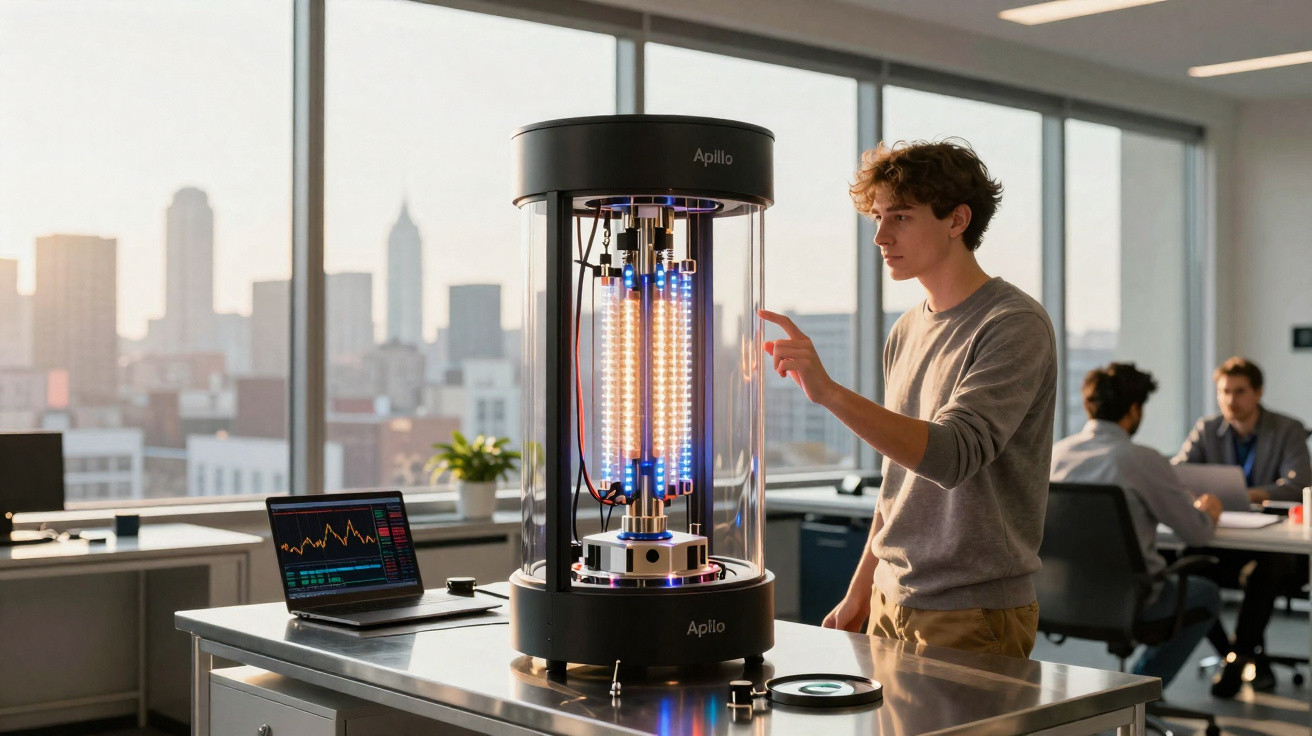
Quantum computing business Quantinuum has filed for a US IPO and is seeking a valuation of more than $20 billion, although its most important product remains a future plan. The company’s central bet is the Apollo quantum computer, which is intended to become the first fully fault-tolerant universal system but is not due until 2029.
Quantinuum’s current financial results are modest, even against the standards of high-growth technology companies. In 2025, it generated revenue of $30.9 million and recorded a net loss of $192.6 million. Both figures rose by 34% from the previous year, meaning losses expanded at the same rate as revenue.
The first quarter of 2026 was more difficult still. Revenue fell from $19.1 million to $5.2 million, while the loss increased by more than four times to $136.6 million. This highlights the quantum sector’s core issue: companies are valued at tens of billions of dollars not for their existing operations, but for expectations that the technology will eventually work at commercial scale.
Quantinuum was formed in 2021 through the merger of Honeywell Quantum Solutions and the UK company Cambridge Quantum Computing. Honeywell currently owns 54% of the business.
The company develops quantum computers based on trapped-ion technology. In these systems, individual atoms are held in place by electromagnetic fields and controlled with lasers. Quantinuum says its hardware has already achieved one of the industry’s highest two-qubit gate fidelities, a key measure of quantum-computing quality.
Quantinuum partners and research programmes
The company’s partners include BMW, Airbus, JPMorgan Chase, HSBC and Thales. For now, however, these relationships concern long-term research programmes rather than real-world industrial deployment.
BMW, for example, is investigating quantum computing for modelling chemical processes in fuel cells, while Airbus is exploring its use in the development of hydrogen-powered aircraft. JPMorgan has worked with Quantinuum since 2020 and is regarded as one of the most active corporate users of its software tools.
Apollo quantum computer and fault tolerance
Quantinuum’s main asset is its pledge to build a fault-tolerant quantum computer. Current quantum systems are excessively noisy: computational errors accumulate quickly, making results unusable for complex tasks. Error correction is widely considered the industry’s principal engineering obstacle.
The planned Apollo system is intended to overcome this challenge. The company says the computer will be capable of long, complex calculations with full error correction - a milestone many regard as the true beginning of commercially useful quantum computing.
For now, though, Apollo remains a paper project. Quantinuum currently has the Helios system, while an intermediate platform, Sol, is expected in 2027. The company’s multibillion-dollar valuation rests on investors believing that Apollo will genuinely arrive by the end of the decade.
Government backing is also fuelling interest in quantum technologies. European countries are already investing billions of euros in the sector, with Germany, France, the Netherlands and the United Kingdom expanding national programmes. France alone has allocated about €500 million to five start-ups developing fault-tolerant quantum computers.
Yet the timing of genuinely useful quantum computers remains highly contested. For more than 10 years, many experts have said the technology is “five to ten years” away from a commercial breakthrough. Google’s chief executive puts the timeframe at 5–10 years, while Nvidia’s chief executive recently said it could take at least 15 years.
Quantinuum’s IPO could become the largest listing in the history of the quantum industry and set a new benchmark for the entire sector. At the same time, it will serve as a test of whether public markets are prepared to pay tens of billions of dollars for a technology that does not yet exist in a finished form.






Comments
No comments yet. Be the first to comment!
Leave a Comment