
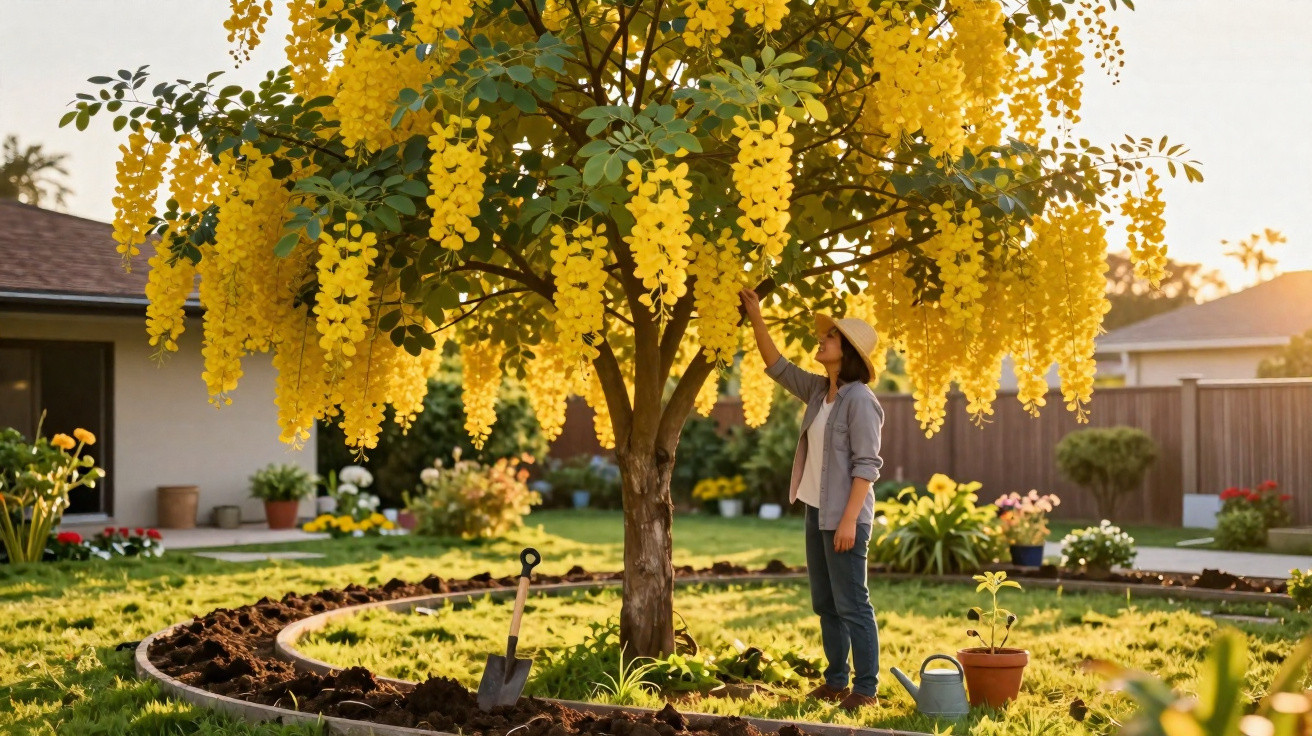
The golden shower tree, widely referred to in many countries as the golden rain tree, is an ornamental species renowned for its long clusters of yellow blooms. Linked to Cassia fistula and native to southern Asia, it has become established across tropical and subtropical regions because of its striking flowering display and ability to transform gardens, pavements and open spaces.
Its most distinctive feature is its drooping bloom, made up of lengthy strings of yellow flowers that spill from the branches like a glowing cascade. The display makes a powerful garden focal point, particularly in the warmer months.
As well as its vivid colour, the broad canopy provides shade and adds a strong presence to landscape schemes. For this reason, the species is used in private gardens as well as along avenues, in parks and in public spaces requiring visual impact while retaining an airy feel.
What are the main features of this species?
The golden shower tree is deciduous, with green foliage, elongated pod-shaped fruits and growth that is considered moderate to fast in a suitable climate. Under favourable conditions, it can remain established in the same position for many years.
- Yellow flowers carried in pendulous clusters.
- Heaviest flowering in spring and summer.
- An elegant, open and ornamental canopy.
- Well suited to warm, sunny regions.
- Attracts moths, butterflies and other pollinators.
Where should you plant a golden shower tree in the garden?
The best site receives several hours of direct sunshine each day. Light encourages flowering and supports healthy growth, particularly in tropical, subtropical and warm-climate areas.
- Select an open position away from walls that are too close.
- Do not plant beneath low overhead cables, as the canopy may spread.
- Choose fertile, light soil with effective drainage.
- Allow sufficient room for both the roots and canopy to develop.
- Use the tree as a feature in gardens, near entrances or beside seating areas.
How do you care for the tree for abundant flowering?
Once it is established, the golden shower tree is generally hardy, although it performs better with regular watering during its first few years. Overwatering should be avoided, however, as waterlogged soil can damage the roots.
Pruning should be minimal and limited to removing dead, crossing or poorly placed branches. Since the appeal of this species lies in its flower clusters and naturally shaped canopy, heavy pruning may lessen its ornamental effect.
Why does the golden shower tree add so much to landscaping?
The golden shower tree enhances landscaping by combining colour, shade, movement and elegance in one species. In bloom, it changes how a space is perceived and creates a bold contrast against lawns, pale walls, stone paths and other green plants.
Its use simply requires planning for sunshine, drainage, space and its eventual size. With these considerations in place, the golden rain tree becomes more than just an attractive tree: it can take centre stage in the garden, bringing brightness, life and a classic touch of tropical splendour.





Comments
No comments yet. Be the first to comment!
Leave a Comment