
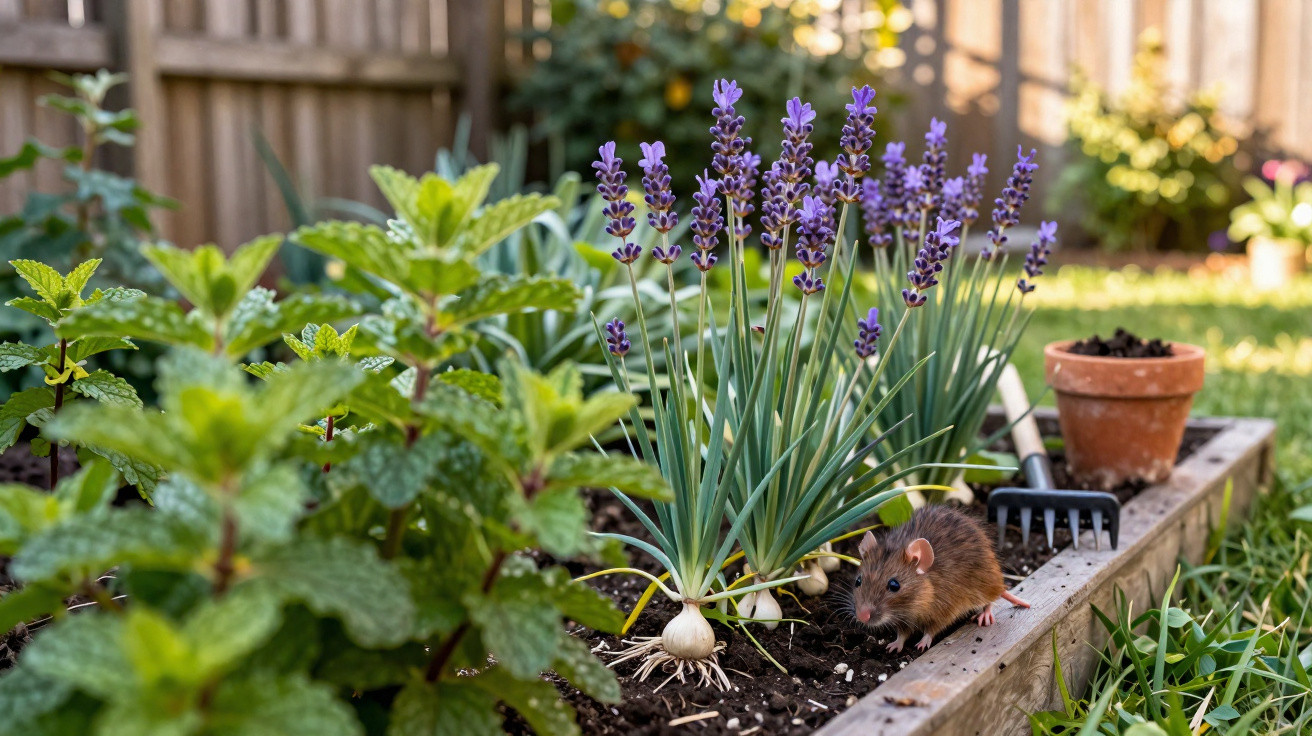
Aromatic plants can make a garden less appealing to rats when they are used alongside good hygiene, control of food scraps and fewer hiding places. Mint, lavender and garlic stand out for their powerful scents, which can disrupt the scent trails rodents use to find shelter, food and travel routes.
Which are the three aromatic plants most commonly used against rats?
Mint is among the most frequently mentioned choices because it gives off a fresh, penetrating fragrance, particularly when its leaves are handled or pruned. It grows quickly in pots and can be positioned near walls, exterior doors, compost bins and corners showing signs of rodent activity.
Lavender can provide a scented barrier in sunny spots, while garlic may be grown in beds or planters near vegetable plots. None of these plants will deal with an infestation on their own, but they can make the setting less welcoming to rodents when the garden does not provide easily available food.
Why do mint, lavender and garlic bother rodents?
Rats rely heavily on their sense of smell to move around, identify food and mark routes. Strongly scented plants do not “frighten away” every animal immediately, but they may make it harder for rodents to remain in particular areas of the garden.
- Mint: a strong menthol fragrance, useful close to entrances, pots and narrow passageways.
- Lavender: an intense floral scent, suited to sunny borders and areas with regular foot traffic.
- Garlic: a distinctive sulphurous smell, suitable for beds near vegetable plots and compost bins.
Where should you plant them to create a more effective barrier?
Aromatic plants work best when placed along likely rat routes rather than in the garden’s decorative centre. Before deciding where to put them, look for small droppings, gnaw marks, tunnels in the soil, leftover pet food or tracks running alongside walls.
Grow mint in a pot, as it spreads readily and may take over a flower bed. Lavender needs full sun and well-drained soil. Garlic requires loose soil, moderate watering and spacing between cloves to produce vigorous leaves and a more noticeable scent.
How can you care for these plants without attracting more pests?
The mistake is planting aromatic herbs while leaving the garden full of exposed organic waste. Rats and mice seek food, water and shelter; if all three remain available, the plants’ scent becomes far less effective as a barrier.
- Keep grass and weeds short near walls, storage areas and beds.
- Store pet food, seeds and grains in sealed containers.
- Do not put food scraps, fat or meat in uncovered compost bins.
- Clear away accumulated dry leaves, stacked wood and garden debris.
- Prune mint and lavender regularly to refresh the scent of their leaves.
A garden is better protected when it no longer provides shelter
Mint, lavender and garlic help by adding strong scents to areas of passage, but meaningful control begins when the garden loses its attractions. A tidy garden without scattered pet food, accessible rubbish or damp hiding places reduces the conditions that allow rodents to stay.
The safest approach combines aromatic planting with management of the space: pots set around the edges, trimmed beds, a securely closed compost bin and frequent checks. In this way, the plants become more than decoration and form part of a preventive barrier against rats.





Comments
No comments yet. Be the first to comment!
Leave a Comment