
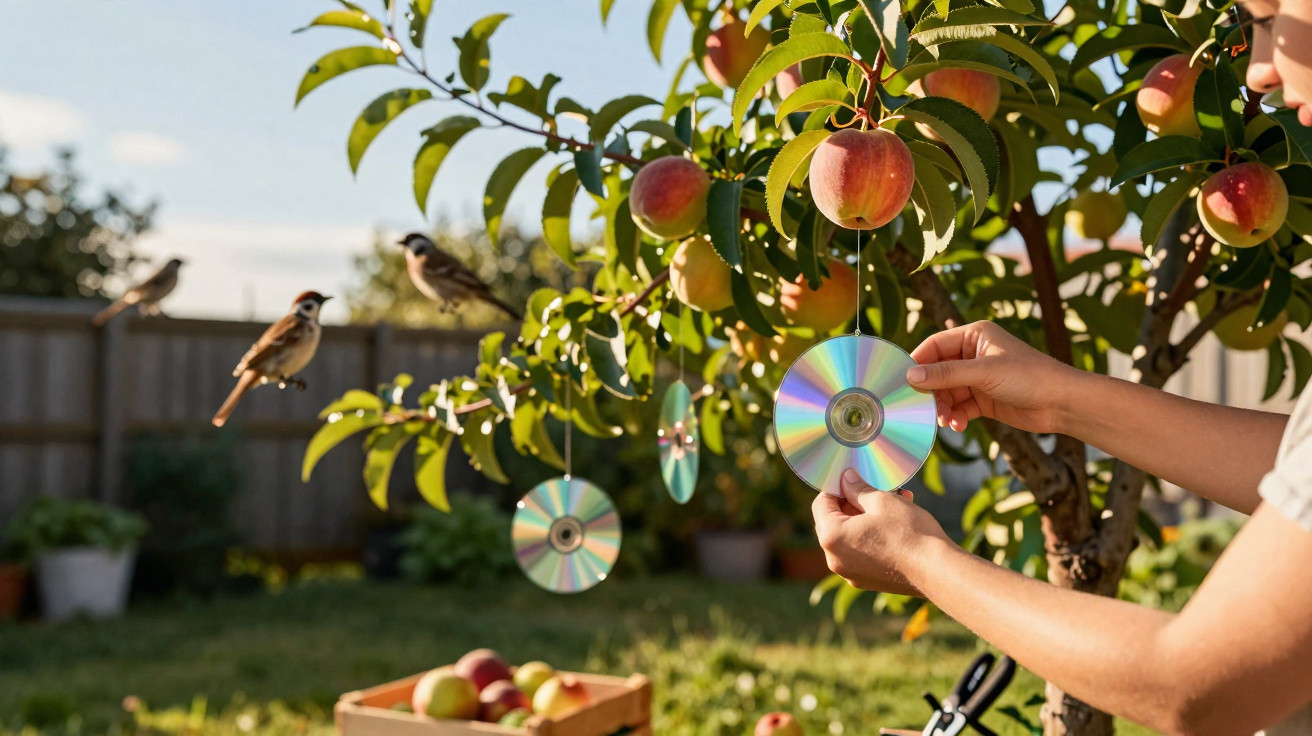
Hanging an old CD in fruit trees has become a familiar trick in gardens and small orchards because it reflects light, spins in the wind and creates a visual disturbance that may help keep birds away during ripening. In the garden, it tends to make the most sense when sweeter fruit starts attracting thrushes, tanagers and kiskadees-exactly the point at which the crop is most exposed.
Why does a hanging disc grab birds’ attention?
The impact is less about the object itself and more about the mix of shine, movement and shifting light angles. As the old CD sways among the branches, it throws out uneven flashes that act as an irritating visual stimulus. On fruit trees with a more open canopy, the reflection usually reaches the spots where birds land before pecking at ripe fruit.
That is why the method remains popular at home. Rather than scaring birds away permanently, the disc makes the area feel less predictable for an approach. In gardens, this kind of visual barrier is often most useful on guava, acerola, mulberry, grape and jabuticaba, especially as fruiting reaches its final stretch.
Does it really keep birds away, or is it just an old habit?
It does work-but with a clear limitation. Visual deterrents can reduce visits at first, particularly in small spaces, but birds often get used to them when the object stays in the same place for many days. For that reason, an old CD works better as a short-term boost than as the only way to protect an entire crop.
Rural extension services and technical reviews on fruit-growing damage point in the same direction: reflective materials help in the short term, while physical protection tends to be more reliable. With backyard fruit trees, the benefit is greater when the gardener changes the disc height, moves it to different branches and pairs the trick with frequent checks on ripening and harvest timing.
How to use the old CD trick in the garden without harming the plant
To get the best from the method, position it according to the canopy shape, the wind and where the sun hits. The disc needs room to move freely, without snagging on leaves, flowers or developing fruit.
- Use string or a soft tie so you do not damage the branch.
- Hang the old CD at different points within the canopy, not only at the top.
- Keep some distance between the disc and the fruit to prevent rubbing.
- Change its position every few days to limit birds adapting.
- Use it more intensively when the fruit is changing colour and giving off a stronger scent.
In a small garden, two or three well-spaced discs are usually more effective than lots of objects bunched on one side. It also helps to pick fully ripe fruit as soon as it is ready, because leaving it on the plant for longer increases both the number of visits and the chance of repeated pecking.
What extra steps improve protection for fruit?
Anyone trying to cut harvest losses needs to think beyond the reflection alone. The strongest results come from combining simple tactics, used at the right time and matched to the fruit type.
- Harvest as soon as the fruit reaches eating ripeness.
- Remove split or very exposed fruit, which tends to attract more visits.
- Use mesh or netting on species that are heavily targeted.
- Avoid keeping feeders nearby during fruiting.
- Rotate visual deterrents so birds do not learn a routine.
In orchards and gardens, technical literature highlights netting as the most dependable barrier for isolated fruit trees or small plantings. Visual deterrents then serve as support-particularly when the aim is to gain a few days until harvest without using harsh or noisy methods.
When does the recommendation make the most sense?
Hanging an old CD makes most sense when the garden has only a few fruit trees, the canopy allows light to circulate and bird damage happens close to ripening. In that context, the disc acts as an extra visual warning and can save part of the yield, especially with small, soft fruit that sits exposed on outer branches.
If the area faces heavy or repeated attacks, it is best to treat the reflection as a management aid rather than a definitive fix. With fruit trees, protecting the colour-change stage, watching bird behaviour and picking at the right moment usually matters more than leaving the same object on a branch for months. In the garden, the logic is practical: reduce losses, safeguard the plant and bring better fruit to the table.
Comments
No comments yet. Be the first to comment!
Leave a Comment