
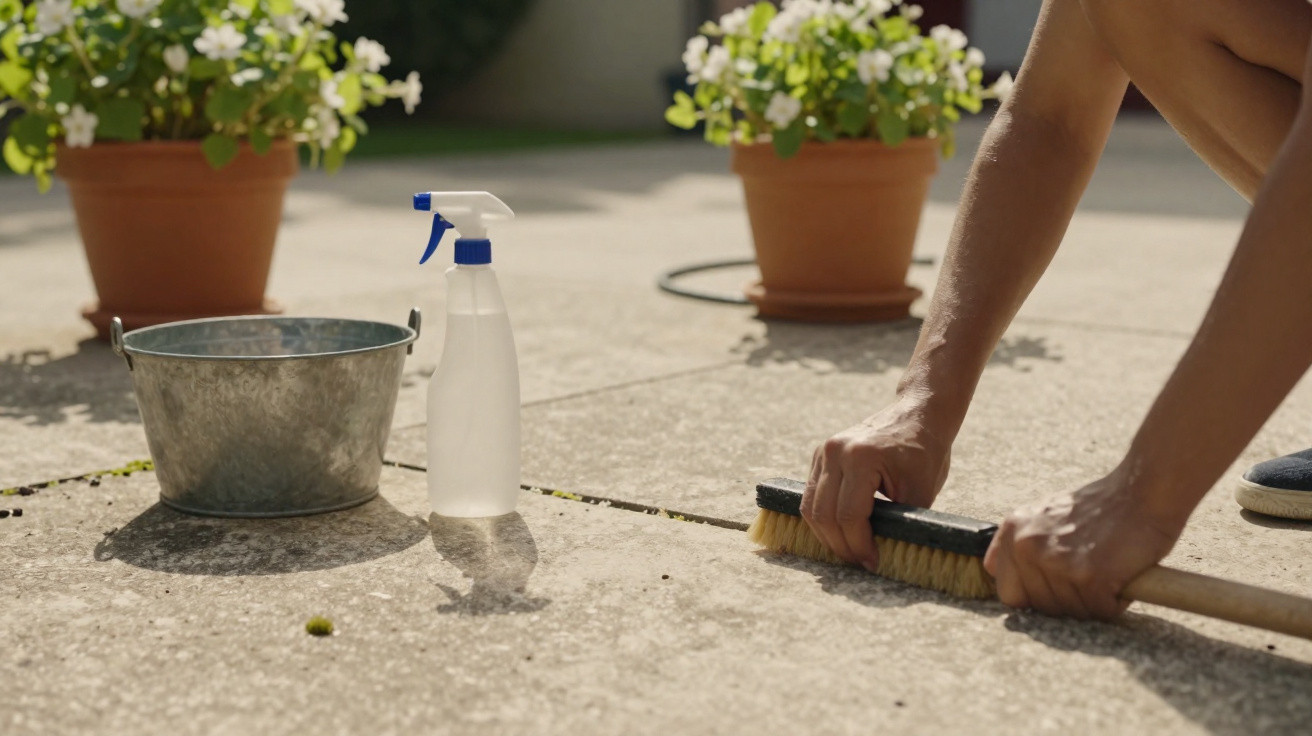
As spring arrives, plenty of homeowners step outside, glance at the patio and garden paths, and feel their motivation drop. Moss sitting between paving slabs, greasy patches beneath the barbecue, joints that have turned black, and an overall grey coating that wipes out any holiday feel. The upside is that getting these areas ready for long evenings outdoors doesn’t require aggressive chemicals or exhausting, hours-long scrubbing.
Why patios turn black and slimy after winter
After months of wet weather, shade and tracked-in dirt, patios are primed for grime. When surfaces stay damp, algae and moss thrive. Decaying leaves can leave behind tannin marks. Add soot, air pollution and barbecue fat, and you end up with a dark film-especially noticeable on concrete and stone. Meanwhile, the joints between slabs collect soil and seeds, so weeds emerge and hold onto even more moisture.
If you ignore it, the problem is not purely cosmetic. Slippery paving is a safety risk, some finishes deteriorate faster, and mould can start to appear near doorways and thresholds.
Regular, gentle cleaning keeps patios brighter for years and avoids the need for aggressive restorations later.
Black soap and hot water: the gentle workhorse
In France, many households rely on traditional black soap for cleaning outdoor areas. This soft, plant-based soap is well suited to timber decking and composite boards, and it also performs reliably on most tiled surfaces.
How to use black soap on a terrace
- Fill a bucket with hot water.
- Stir in a small amount of liquid black soap.
- Apply the mixture using a stiff deck brush or yard broom.
- On timber boards, scrub in the direction of the grain to reduce the chance of splintering.
- Rinse well and allow the area to dry.
Because only a small amount is needed, it tends to be cost-effective over time. Its biggest benefit is that it cleans without being overly harsh on the finish-particularly important on wood, where strong detergents can dry the boards out and lift the fibres.
Black soap is particularly handy for wooden corners of the terrace that fear harsh detergents or too much pressure.
Washing-up liquid and baking soda for stubborn grime
Black soap isn’t to everyone’s taste, and many people simply won’t have it in the cupboard. A straightforward substitute-washing-up liquid combined with baking soda-can deliver a similar result.
A simple two-step method
This pairing is useful when dirt has worked its way into concrete slabs, stone paving, or textured tiles.
- Scatter baking soda generously over the dirty sections, paying extra attention to dark stains and the joints.
- Mix a bucket of hot water with a good squirt of washing-up liquid.
- Pour the soapy water over the baking soda until the areas are thoroughly soaked.
- Leave it to sit for 45–60 minutes so it can break down the deposits.
- Scrub with a stiff brush, then rinse with clean water.
The fine powder provides mild abrasion and can help reduce certain smells. The dwell time matters: giving the mixture time to work helps loosen grime so it lifts more readily when you brush.
White vinegar and water: natural cleaning with a disinfecting twist
If you prefer traditional home remedies, a basic blend of water and white vinegar is a common option. A 50/50 mix helps tackle light limescale, soap residue and some algae.
It’s most appropriate for ceramic tiles, concrete pavers and composite materials. Used correctly, it can brighten slightly dulled surfaces and lessen green staining on paths that remain wet for long periods.
Avoid using white vinegar on limestone or marble, as acidity can attack the surface and leave permanent marks.
With suitable materials, it’s quick to mix, inexpensive, and easy to rinse away. It also offers a mild disinfecting effect, which can be useful near thresholds, pet areas, or outdoor dining spots.
Pressure washer: powerful help, real risks
A pressure washer is often the first choice for anyone who wants fast results: a single pass and the dirt appears to disappear. However, used without care, it can gradually and quietly damage a patio.
When pressure washing makes sense
High pressure is best reserved for hard-wearing surfaces such as:
- rough concrete slabs
- sturdy stone pavers
- badly soiled paths at the far end of the garden
It can blast away moss, mud and weeds lodged in the joints. The downside is that strong pressure applied too close to delicate tiles may chip edges, create micro-cracks and increase porosity. Over time, that extra porosity holds onto more moisture and grime, making the patio tougher to clean each year.
A sensible middle ground is to use a patio cleaning head that attaches to the lance. It disperses the jet inside a rotating housing, helping to prevent stripes and reducing the direct impact on the surface.
Always start with the lowest possible pressure and stand back; you can move closer only if the surface tolerates it.
Targeted tactics for stains and black joints
Some marks won’t shift with general washing alone. Barbecue grease, red wine, or that persistent green film around pots can need more focused action.
Dealing with localised stains
For small, specific spots, wiping with a cloth dampened with household alcohol (rubbing alcohol) is often enough to break down the residue-rub gently, then rinse. If a stain won’t budge, some people use solvents such as turpentine or white spirit.
These should be used outdoors, wearing gloves, with good ventilation. Apply only to the affected patch rather than across the whole patio. They are also unsuitable for certain plastics and painted finishes, which may soften or discolour.
How to revive blackened joints
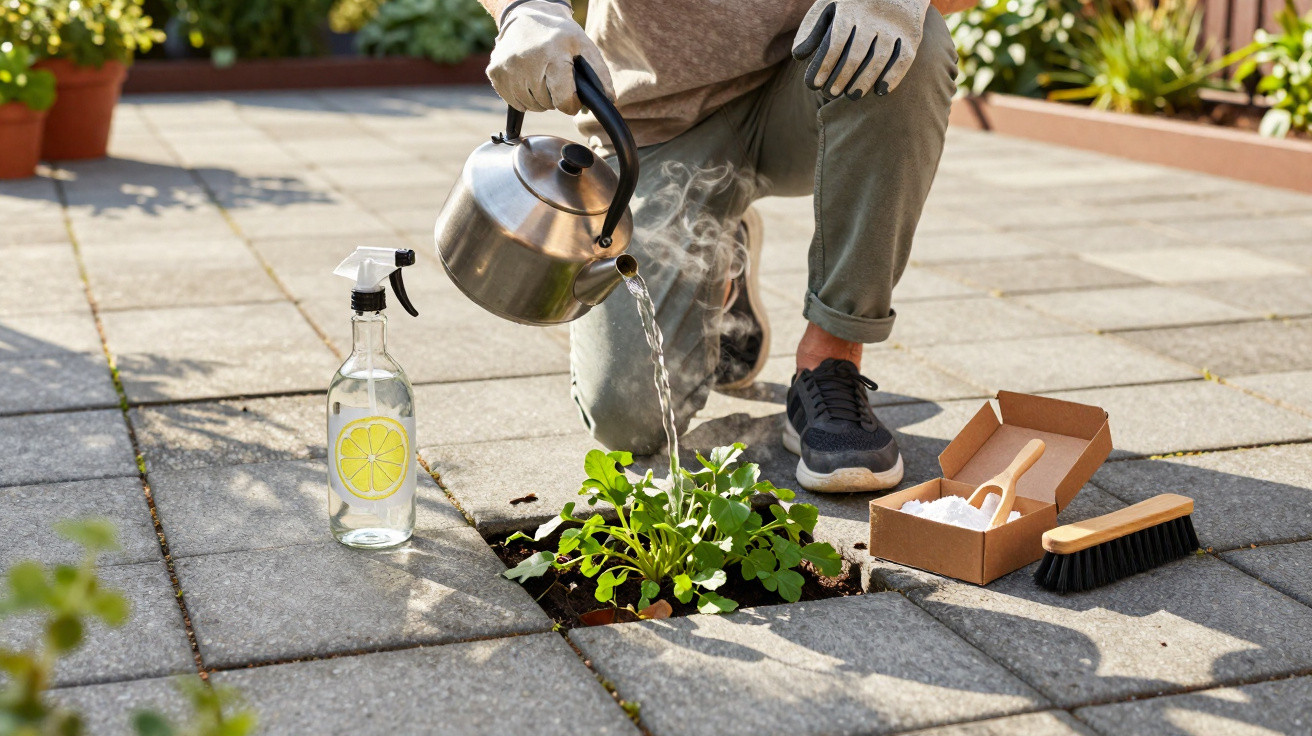
Cement-based joints between tiles readily collect soil and organic debris, which darkens when it stays damp. A simple process often improves them:
- Tip baking soda directly into the joints.
- Run warm water along the lines to dampen the powder.
- Scrub with an old toothbrush or a narrow joint brush.
- Rinse thoroughly to wash away any residue.
If the joints are very old, you may not get a perfect result on the first attempt, but they usually lighten by several shades. Cleaner joints can make the entire patio look fresher, even when a few stains remain on the slabs.
Quick reference: which method for which surface?
| Method | Best suited to | Typical effectiveness | Main limits |
|---|---|---|---|
| Hot water + black soap | Wood, composite decking, tiles | High on general dirt | Smell can bother some people |
| Soapy water + baking soda | Concrete, stone, textured tiles | High on ingrained grime | Needs an hour of contact time |
| Water + white vinegar | Tiles, concrete pavers | Moderate on light stains and algae | Unsuitable for limestone and marble |
| Pressure washer | Robust concrete and hard stone | High on moss and mud | Can damage porous or delicate surfaces |
| Alcohol / turpentine / white spirit | Small, localised marks | High on greasy stains | Requires caution and spot testing |
Reducing effort: timing, prevention and small habits
If you want to put in less work overall, timing makes a bigger difference than most people expect. Waiting until the first warm weekend of the year to tackle a blackened patio usually means dealing with months of build-up. By contrast, giving it a quick clean in late autumn-once the last leaves have dropped-can make spring maintenance far quicker.
A few small routines also help reduce future scrubbing:
- Sweep away leaves before they decompose on the slabs.
- Put a mat beneath the barbecue to catch grease.
- Remove weeds from joints before they establish deep roots.
- Rinse spills on tiles as soon as they happen.
These quick actions take only minutes, yet they prevent the worst staining from forming.
Understanding common terms and risks
You’ll often see the word “porous” on product labels and in DIY advice. A porous stone or tile absorbs water readily. Once water penetrates, it carries dirt, algae spores and sometimes dissolved salts with it. That’s why more delicate paving can become patchy-or even start to crumble-after years of heavy-handed cleaning.
Using a pressure washer too close to the surface, or relying on harsh chemicals, can increase porosity. A patio may look spotless immediately afterwards, but grime often returns faster each season. Gentler products and softer brushes can seem less dramatic at first, yet they frequently keep paving in better condition for longer.
There’s also a sensible caution to apply to “natural” options. White vinegar, baking soda and black soap are widely viewed as mild, and they’re generally less polluting than heavy-duty detergents. Even so, they still need to be used appropriately. Pouring large amounts of acidic liquid onto sensitive stone, or rinsing concentrated mixtures into garden ponds, can still cause harm.
The best routine is usually a mix: regular light care with mild products, and targeted treatment only where stains really need it.
With a routine like that in place, the yearly shock of seeing a blackened patio tends to disappear. When the first warm evening arrives and the chairs come out, the difference is simple: the terrace is already guest-ready, with very little effort.
Comments
No comments yet. Be the first to comment!
Leave a Comment