
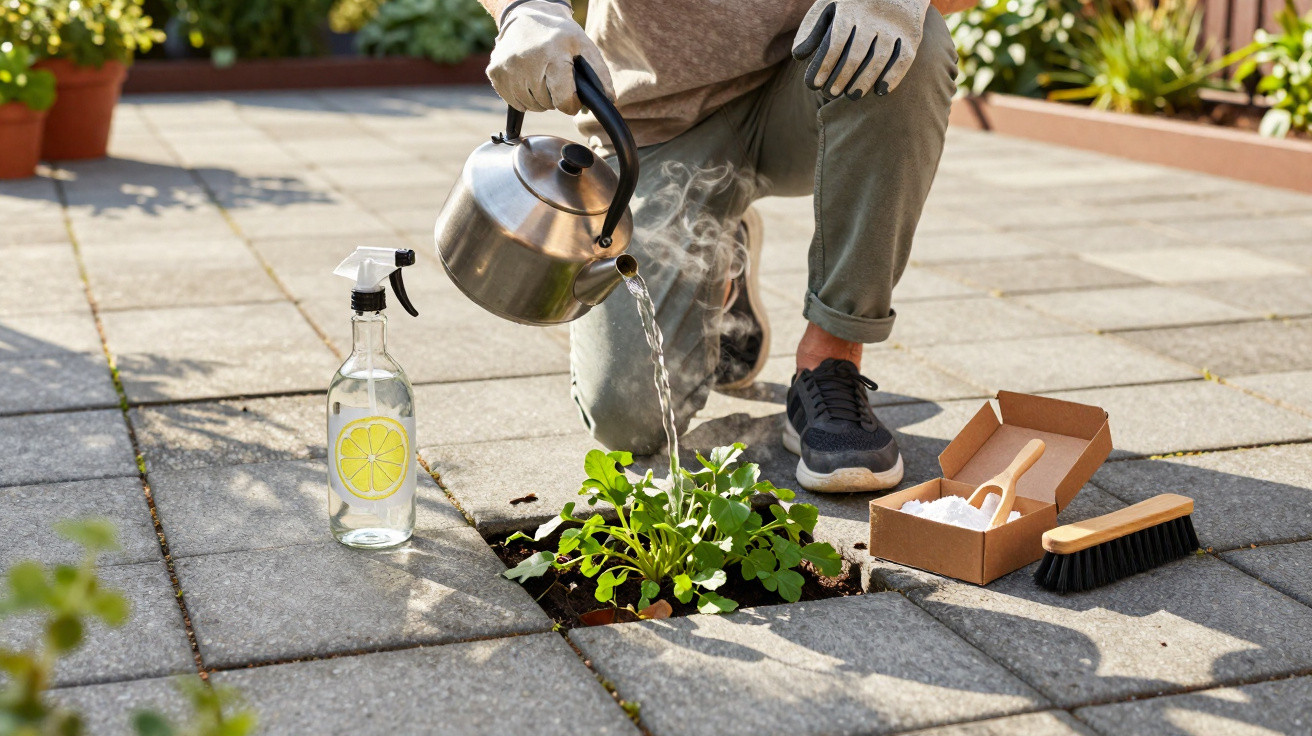
Weeds growing between paving stones are a common nuisance on footpaths, in gardens, and in outdoor leisure areas. Besides spoiling the look of an outdoor surface, these plants can gradually shift the stones, while also trapping dirt and moisture. The good news is that you can control them without relying on chemical herbicides, which helps protect the environment and keeps children and pets safer.
How do you remove weeds from paving stones?
The key is to know how to remove weeds from paving stones without turning to harsh products. The best approach depends on how much growth there is, the type of surface you have, and how much time you can spare for upkeep-often, the most effective routine combines hands-on removal with simple household options.
In practice, the most popular physical and natural ways to clear weeds from between stones are straightforward and can be done with everyday items or basic gardening tools. The options below are particularly useful as part of regular cleaning:
- Hand pulling using your hands or purpose-made tools.
- Joint scrapers or narrow blades for tight gaps.
- Boiling water poured directly onto the weeds.
- Vinegar mixtures using household vinegar on small, targeted areas.
- Bicarbonate of soda applied to gaps after they have been cleaned.
- A pressure washer for surface dirt and moss.
Watch a video on the YouTube channel Vida no Jardim about natural weed control, sustainable growing, and smart land management:
Which natural methods work best in the joints between stones?
Among non-industrial, chemical-free options, manual removal remains one of the most reliable-particularly when you manage to lift out the roots completely. In smaller areas, you can do the job with gloves and a simple implement such as a hook, an old screwdriver, or a joint scraper.
To make the task quicker, there is a handy gardening tip: dampen the surface before you start pulling. After watering or rainfall, the material in the joints loosens and the roots usually come free with less effort. Grip the plant at the base and collect the debris afterwards to stop seeds dropping back into the gaps, which helps limit regrowth over the following weeks.
How can you use boiling water, vinegar and bicarbonate of soda safely?
Boiling water is a fast way to damage the top growth of weeds between stones, although tougher species may need repeated applications. Kitchen vinegar, used neat or slightly diluted, affects the leaf surface and tends to work best on young plants-so long as you avoid splashing nearby ornamental plants.
Bicarbonate of soda can be sprinkled into joints once they are already clean to make conditions less favourable for regrowth. One useful point is that small amounts in specific spots are enough; using too much may leave a whitish residue on the paving and can harm desired plants if there are pots close to the paved area.
How can you prevent weeds from appearing between stones?
Prevention is usually easier than tackling weeds once they have taken hold in the joints. During installation, placing a geotextile layer beneath the base of the stones helps block roots coming up from below, and filling the joints with well-compacted jointing sand or polymeric sand reduces the spaces where seeds can settle.
Over time, soil particles and fallen leaves can build up on the surface, which encourages germination even on well-laid paving. For that reason, sweeping regularly, topping up the jointing material when needed, and avoiding standing water are practical habits that help keep the paving more stable, cleaner, and less prone to weeds throughout the year.

Comments
No comments yet. Be the first to comment!
Leave a Comment