
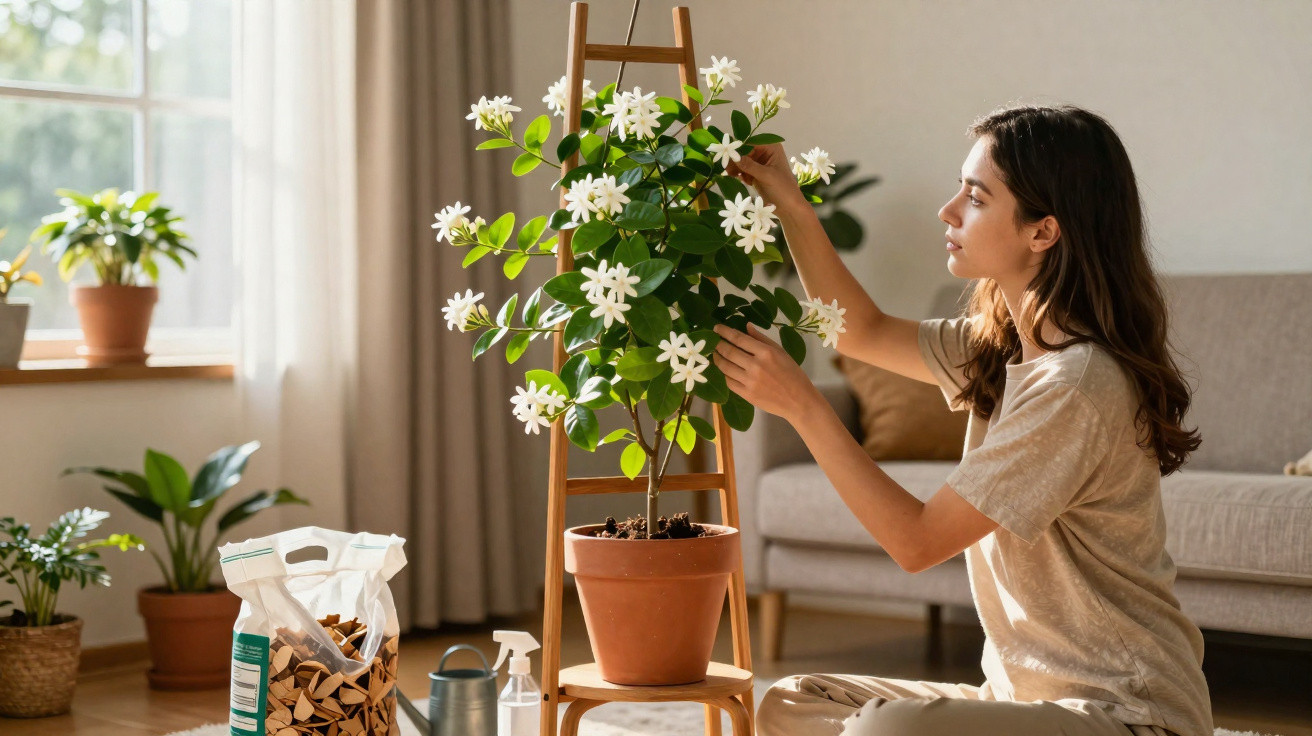
The cape jasmine is a fragrant climber that turns a supported pot into an elegant focal point indoors. Its white, star-shaped flowers release a distinctive scent, bringing together beauty, fragrance and compact growing in one plant.
Why does cape jasmine scent the whole house so strongly?
What makes this plant so appealing is the display of waxy, white, highly scented blooms that open in delicate clusters. In bright indoor spaces, the perfume carries easily, which is why this climber works so well for living rooms, enclosed balconies and spots by windows.
Stephanotis floribunda is a woody climber native to Madagascar, valued for its glossy leaves and tubular flowers with an intense aroma. Despite the popular name, it is not part of the Jasminum genus, but it has become well known for its sweet perfume.
This climber stands out for the following reasons:
- White flowers: star-like in shape with a delicate look.
- Pot growing: makes it easier to control the roots, compost and overall plant size.
- Support: trellises and arches guide the twining stems.
- Light: bright conditions encourage growth and flowering.
- Watering: balanced moisture helps prevent bud drop and weak roots.
Where should you place the climber indoors?
The best position is close to a well-lit window, in a glazed balcony, or in an interior area with plenty of natural daylight. The plant likes abundant light, but in smaller pots it should be kept out of harsh, direct sun to avoid excessive heat around the roots.
It also helps to avoid sudden changes of position, cold draughts and dim corners. When conditions fluctuate too much, the plant may slow down, drop buds and take longer to open fresh fragrant flowers.
What compost should you use to keep the plant healthy?
The right compost needs to be light, fertile and free-draining, because this climber enjoys moisture but not waterlogging. A blend of topsoil, organic compost and a drainage material helps keep the roots well aerated and supports steady growth.
Titled image/caption: Fragrant climber in a pot
The pot should combine good drainage with a sturdy support.
Use a stable container with holes in the base and a trellis fixed securely.
The compost should hold a little moisture, but it must never become saturated.
The pot must have drainage holes and a drainage layer to prevent water building up. If the compost becomes too compacted, flowering can decline and the leaves may turn yellow-often a sign of too much moisture.
To pot it up, use the following set-up:
- Pick a sturdy medium or large pot with reliable drainage.
- Combine topsoil, organic compost and coarse sand or perlite.
- Fit an arch, cane support or small trellis before the stems put on length.
- Keep a light surface cover on the compost to retain moisture without smothering it.
Why is a support essential for this plant?
Cape jasmine is a twining climber, so its stems need something to wrap around and climb. Without support, the plant becomes tangled, loses its shape and the leaves receive less light.
Small trellises, metal arches, bamboo and plant supports all suit container growing, as long as they are firmly anchored. Training the stems gently reduces breakage, improves air flow and makes the blooms more visible and decorative.
A support is particularly useful for:
- Directing stems neatly so the plant does not become a knot of growth.
- Spreading leaves and flowers more evenly around the pot.
- Preventing long shoots from snapping or trailing along the floor.
- Turning the climber into a compact ornamental feature.
How should you water to encourage continuous flowering?
As with other plants often mentioned as elegant, garden-scenting choices, cape jasmine responds best to consistent care. Water when the surface has dried, keeping moisture moderate and maintaining regularity.
In warm weather and during active growth, watering may need to be more frequent-always without soaking the compost. In colder periods, cut back on watering, avoid heavy pruning, and keep the plant away from children and pets, as the sap should not be ingested or handled without care.


Comments
No comments yet. Be the first to comment!
Leave a Comment