
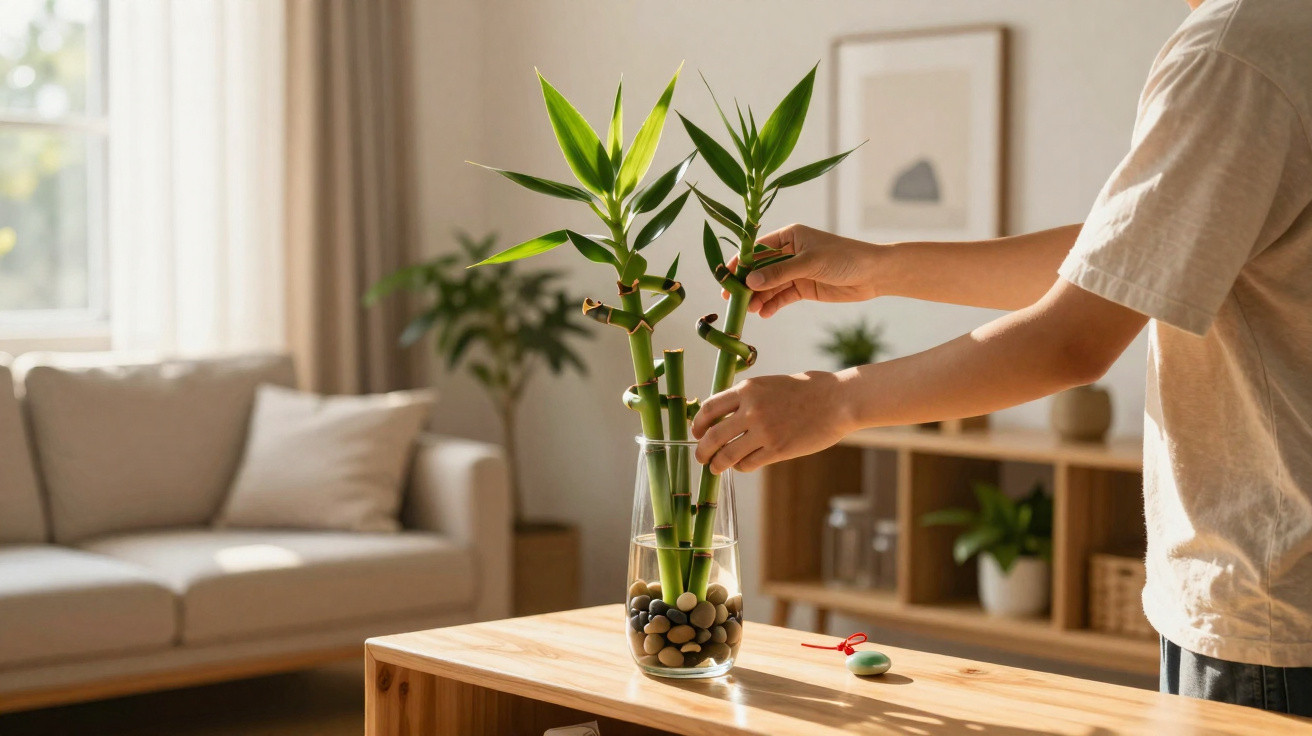
Lucky bamboo is among the plants most commonly kept in homes and offices, combining symbolism, a light appearance and easy cultivation. Despite its name, it is not a true bamboo but Dracaena sanderiana, a tropical plant connected with feng shui, prosperity and balance in indoor spaces.
Where does lucky bamboo symbolism come from?
Lucky bamboo became prominent in Chinese culture as a symbol of growth, flexibility and positive energy. In feng shui, it is often used to balance the flow of energy within the home and to express intentions related to health, love, harmony and prosperity.
The number of stems carries symbolic meanings too. One stem generally stands for good fortune; two stems are associated with love and relationships; three stems are linked with happiness; five stems refer to health; and six stems are used to represent prosperity.
Why is it found in so many homes?
Lucky bamboo has become popular because it takes up very little room, can be grown in water or compost, and suits living rooms, sideboards, desks and entrance areas. Its upright form and delicate leaves offer an attractive look, while it does not need direct sunlight to stay green.
Alongside its symbolic value, the plant brings practical everyday benefits:
- it helps introduce a natural feel to compact rooms;
- it works as a green focal point on desks and shelves;
- it requires straightforward maintenance compared with other plants;
- it adapts well to indirect indoor light;
- it adds a subtle decorative feature without taking up much space.
Where should lucky bamboo be placed for the best results?
The best location is somewhere with indirect light, away from strong sun, intense heat and dry draughts. In living rooms and offices, lucky bamboo usually works well near bright windows screened by a sheer curtain, as well as on sideboards or side tables.
Lucky bamboo is also frequently placed in entrances and work areas because of its association with welcoming energy, focus and prosperity. The main point of care is to avoid excessively dark places, as the plant can lose its strength and turn yellow over time.
How do you keep it healthy and vigorous?
When it is grown in water, the roots must remain covered, and the water needs changing regularly to prevent unpleasant odours, residue build-up and mosquitoes. Using filtered, rested or low-chlorine water can help prevent yellow leaf tips.
A few measures will keep the plant healthy for longer:
- change the water once a week;
- keep only the roots and lower section of the stem under water;
- keep the leaves out of direct sunlight;
- clean the container if algae develops;
- use highly diluted liquid fertiliser only occasionally.
What does this plant represent in the home?
The presence of lucky bamboo brings together symbolism and daily care in a plant that is easy to maintain. It represents growth, adaptability and balance, while still needing clean water, suitable light and a stable setting to remain attractive.
Its benefits in the home are most apparent when the plant is given a position that meets its needs. In a bright spot, sheltered from strong sun and properly cared for, lucky bamboo stays green, upright and decorative, reinforcing the sense of harmony that has made it one of the world's most popular plants.

Comments
No comments yet. Be the first to comment!
Leave a Comment