
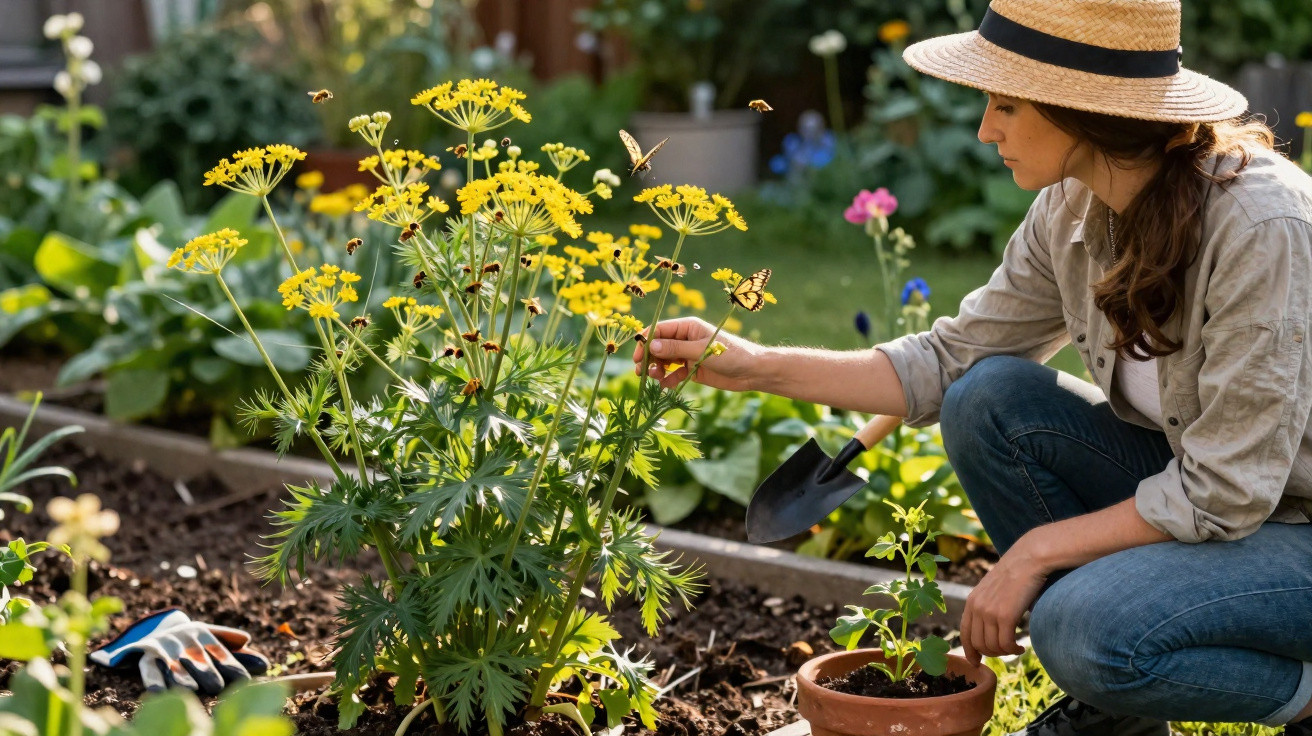
The first time it struck me, the garden felt oddly hushed. My dahlias were immaculate, the roses were laden with colour, and the salvia stood to attention like neat rows of tiny purple soldiers. It was undeniably lovely - but the air hardly stirred. A couple of half-hearted bees, one bewildered butterfly, and that was about it. Then, right at the far end of the garden in a corner I’d more or less stopped noticing, a different patch of green was humming like a summer street market. No showy blooms. No bright tones. Just a waist-high snarl of soft, feathery stems.
When I went over, I saw it wasn’t “just greenery” at all - it was teeming. Small wasps, bees of every size, hoverflies moving as if in slow motion, and something that looked very much like a miniature hummingbird hawk-moth. My flower beds were picture-perfect. This unnamed plant was where the action was.
Most gardeners pull it up without a second thought.
The “boring” plant that turns your garden into an airport for pollinators
That plant is fennel - ordinary, leggy, slightly feral fennel. The sort that appears by the compost heap or along a fence line, and that many people turf out because it “looks untidy”. When it starts to set seed, it sends up large, airy umbels made from countless tiny yellow flowers that barely register as flowers at all. And yet, that’s exactly where the magic is.
Stay beside fennel while it’s in bloom for more than half a minute and you’ll notice it straight away: a steady, low drone, like a power line made of wings. Bees don’t merely drop in; they line up. Minute parasitic wasps, lacewings, ladybirds, hoverflies - all the helpful little workers you wish for when aphids hit your roses - are drinking from those nectar-packed pinpricks of blossom. It’s as if fennel has switched on an “open” sign for every beneficial insect nearby.
Last July, a neighbour asked me round to admire her “bee-friendly makeover”. She’d spent a fair bit on pollinator seed mixes, bold coneflowers, echinaceas, and fancy salvias arranged in crisp, perfect blocks. It looked like it belonged in a catalogue. We stood there waiting for the soundscape to match the styling. It… didn’t. A few honey bees wandered through, had a taste, and carried on. Attractive, but strangely quiet.
Down a side path beside her bins, a clump of wild fennel had planted itself. She said sorry for the “weed” and told me she was going to remove it. But that neglected, unwatered plant was thick with life. Carpenter bees barged for room. Hoverflies hovered above it like tiny drones. If you were counting visitors, the fennel was doing better than all the glamorous flowers put together. We ended up watching that scruffy corner longer than her carefully planned borders.
There’s a straightforward explanation for why fennel draws so many insects. Those umbrella-like heads are built from dozens - often hundreds - of tiny blooms. Each flower is shallow and open, which means even the smallest wasp or fly can feed easily. Many garden favourites have deep tubes or complicated shapes that only a few pollinators can use. Fennel, by contrast, is a level, open buffet that almost everyone can reach.
And fennel doesn’t just flower for a handful of days - it keeps going for weeks. It’s not precious about flawless soil or constant watering. While other plants sulk during heatwaves or get flattened by a storm, fennel carries on quietly supporting the local insect population. It’s not that your ornamental flowers don’t matter; it’s that fennel fills a different niche - the dependable, slightly scruffy friend who turns up when you need an extra pair of hands.
How to grow fennel so it helps pollinators (without taking over)
Begin with one decision: are you after culinary fennel (the bulbing type) or wild/bronze fennel (the non-bulbing sort)? For pollinators, both are useful, but wild fennel and bronze fennel usually flower more freely and reach a greater height. Sow seed straight into the ground in spring once the soil has warmed, or set out young plants from a garden centre. Choose a bright, sunny position - fennel loves light and will lean towards it if it’s even slightly shaded.
You don’t need perfect soil to succeed. Fennel is quite happy in ground that’s on the dry side, even a bit stony. Give it some water while it establishes, then ease off. This is a plant that genuinely does well with a touch of benign neglect. The key is to allow room: one or two clumps at the back of a border, or along a fence, where the tall, airy stems can move without smothering your treasured dahlias. Make sure you let at least a few stems go right through to flowering and seeding - that’s the point at which pollinators really benefit.
If fennel has died on you before, you’re in good company. Many of us treat it like a demanding veg crop, feeding and watering too much, then wondering why it collapses or rots. Fennel dislikes waterlogged roots and heavy, compacted ground. What it wants is drainage and light, not constant cosseting. And, let’s face it, nobody manages that perfectly every single day. That’s part of what makes fennel so refreshing: it copes with the missed days and the skipped watering rounds.
Another common misstep is yanking it out the moment it begins to flower. From a cook’s perspective, the best bulbs are lifted before the plant “bolts”. From a pollinator’s perspective, bolting is when the real celebration starts. If you’re growing bulb fennel, keep some plants for the kitchen and allow a couple to go wild and bloom. One for you, one for them - a balance that feels unexpectedly satisfying.
“We’ve all been there, that moment when you stare at your garden and realize it looks perfect on Instagram and strangely lifeless in real life.”
Putting in fennel is a small act of defiance against that polished-but-hollow look. It leans, it self-seeds a little, and after a storm it doesn’t always stand to attention. But that slight disorder is precisely what invites life in. If you want to stop it running riot, remove a few seed heads before they dry, or cut some stems to use in the kitchen. Let the rest remain as a tall, airy haze - a vertical cloud that hums with wings.
- Best spot for fennel: At the back of sunny borders, along fences, or near the veg patch so beneficial insects can patrol.
- When to sow or plant: Sow seed or plant out in spring; in milder areas you can also sow in late summer for the following year.
- Water and care: Water lightly while young, then only during prolonged dry spells; rich fertiliser isn’t necessary.
- Keeping it in check: Cut some flower heads before they set seed if you don’t want self-sown plants everywhere.
- Combining with flowers: Set fennel’s feathery texture against zinnias, cosmos, or marigolds for colour and shape without losing the relaxed, wild feel.
A different way to see what a “beautiful” garden looks like
Once you’ve watched a fennel clump at full tilt, your sense of what counts as “success” in the garden starts to shift - quietly, but permanently. You begin to pay attention to sound as much as appearance. You notice the quick, zig-zag flights between stems, and the tiny wasps hunting for a place to raise the next generation of pest-eaters. Some of your best garden moments may happen not under the rose arch, but beside a simple yellow-green haze of fennel near the back gate.
You don’t need to turn your garden into a meadow overnight. One plant in one corner can change the whole feel. You might grow fennel for pollinators and find you enjoy the fronds with grilled fish, or you might discover the dried seed heads look lovely in a vase. Or you may simply keep it as a quiet ally, doing its work every day while you’re busy with everything else. And when a friend asks why insects are bypassing their flashy blooms to gather on that tall, unassuming plant instead, you’ll have a satisfyingly clear answer.
| Key point | Detail | Value for the reader |
|---|---|---|
| Fennel attracts diverse pollinators | Its flat umbels of tiny flowers feed bees, hoverflies, wasps, and beetles for many weeks | Improved pollination for fruit and veg, plus stronger natural pest control |
| Easy, low-maintenance growth | Thrives in sun, poorer or drier soil, and needs very little watering once established | Ideal for busy gardeners who want results without daily attention |
| Discreet but powerful garden ally | Can be tucked behind borders or near the veg patch and managed partly by deadheading | Supports biodiversity without spoiling the garden’s overall look |
FAQ:
- Does fennel really attract more pollinators than flowers? Not necessarily more than every flower, but fennel often brings in a broader range of insects than many ornamental blooms, because its many shallow flowers are easy for small species to use.
- Will fennel take over my garden? Fennel can self-seed, particularly wild forms. Remove some seed heads before they dry if you want fewer volunteers, or grow it in a contained bed.
- Is fennel safe near my vegetables? Yes - and the beneficial insects it attracts can help keep pests down. Just don’t plant it right beside dill, as they can cross and affect seed purity.
- Can I still eat fennel if I let it flower? You can pick young fronds whenever you like and use the seeds in cooking once they ripen. Bulbs are best before flowering, so grow separate plants for eating and for pollinators.
- Does fennel work in pots? It can, provided the container is deep and drains well, but it generally does better in the ground where roots can spread and the plant can reach full size for maximum flowering.
Comments
No comments yet. Be the first to comment!
Leave a Comment