
Creating a vernal pool in the garden turns low-lying patches into thriving ecological havens. This straightforward project uses rainwater to form a temporary nursery that is ideal for native amphibians to breed and for boosting household biodiversity.
How does planning a vernal pool in the back garden work?
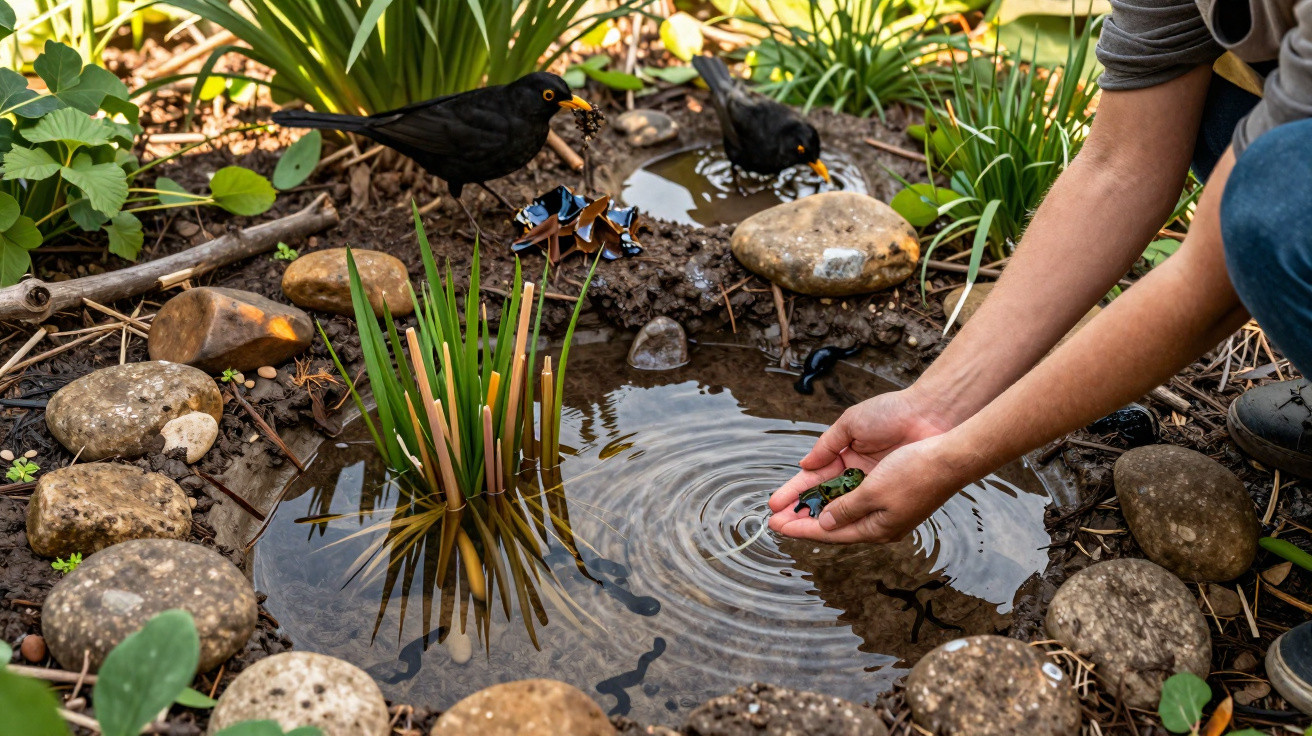
To plan this space, start by selecting a naturally low area where water already gathers. By digging a shallow basin, you harness the flow of rainfall and hold on to that valuable resource instead of letting it run off your property quickly.
With a modest depth of around 60 centimetres, the pool warms rapidly in the sun. That gentle, predictable warming helps eggs hatch sooner, so newly emerged tadpoles can complete their life cycle before the pond dries out at the end of the hot period.
The creator set up the space using these key steps:
- Planned excavation: Lifting the top layer of turf to shape a shallow pool using a backhoe.
- Small dam: Piling clay-rich soil at the lowest end to help retain rainwater.
- Submerged branches: Adding small branches and twigs to provide support for amphibians to lay eggs.
- Dry leaves: Placing leaf litter on the muddy base to supply nutrients and natural hiding places.
- Edge sowing: Planting native wildflowers and grasses around the margins to reduce erosion.
Why does the absence of fish benefit local amphibians?
Permanent ponds that contain predatory fish can be dangerous for amphibians. Fish consume defenceless eggs and tadpoles and can also release chemical cues into the water that deter adult frogs searching for safe places for their necessary breeding.
By establishing a pool that is completely fish-free, the homeowner provides a far more successful breeding site. Without aquatic predators, native frogs’ survival rates rise markedly, allowing wildlife to thrive within this small, artificial sanctuary set into the household lawn.
Below is the official YouTube video from The Wildlife Homestead channel:
Which structural elements attract animals to the new environment?
Water alone is not enough to establish a healthy ecosystem. It is important to add natural features that mimic a woodland floor, giving small animals the protection they need to hide and lay their eggs in safety.
Natural refuge
Encouraging wildlife
Placing branches under the surface creates crucial anchor points, allowing frogs to attach their egg masses away from the silty bottom. Adding dry leaves to the base produces organic debris and forms ideal cover for developing tadpoles.
In addition, native vegetation planted around the small dam helps stabilise the soil against erosion caused by heavy run-off. Over time, these plants mature and cast helpful shade that holds moisture for longer, turning what was once a uniform lawn into a more complex habitat.
Among the main materials added to the pool are:
- Fallen branches to secure eggs.
- Dry leaves to shelter tadpoles.
- Wildflower seeds along the margins.
How do birds use mud from the edges to build nests?
This pond also benefits birds that visit the area around the home. Keeping part of the bank exposed provides a steady supply of damp mud, an essential material that native birds use to shape sturdy nests during the breeding season.
Birds such as thrushes gather pliable mud from the edges and mix it with small, dry twigs. This ecological behaviour was observed at close range, showing the effort these small creatures invest to create secure, well-insulated structures where they will raise their new chicks.
The birds seen using resources in the garden include:
- The American robin when building its base.
- The eastern phoenix collecting mud for reinforcement.
- Swallows checking the area for workable clay.
What impact does this temporary ecosystem have on household biodiversity?
Putting these temporary pools in place directly supports local wildlife conservation. Practical actions like this demonstrate how small interventions can protect native amphibians, and they offer a useful example for anyone wanting to enrich their own garden’s biodiversity through sustainability.
Beyond amphibians and birds, the site can also draw flying mammals through the well-placed installation of artificial roosts. Bat boxes for insect-eating bats mounted near the water’s edge round out the ecosystem, helping control urban pests and promoting a thoroughly healthy ecological balance.
Official source: Information gathered directly from YouTube / The Wildlife Homestead.
Comments
No comments yet. Be the first to comment!
Leave a Comment