
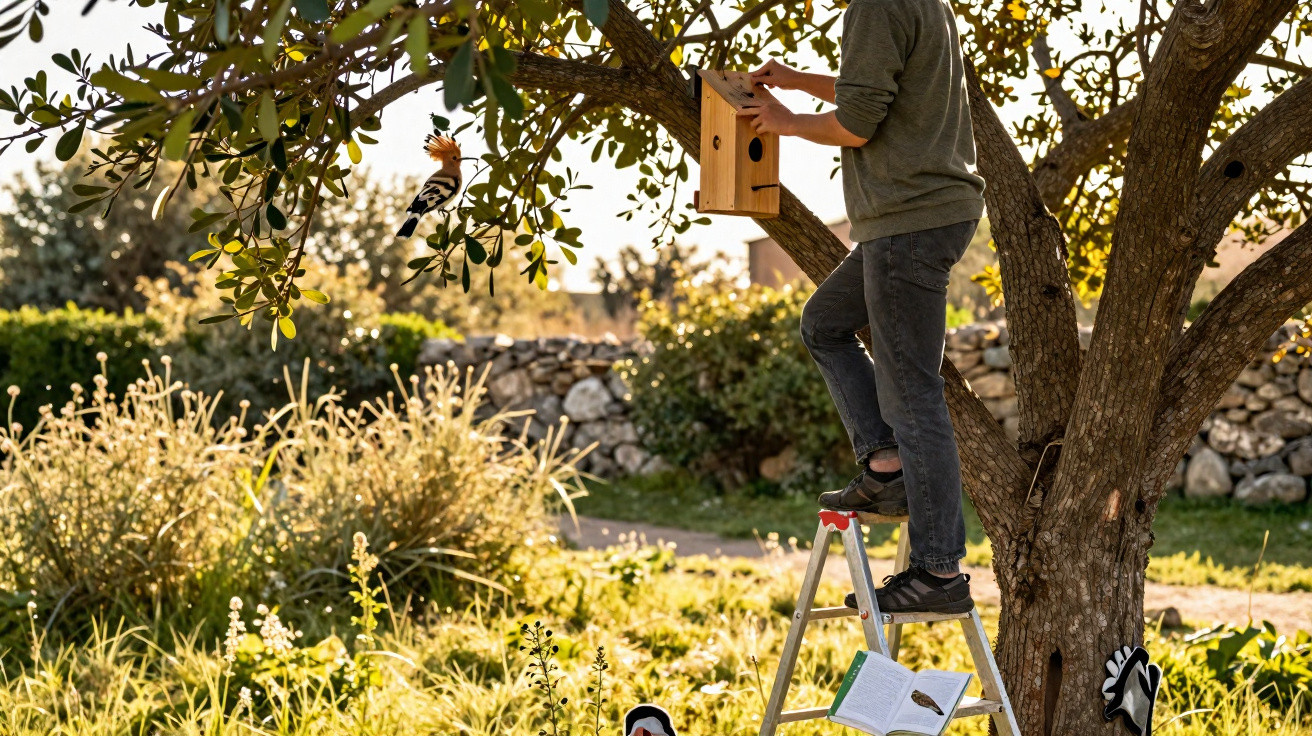
More and more hobby gardeners are wondering how to entice this exotic-looking bird with its striking feathered crest right to their front door. A correctly positioned nest box is central to making that happen. If you follow a few straightforward guidelines, you support a bird that has become scarce in many areas and, at the same time, gain a highly efficient pest hunter for your vegetable patch.
Why the hoopoe is a dream guest in the garden
With its orange crest, the hoopoe looks as though it has flown in from a tropical park, yet it is also native to Central Europe. In spring, in particular, it returns from its wintering grounds and searches for suitable breeding sites in varied, well-structured landscapes - and increasingly, in gardens too.
"The hoopoe eats ground-dwelling insects, larvae and even slugs - completely without chemicals."
That makes it a natural ally for anyone who wants to protect vegetables without using toxins. The long, curved tip of its beak works like tweezers: it probes into the soil and pulls out chafer grubs, beetle larvae and other pests that would otherwise nibble at roots and leaves.
At the same time, hoopoes now struggle to find suitable nesting cavities. Old fruit trees with woodpecker holes are becoming rarer, hedgerows are disappearing, and barns and stables are being renovated and sealed tightly. This is exactly where a thoughtfully planned nest box can make a difference.
The right location: where a hoopoe nest box should go
If you want to attract the bird from April onwards, the most important step is choosing the nest box site carefully. The box can be mounted in many different places, provided a few basic principles are met.
Peace, protection, a clear view
The best spot is in a quiet part of the garden, well away from the patio, trampoline and barbecue area. The bird may tolerate people nearby, but constant disturbance right next to the box will put it off. It also needs a degree of protection from typical predators such as cats, martens or foxes.
- Mounting surface: tree trunk, sturdy hedge, house wall, barn or a stable post
- Height: usually 2 to 3 metres, higher if the ground conditions make sense
- Surroundings: as open as possible, with short grass, meadow or vegetable beds where the bird can forage
In a heavily shaded garden with dense growth, a hoopoe will find things difficult. It relies on open patches with light, workable soil where it can probe for insects. A wildlife-friendly garden with minimal hard landscaping is ideal.
The best orientation for the entrance hole
For the direction, it helps to think about the path of the sun. Ideally, the entrance hole should face east or south-east. That way, the box benefits from gentle morning sun, while the hotter midday sun is less likely to overheat it.
"A nest box facing east or south-east protects against heat and heavy rain and creates a stable microclimate for the chicks."
A fully exposed south-facing position on a bare house wall can become too hot very quickly in high summer. Equally, a permanently damp north-facing wall is a poor choice because the box may never properly dry out. Partial shade - or moving shade from branches - is entirely sufficient.
What a suitable hoopoe nest box looks like
Hoopoes often favour semi-open cavities and slightly larger box designs. Whether you buy one or build it yourself, focus on robust materials and appropriate dimensions.
| Feature | Recommendation |
|---|---|
| Material | Untreated, weather-resistant wood (e.g. spruce, pine, larch) |
| Wall thickness | At least 18–20 mm for good insulation |
| Entrance hole | Relatively large so the hoopoe can fly in and out comfortably |
| Roof | Slightly sloped forwards, with an overhang to shed rain |
| Cleaning | A flap or removable roof for access after the season |
Solvent-based stains or paints do not belong on the inside of the box. If you treat it at all, a thin exterior coat using a bird-safe, water-based wood stain is enough.
The right timing: when the box should be put up
Ideally, the box should be installed in autumn or winter. Then it not only becomes available as a breeding site later on, but also provides shelter for other species over winter, such as tits or sparrows. Many birds remember these refuges and return to them in spring.
If you missed that window, you can still put the box up in spring. The key point is that the bird discovers it in time for the breeding period - usually between April and June.
Care: cleaning and checking without stressing the bird
The hoopoe is not a particularly tidy tenant. During the breeding season, a thick layer of droppings, food remains and nesting material builds up inside. If the box is never cleaned, parasites can multiply and weaken the chicks.
"One thorough clean per year is usually enough - ideally between late summer and winter."
To do this, remove all old nesting material and brush the interior out while dry. Cleaning products are unnecessary; if you use water at all, keep it to a minimum. Gloves are sensible, especially if the box is heavily soiled.
Craftsmanship and conservation: why a regional nest box is worth it
Many workshops and small businesses make specialised nest boxes designed for specific species. Buying one of these products often supports several aims at once: protecting rare birds, promoting local timber processing, and - in many cases - social projects that provide work for people with disabilities.
For more demanding species like the hoopoe, a well-considered design can be decisive. It provides sufficient space, lasts longer and becomes a reliable part of the garden ecosystem.
Legal aspects and respectful behaviour around wild birds
Wild birds are protected in many countries - and the hoopoe is among them. If you attract it to your garden, you are providing habitat, but you must not catch it, keep it or breed it. A nest box is simply an offer, not a cage.
- Do not install a camera inside unless the box is explicitly designed for that purpose
- Keep your distance during the breeding season and do not block the flight path
- Do not feed directly at the nest box, as this can draw in predators
Children can be involved very easily - for example, when building the box or painting the outside. However, they should understand that the inside is off-limits once a breeding pair has moved in.
How to make your garden more hoopoe-friendly overall
A single nest box works best when the surroundings are suitable. The bird needs open, preferably short areas where it can find insects. If every square metre is paved over, its food supply disappears.
Helpful measures include:
- A small meadow with wildflowers, mown only occasionally
- A vegetable bed without chemical pest control
- Sandy or loose soil patches where insects can develop
- Old fruit trees or a corner of deadwood to support beetles and larvae
If you also avoid slug pellets, you create a genuine buffet for the hoopoe and other insect-eaters. The more varied the garden, the more stable the ecological balance.
Practical examples and possible pitfalls
A typical scenario looks like this: on the edge of a village there is a larger garden with fruit trees and vegetable beds. A hoopoe box is fixed to a barn wall facing east, at around 2.5 metres high. Below it sits a strip of vegetables, with a closely cut meadow to one side. There are no free-roaming cats nearby. In that kind of set-up, the chances are good that a hoopoe will accept the offer.
It becomes difficult when the box is mounted right beside a heavily used patio, children are constantly playing underneath, or the household cat treats the post as a climbing frame. Brightly lit walls with motion-sensor lights can also be disruptive. In situations like these, it is often worth moving the box a few metres.
With a little patience - and by understanding what the bird needs - you may gain a spectacular, useful seasonal resident while also helping to protect a species that has become rare in many regions.
Comments
No comments yet. Be the first to comment!
Leave a Comment