
The first proper heatwave of the year arrived on a Tuesday. By 10 a.m., the roses in the front border were already drooping-petals slack, leaves curling inwards as if they’d simply had enough. The lawn had turned into a rigid, straw-yellow mat. You could practically imagine the cucumbers grumbling.
Walk a few metres further-round the back of the house-and everything looked different. Beneath the light canopy of an old apple tree, herb pots stood glossy and upright. A small patch of lettuce still held beads of dew. The soil felt cool under your fingers. The thermometer read 34°C, yet in that soft shade the garden seemed to have quietly opted out of the drama.
The only meaningful change? Someone had given the plants a short break from full sun.
When shade becomes a survival strategy
On blindingly bright days, it feels as if you can trace plant stress by following the light. Beds left fully exposed look battered by mid-afternoon: leaves singed, soil split open, bees rushing about-then disappearing when the heat hits its peak. Only a few metres away, where a fence, shrub, or trellis blocks the sun for a couple of hours, the whole scene looks… steadier.
Gardeners who intentionally build in partial shade often describe it as a pressure release-not a defeat, and not a compromise, but a deliberate approach. When temperatures surge, their gardens don’t tip into emergency mode. Growth slows, plants hold on, and the plot keeps moving forward.
Partial shade doesn’t take growth away; it spreads it out.
Spend any time in gardening groups and you’ll spot the same trend. The people who stopped fixating on “six hours of direct sun or nothing” are often the ones who lost fewer plants in the punishing summers of recent years. A community gardener in Phoenix told me her basil “melted” in full afternoon sun, while a bed tucked behind a scruffy mulberry tree kept producing leaves right through August.
Across parts of southern Europe, urban growers now note which balconies receive only morning light-and swap them like they’re priceless. One French study on city gardens found that shaded plots lost far less yield during 40°C spells than fully exposed ones, largely because plants weren’t burning energy just to stay alive.
The harvest didn’t vanish; it shifted into something steadier, and less all-or-nothing.
There’s a straightforward explanation. Plants need more than light-they need the right mix of light, heat, and water. When the sun is too fierce, leaves dial down parts of their photosynthesis to prevent damage. The result is reduced growth, no matter how “sun-loving” the seed packet claims the variety is.
Partial shade helps by removing the most punishing hours-especially between 1 and 5 p.m., when heat and UV reach their highest levels. Under a tree, a shade cloth, or beside a north-facing wall, leaf temperatures can stay several degrees cooler than the surrounding air. That margin is often what separates coping from collapse.
Light is food. At the wrong time, too much of it becomes a burn.
How to invite partial shade into a sun-baked garden
You don’t need a towering, mature oak to alter your garden’s microclimate. Begin by watching your space over an entire day. Where does the sun feel most relentless? Which area eases off in late afternoon? That’s the pattern you can work with.
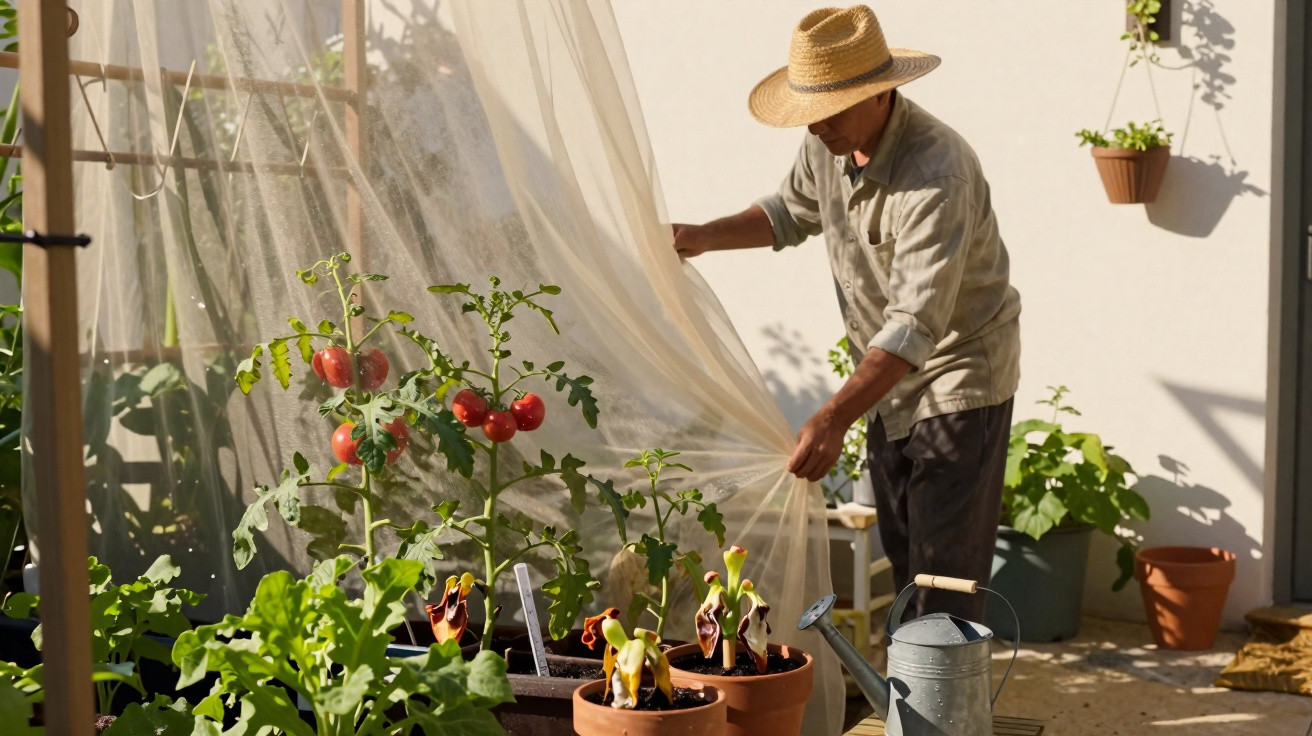
Even simple additions can give plants room to breathe: a piece of 30–50% shade cloth pulled over stakes on the west side of a bed; a line of tall sunflowers throwing a moving shadow over lettuce; a pallet stood upright so beans can climb while salad crops sit in their mottled shade.
Think less “pitch dark”, more “sunglasses for your plants”.
Many gardeners get stuck on the same assumption: that shade equals poor results. They pack tomatoes into the brightest, hottest corner, then can’t work out why blossoms drop and foliage scorches. Or they yank out self-seeded shrubs and volunteer plants that could have served as ideal, natural parasols.
Most of us know that sinking feeling: by midday your prized pepper looks like wilted, cooked spinach and you feel personally at fault. Rather than questioning your ability, look at exposure and timing. A touch less direct sun can translate into better fruit set, fewer dropped flowers, and fewer frantic evening watering sessions.
Let’s be realistic: hardly anyone tracks sun hours every day with military precision. But spotting your hottest patches and taking the edge off there? That alone can shift the whole season.
Some gardeners talk about this change as a genuine turning point. They stop chasing flat, wide-open, “perfect” beds and start building in layers instead: taller crops, shrubs, and small trees to form the structure; mid-height perennials and vegetables to fill the gaps; and delicate greens tucked into the gentle blur of partial shade.
“Once I stopped treating shade as the enemy, my garden stopped burning out,” says Lena, who gardens on a south-facing slope in central California. “I planted a small fig, put my lettuces under its future canopy, and now my garden looks less exhausted than I do in July.”
- Use morning sun, dodge afternoon blast
Put sensitive crops where they receive light before noon, then shade after 2 p.m. - Create “living umbrellas”
Tall corn, sunflowers, or okra can protect greens and herbs planted at their base. - Choose plants that enjoy partial shade
Lettuce, spinach, coriander, hydrangeas, and many ferns often do best with breaks from full sun. - Mix solid and dappled shade
Climbers trained on trellises or lattice soften sunlight without plunging beds into gloom. - Cool the soil, not just the leaves
Mulch under shaded plants stops roots from baking and eases watering pressure.
Rethinking success in a hotter gardening world
Few people post online bragging about their “ideal patch of partial shade”. The showy photos are nearly always vast, open vegetable beds under a blazing sky. Yet the quieter reality is this: the gardeners who still enjoy their plots at the end of August are often the ones who’ve accepted-and designed for-those gentler, shadier edges.
As summers intensify and heat spikes become harder to predict, success will look less like pushing for maximum exposure and more like knowing when to pull plants out of the glare. Not as a last-minute rescue, but as part of the plan. A garden doesn’t need to be sun-drenched to be productive; it needs to be balanced enough to breathe.
Perhaps that’s what partial shade really brings: less fixation on driving plants to their limit, and more focus on comfort, resilience, and the quiet relief of stepping outside on a blistering day and finding your garden… steady.
You start laying out beds differently. You pay attention to where shadows land in July. You let that volunteer shrub remain for one more season. And before you plant, you ask not only “how much sun does this need?” but “how will this feel at 3 p.m. on a 38°C day?”
That’s when the strain begins to ease-for your plants, and for you.
| Key point | Detail | Value for the reader |
|---|---|---|
| Partial shade reduces plant stress | Breaks the most intense sun hours and lowers leaf temperature | Fewer losses during heatwaves, more stable growth |
| Simple structures can create shade | Shade cloth, trellises, tall crops, and small trees adjust light exposure | Low-cost, flexible ways to protect plants as climate warms |
| Choose crops suited to softer light | Lettuce, herbs, leafy greens, some flowers and shrubs thrive in partial shade | Better harvests and less daily maintenance stress |
FAQ:
- Question 1 Isn’t full sun always better for vegetables?
- Answer 1 No. Many “full sun” crops struggle in extreme heat. In hotter regions, 4–6 hours of morning sun plus afternoon shade often gives better yields and healthier plants than 8–10 hours of harsh exposure.
- Question 2 What does “partial shade” actually mean?
- Answer 2 Typically it means 3–6 hours of direct sun, or bright indirect light most of the day. Think morning sun, or dappled light under a tree, rather than deep, dark shade.
- Question 3 Can I still grow tomatoes in partial shade?
- Answer 3 Yes, especially in very hot climates. Give them strong morning light and protect them from the fiercest afternoon rays. They may ripen a bit more slowly, but blossoms and fruit often hold better.
- Question 4 How can I add shade if I rent and can’t change the garden permanently?
- Answer 4 Use movable solutions: pots with tall plants, temporary shade cloth on stakes, folding screens, or lightweight trellises with annual climbers like beans or nasturtiums.
- Question 5 Won’t shade increase pests or diseases?
- Answer 5 Dense, airless shade can, but light, airy partial shade usually doesn’t. Space plants well, keep air circulating, and water at soil level to keep foliage dry and healthy.
Comments
No comments yet. Be the first to comment!
Leave a Comment