
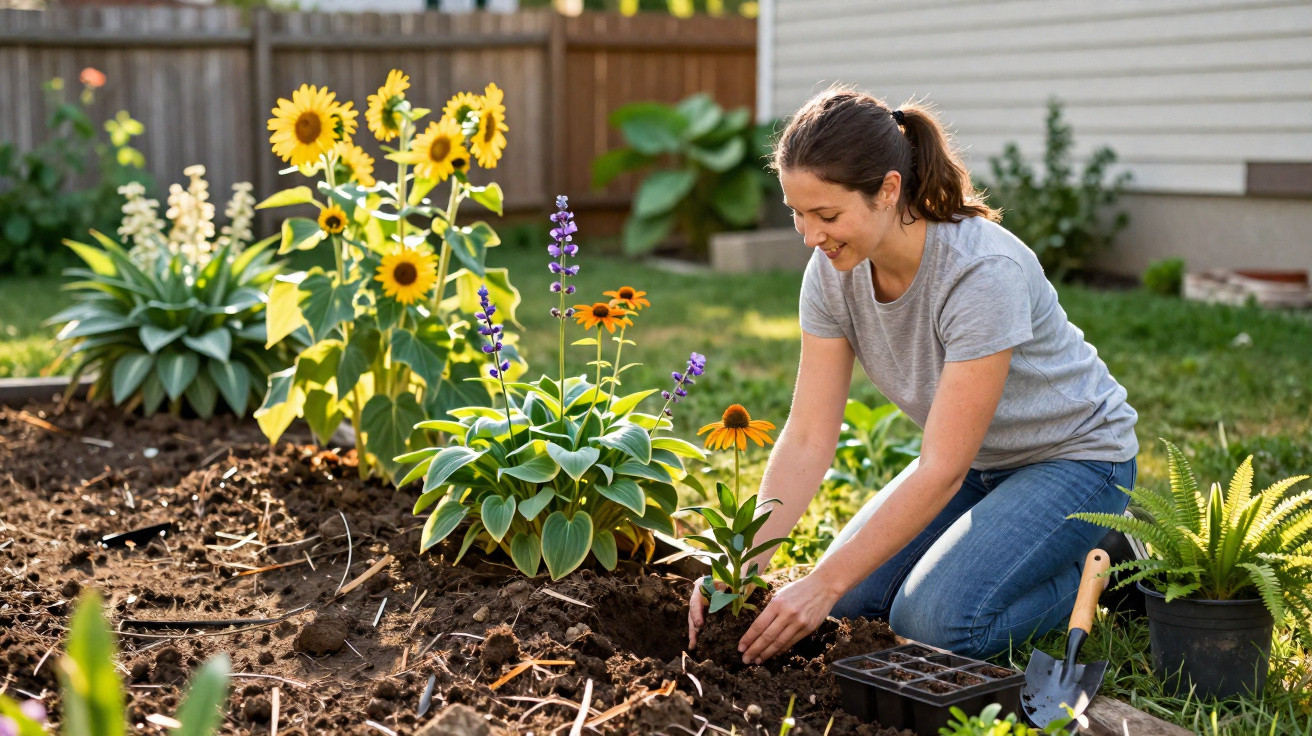
Many home gardeners find themselves staring at brown beds and bare patches in spring, unsure where to begin. Instead of replanting everything and spending a lot on short-lived seasonal bedding, there’s a smarter option: perennial plants you put in once and that return each year with more strength. Planting now sets the foundation for a garden that gradually fills in almost on its own.
Why now is the perfect time for perennials
For plants, spring is the starting gun. The ground is no longer frozen, yet it stays cool and moist - exactly the conditions perennial roots prefer. They can spread steadily without being held back straight away by heat and drought stress.
In northern and higher-lying areas, the best window is typically April to mid-May; in milder regions it often starts as early as March. The key is simple: don’t plant into frozen soil, and avoid ground that’s completely waterlogged. If you catch this timing, you greatly increase the chance of strong growth and, often, a surprisingly generous display of flowers in the first year.
"If you plant perennials in spring, you give them time to establish roots - the best insurance against summer heat and losses."
How to prepare your bed for a “garden transformation”
Before you buy anything from the garden centre, take a careful look at what you’re working with. Full sun, partial shade and shade each call for very different perennials. Ignore that, and you’ll lose plants - and money.
Assessing the site correctly
- Full sun: at least 6 hours of direct sun per day, often with drier soil.
- Partial shade: sun in the morning or evening, with shelter around midday.
- Shade: hardly any direct sun, for example under trees or against north-facing walls.
Once you know which zones you have, you can get the basics right:
- Remove weeds and any leftover roots thoroughly.
- Loosen the soil with a spade or digging fork, to at least a spade’s depth.
- Work in well-rotted compost - this improves nutrients and soil structure.
- After planting, water in well and mulch the surface, for example with bark mulch or shredded prunings.
Mulch helps the soil retain moisture, stops the surface from crusting over, and slows down weeds. That’s exactly what young perennials need to settle in without stress.
15 perennials that quickly make a visible difference
The selection below covers a range of sites and looks - from showy sunny borders to cool, shady corners. That makes it easy to choose plants that genuinely suit your garden.
Stars for sunny borders
- Peony (Paeonia): Large, often scented blooms and a very long-lived nature. Once established, peonies can stay in the same spot for decades and grow more luxuriant each year.
- Lupin: Colourful flower spikes that add height and structure. Planted in groups, they read like small towers.
- Yarrow (Achillea): Flat, colourful flower heads that cope remarkably well with heat. Ideal for drier, poorer sites.
- Lavender: Fragrance, silvery foliage and a magnet for bees. Perfect along sunny paths, in gravel gardens, or as a low edging.
- Crocosmia: Bright red to orange arching sprays that seem to leap out of the border in summer. Pairs well with ornamental grasses.
- Delphinium: Tall, slender spikes in blue and violet shades - ideal at the back of a border or in front of fencing.
- Michaelmas daisy (autumn aster): Airy clouds of small flowers from late summer into autumn. It extends the season when much else has already finished.
Perennials for shade and cool corners
- Christmas rose and Lenten rose (Helleborus): Often flowering while the rest of the garden is still dormant - from late winter into spring. Suits partial shade through to shade.
- Hosta: The foliage is the main attraction: large, often variegated, and highly decorative. It prefers fresh, relatively moist shady spots.
- Astilbe: Feather-light, upright plumes that are especially happy in partial shade. A strong choice for humus-rich soils that stay evenly moist.
- Bleeding heart: Heart-shaped flowers that hang down from thin stems. Fits beautifully into romantic shade borders and beneath taller shrubs.
- Bergenia: Thick, glossy leaves and early flowers. It copes with more challenging spots too, such as near walls or under trees.
Versatile gap-fillers and long bloomers
- Coral bells (Heuchera): Foliage that looks good year-round, ranging by variety from lime green to almost black. Works in borders, pots, or as edging.
- Hardy geranium (cranesbill): Forms low mounds and flowers over a long period. Excellent for closing gaps and visually tying beds together.
- Penstemon: Slim stems carrying many bell-shaped blooms. Often flowers right through summer if you remove spent flowers.
"A mix of structural perennials, filler plants and ground cover creates a bed that stays interesting all year round."
How to combine the 15 perennials intelligently
A border looks its best when it plays with contrasts: tall and low, fine and bold, light and dark. If you scatter favourite plants without a plan, you’ll usually end up with gaps and a restless overall look.
| Zone | Suitable perennials | Effect |
|---|---|---|
| Sunny show border | Peony, Lupin, Yarrow, Delphinium, Lavender, Crocosmia, Michaelmas daisy (autumn aster) | Strong colour, tall, attractive to insects |
| Part-shaded area | Helleborus, Astilbe, Bergenia, Hardy geranium (cranesbill), Coral bells (Heuchera) | Soft transitions, long season, lots of structure |
| Shady corner | Hosta, Bleeding heart, Bergenia | Big leaves, calm look, romantic touch |
A practical method is to choose three to five structural perennials that set the tone - for instance, peonies and delphiniums towards the back. Then weave in lower growers such as yarrow, hardy geranium and coral bells to break things up. At the front, use ground-covering perennials to close the gaps so there’s no bare soil on show later.
Low-maintenance doesn’t mean no maintenance
Perennials are considered undemanding, but they do need a bit of help in the first two years. In dry spells, water newly planted specimens regularly rather than leaving them for ages and then soaking them. The better approach is less frequent but thorough watering that encourages roots to grow downwards.
For many types, a single annual application of compost around the plants is enough. Only very hungry candidates - such as some cultivated delphinium forms - benefit from an extra feed in spring.
Why perennials save money and stress over the long term
If you buy container plants and annuals anew each season, you keep paying year after year. Perennials, by contrast, form larger clumps over time that you can divide. That means a handful of starter plants can turn into whole beds after a few years.
Many varieties attract bees, bumblebees and butterflies. Lavender, yarrow, Michaelmas daisy (autumn aster) and hardy geranium are among the best nectar sources. A garden rich in perennials doesn’t just look good - it also buzzes and flutters, which supports the ecological balance in your own back garden.
Practical examples for different garden types
If you have a small terraced-house garden, it helps to plan in layers: peonies and delphiniums at the back, lupins and yarrow through the middle, and hardy geranium plus coral bells at the front. With just five to seven varieties, you can create a closed, easy-care strip.
In a more naturalistic garden, crocosmia and Michaelmas daisies (autumn asters) sit well alongside loose, airy ornamental grasses. The result is a gently waving, slightly wild look that still offers structure in winter with dried stems. In shady courtyards, hostas, bergenias and astilbes take centre stage - rounded out with a few pots of hellebores for early colour.
Common mistakes and how to avoid them
Planting too closely can look pleasingly “full” in year one, but it tends to backfire later when vigorous perennials start crowding each other. It’s better to stick to the recommended spacing and be patient - many species really take off in years two and three.
Another classic error is moving perennials around too often. Every major transplant sets them back. Plan the position carefully from the start, check the light conditions, and only divide or relocate every few years if it’s genuinely necessary.
If you keep these points in mind and get started now, in just a few months you’ll hardly recognise how bare the garden looked in winter. Perennials work quietly but lastingly - turning even modest beds into lively, enduring garden scenes.


Comments
No comments yet. Be the first to comment!
Leave a Comment