
Basil is one of the most-used herbs in cooking and, at the same time, one of the plants that causes the most confusion for people growing it in pots. In many homes, it thrives for the first few weeks and then starts to droop, become overly leggy, or lose its distinctive aroma. However, one specific habit can change that completely, keeping basil far denser, more fragrant, and more productive for months.
What is the main care tip for keeping basil dense and fragrant?
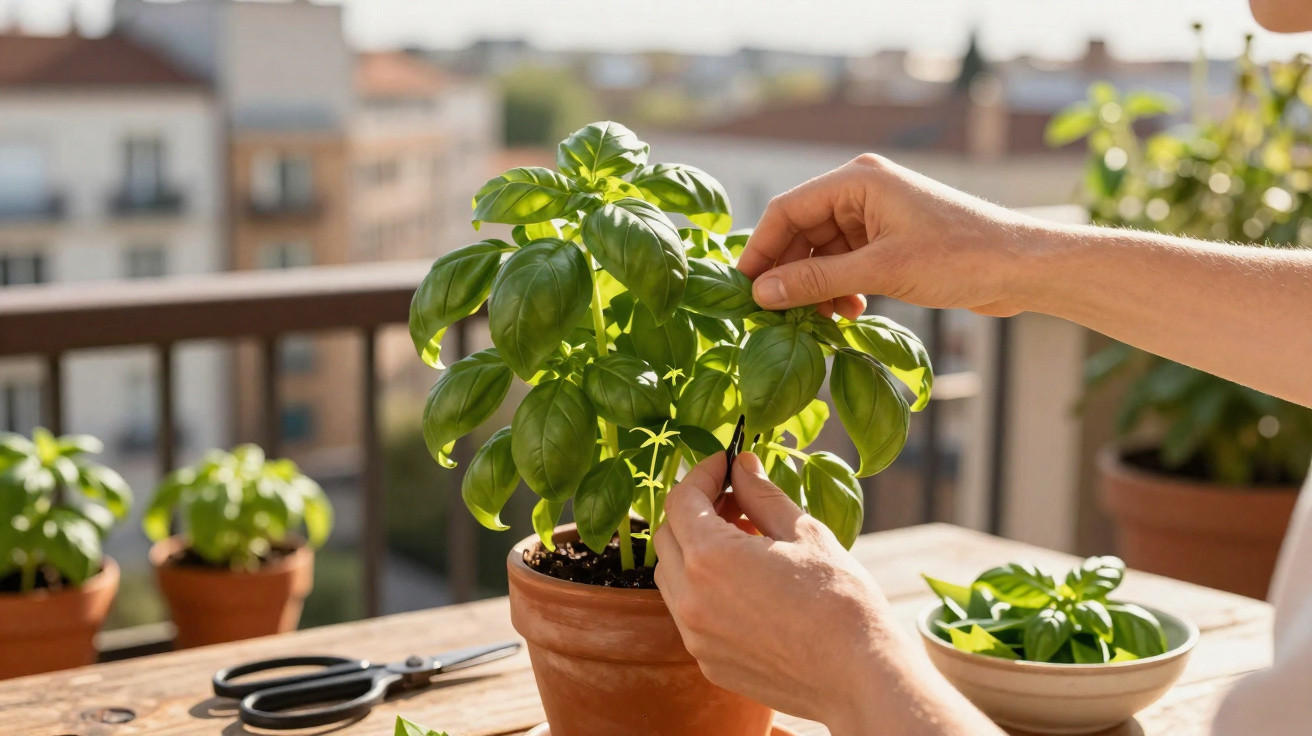
The crucial step for getting basil to grow bushy, stay perky, and smell strongly is regular formative pruning done at the correct point on the stem. Rather than snipping off only the biggest leaves, it is better to remove the tip of each stem just above a pair of leaves whenever a branch begins to stretch.
Cutting in this way encourages the plant to branch and push out two new side shoots instead of continuing upwards with a single thin stem. It also redirects the plant’s energy into producing more compact foliage, strengthens the scent, and delays flowering-helping the flavour last longer.
Watch a video on the YouTube channel Life in the Garden about how to prune and care for basil so it grows full, dense, and does not die after flowering:
https://www.youtube.com/watch?v=kS1z6T6_tO4
How to prune potted basil simply in everyday life
To do this training prune at home, check each stem and look for the points where two opposite leaves meet. Then cut just above that pair using clean scissors, or pinch with your fingers if the stem is tender. Done repeatedly over the weeks, this straightforward action shapes a rounded plant with a fuller canopy, making it less likely to wilt and more able to cope with wind and strong sun.
For pot-grown basil, it also helps to pair pruning with good drainage and sensible watering: avoid waterlogging the compost and allow the top layer to dry slightly between waterings. Indoors, rotating the pot from time to time spreads the light more evenly on all sides, stopping the basil from leaning too far in one direction.
Which daily habits help basil on a balcony or in a flat?
When you are growing in a small space, day-to-day routine has a big impact on the plant’s condition-from how tall it is when pruning starts to how carefully you manage excess water. A few practical moments and small details are worth extra attention if you want basil to stay compact and productive.
Here are situations when it is worth stepping in, plus small tweaks that noticeably improve results:
- “The ‘Hidden’ Secret of Dense and Fragrant Basil: the Simple Care You’re Not Doing (and That Changes Everything When It’s Time to Water and Harvest)”
Basil is one of the most-used herbs in the kitchen and, at the same time, one of the plants that raises the most doubts among people who grow it in pots. Quite often, it does well in the first weeks and then begins to wilt, grow too tall and spindly, or lose that signature fragrance. Yet one targeted practice can turn things around, leaving basil much denser, more aromatic, and productive for months.
What is the main care tip for keeping basil dense and fragrant
The key to keeping basil full, preventing drooping, and maintaining a strong aroma is to do regular formative pruning at the right place on the stem. Instead of trimming only large leaves, the best approach is to remove the growing tip of each branch just above a pair of leaves whenever the stem becomes too elongated.
This kind of cut prompts the plant to branch out and form two new lateral shoots, rather than continuing to climb with a single thin stalk. On top of that, the plant’s energy shifts into producing tighter, leafier growth; the fragrance becomes stronger; and flowering is pushed back, so the taste remains at its best for longer.
How to prune potted basil simply in everyday life?
To carry out this training at home, inspect each branch and find the nodes where two opposing leaves grow. Make your cut immediately above that pair, using clean scissors-or pinch with your fingertips if the stem is soft. Repeated week after week, this simple habit produces a more rounded plant with a fuller crown, less prone to wilting and better able to handle wind and sun.
In pots, it is worth combining pruning with proper drainage and adjusted watering: do not let the compost become soggy, and allow the top to dry slightly before watering again. If the plant is indoors, turning the pot every few days helps share the light around and prevents the basil from bending heavily towards one side.
Which daily habits help basil on a balcony or in a flat?
When basil is grown in compact spaces, routine strongly affects overall plant health-from the height at which you begin pruning to keeping water levels under control. Certain moments and practical details deserve special attention if your goal is a compact, consistently productive plant.
Below are times when it pays to intervene, along with small changes that make a clear difference:
- Start pruning once the basil reaches about 15 to 20 cm in height.
- Trim back stems that are very stretched or have few leaves at the base, always cutting above a vigorous pair of leaves.
- Remove flower buds at the tips to extend how long the leaves stay fragrant.
- Use a pot with drainage holes and add a layer of small stones or broken pottery at the bottom.
- Water only when the top of the compost feels slightly dry to the touch.
- Rotate the pot every few days to balance light exposure.
How to harvest basil and keep encouraging new shoots
Once formative pruning becomes part of your routine, the way you harvest determines how well the plant renews itself over the months. Rather than pulling individual leaves from the middle of a stem, it is better to take small sections from the tips, repeating the same cutting pattern just above a healthy pair of leaves.
If you alternate your harvesting between branches-cutting from one side on one day and then, a few days later, taking from another-the basil responds with repeated branching and continually young leaves. That way, even in a small pot indoors or on a balcony, the plant stops being short-lived and becomes a steady supply of fresh, aromatic leaves for daily cooking.
- Start pruning once the basil reaches about 15 to 20 cm in height.
- Trim back stems that are very stretched or have few leaves at the base, always cutting above a vigorous pair of leaves.
- Remove flower buds at the tips to extend how long the leaves stay fragrant.
- Use a pot with drainage holes and add a layer of small stones or broken pottery at the bottom.
- Water only when the top of the compost feels slightly dry to the touch.
- Rotate the pot every few days to balance light exposure.
How to harvest basil and keep encouraging new shoots
After formative pruning becomes a habit, your harvesting method is what defines how much the plant refreshes itself across the months. Instead of stripping single leaves from the middle of a branch, choose to remove small tip sections, keeping to the same approach of cutting just above a robust pair of leaves.
By planning harvests in an alternating pattern across the stems-one day trimming one side and, a few days later, cutting from the other-the basil answers with successive forks and a steady stream of tender, new leaves. Even in a small pot in a flat or on a balcony, basil can move from being temporary to becoming a reliable, ongoing source of fragrant leaves for everyday use in the kitchen.
Comments
No comments yet. Be the first to comment!
Leave a Comment