
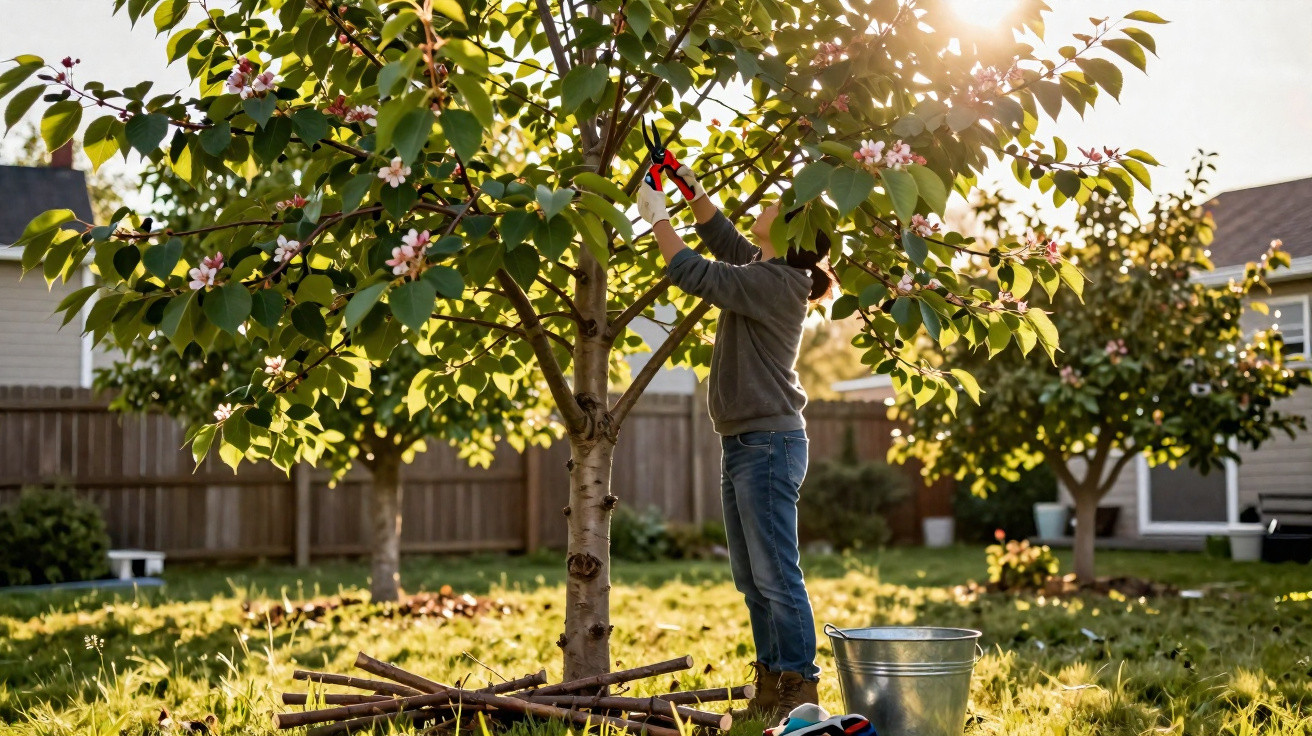
Plenty of hobby gardeners will recognise this: the cherry tree looks robust and healthy, yet it produces little more than a handful of fruit. Feeding, watering, good soil-nothing seems to make a difference. That was exactly where one garden owner found themselves, until an experienced neighbour pointed out what to cut, and precisely where. The change the following spring was so dramatic it almost felt like magic.
Why a vigorous cherry tree can still produce hardly any cherries
Dense foliage uses up all the energy
A thick, leafy canopy can look like a sign of perfect health. With cherry trees, however, that very lushness can be the problem. If the tree puts most of its effort into wood and leaves, its reserves are channelled into growth rather than blossom and fruit.
Nutrients move through the tree via the transport tissues in the trunk and branches. When strong new shoots keep appearing, that growth “gobbles up” a large share of the available energy. Flower buds-the ones meant to become cherries-then receive too little support. The result is a handsome crown, but empty picking bowls.
An overly dense cherry tree invests in wood-not in fruit.
Without light inside the crown, there are no flower buds
Light is the second major factor. Deep inside an unpruned, heavily branched crown, it is often dim and shaded-yet that is exactly where many potential fruiting shoots sit.
For a cherry tree to set plenty of blossom, those buds need sun, not only on the outside of the canopy. If hardly any light reaches the interior, the tree effectively changes its “production plan”: it flowers less and therefore sets fewer fruits. It may look healthy, but it is running at low power.
The neighbour’s tip: remove the energy thieves consistently
What the notorious “water shoots” really are
The turning point came when the neighbour pointed to a particular set of shoots: smooth, very vigorous branches growing steeply upwards. In horticultural terms they are water shoots (sometimes called “gourmet shoots”), because they drain the tree of an outsized amount of energy.
Typical features include:
- they grow almost vertically upwards
- they have smooth, often slightly paler bark
- they form few flower buds, or none at all
- they surge upwards noticeably within a single year
As a rule, these shoots will not produce a single cherry. Their job is to add height and build new wood. For harvesting they are useless-yet for the tree’s energy budget they are extremely costly.
How to make the key cut
The neighbour’s instruction was clear: remove these water shoots right at their point of origin. No stump, no little peg-cut cleanly back to the branch collar. That is the only way to stop them re-sprouting year after year and continuing to weaken the tree.
What matters most:
- Use sharp tools: a well-honed, sturdy lopper or high-quality secateurs prevents crushing and ragged cuts.
- Cut right at the base: take the shoot off as close as possible to where it emerges, without damaging the surrounding bark.
- Start with upright growth: anything that shoots straight up and has never flowered is your number-one suspect.
Removing water shoots redirects energy back into blossom and fruit.
Light and air: how a thinned-out tree suddenly performs
What to do with rubbing and crossing branches
Next, the neighbour worked through the crown methodically. Whenever two branches crossed, rubbed against one another, or grew into the same space, one of them was removed. Priority went to branches that pointed outwards and formed a stable framework.
Rubbing branches cause several problems at once:
- The bark gets damaged, making it easy for fungal pathogens to take hold.
- Wind movement creates repeated injuries.
- Even less light reaches the interior of the crown.
A simple rule helped with decisions: keep the stronger, better-positioned branch; remove the weaker one or the one growing inwards.
An open crown attracts warmth and pollinators
Once the crown was thinned, the centre of the tree became something like a light shaft. Sunlight could finally reach inner areas that had previously been hidden in shade.
That improves several processes at the same time:
- The wood warms up faster, so buds break more vigorously.
- Bees and other pollinators can reach the blossom more easily.
- Moisture dries more quickly, making fungal diseases less likely.
A well-ventilated crown works like a sunbed for flower buds and a fast lane for pollinators.
The right timing: cherry trees are sensitive to pruning choices
Why heavy winter pruning can be risky
Cherry trees are stone fruit and react far more sharply to pruning mistakes than, for example, apples or pears. If you cut hard in the depths of winter, you can trigger gummosis: thick, amber-coloured resin oozing from the cuts.
This resin flow weakens the tree, costs extra energy, and provides an entry point for germs. A better approach is a moderate cut at the right time of year.
The ideal moment for bigger interventions
The neighbour recommended a straightforward routine:
| Timing | Type of pruning |
|---|---|
| Spring | Only small corrections; remove dead or broken twigs |
| Immediately after harvest | Larger cuts; thin the crown; remove strong water shoots |
After harvesting, the tree still has plenty of vigour, wounds close more quickly, and the risk of gummosis is lower. At the same time, the tree is already preparing buds for the following year-making it a good window to steer energy back into the right places.
Hygiene and tools: small details with a big impact
Clean blades, healthier trees
One point many people overlook: dirty tools can carry fungi and bacteria from one tree to the next. The neighbour followed a simple but consistent habit-before each use, he wiped the blade with alcohol. When moving on to another tree, he did the same again.
For very thick branches, he suggested a natural wound dressing, such as a thin layer made from clay- or resin-based material. This protects open areas from moisture and pathogens until the tree seals the wound itself.
What changed the next spring on the cherry tree
From a “leaf monster” to a cloud of blossom
The following spring, the effect was unmistakable. Instead of a dense, dark mass of leaves, the tree formed a looser crown filled with light. On many of the now well-lit branches, flower buds appeared where previously only wood had grown.
Flowering was noticeably heavier, bees buzzed right into the middle of the crown, and many of those blossoms turned into plump, well-ripened cherries. The tree not only carried more fruit; it also ripened more evenly, because light and airflow reached every part of the canopy.
One targeted prune a year can be the difference between a token harvest and bowls full.
The three basic rules everyone should remember
In the end, the neighbour boiled his experience down to three simple rules that most hobby gardeners can keep in mind:
- Remove steep, upward-growing water shoots consistently.
- Thin the crown so that light and air can reach the centre.
- Make larger cuts preferably after the harvest, using clean tools.
If you stick to those points, you often do not need expensive specialist fertilisers or complicated aids. The tree simply gets the chance to put its energy back into blossom and fruit rather than into useless wood.
Practical tips for other fruit trees in the garden
What also applies to apple, plum and more
Many lessons from this cherry-tree example carry over to other fruit varieties. Apple and plum trees also suffer from too many water shoots and an overly dense crown. If you thin them out with the same consistency, you will usually improve both fruit quantity and quality.
The key is to assess each tree on its own merits: some varieties crop mainly on young wood, others on older spurs. A quick look at a variety description-or a chat with experienced local gardeners-helps prevent pruning mistakes.
Risks to keep in mind
A common mistake is pruning too aggressively. If you remove half the crown in a single year, you put the tree under severe stress. It often responds with an “emergency programme”, throwing up even more water shoots the next year-the exact opposite of what you want.
A moderate approach over several years works better. Each year, thin a little more; each year, take out some water shoots; remove dead and diseased wood as you go. That way the tree stays stable, crops more reliably, and develops a balanced crown structure.
Looking at your cherry tree with slightly different eyes, you will quickly spot where energy is being wasted-and where a well-placed cut can work wonders. With a bit of confidence in the secateurs and a clear plan, a “decorative tree with no yield” becomes what it should be: a dependable source of sweet red cherries in your own garden.

Comments
No comments yet. Be the first to comment!
Leave a Comment