
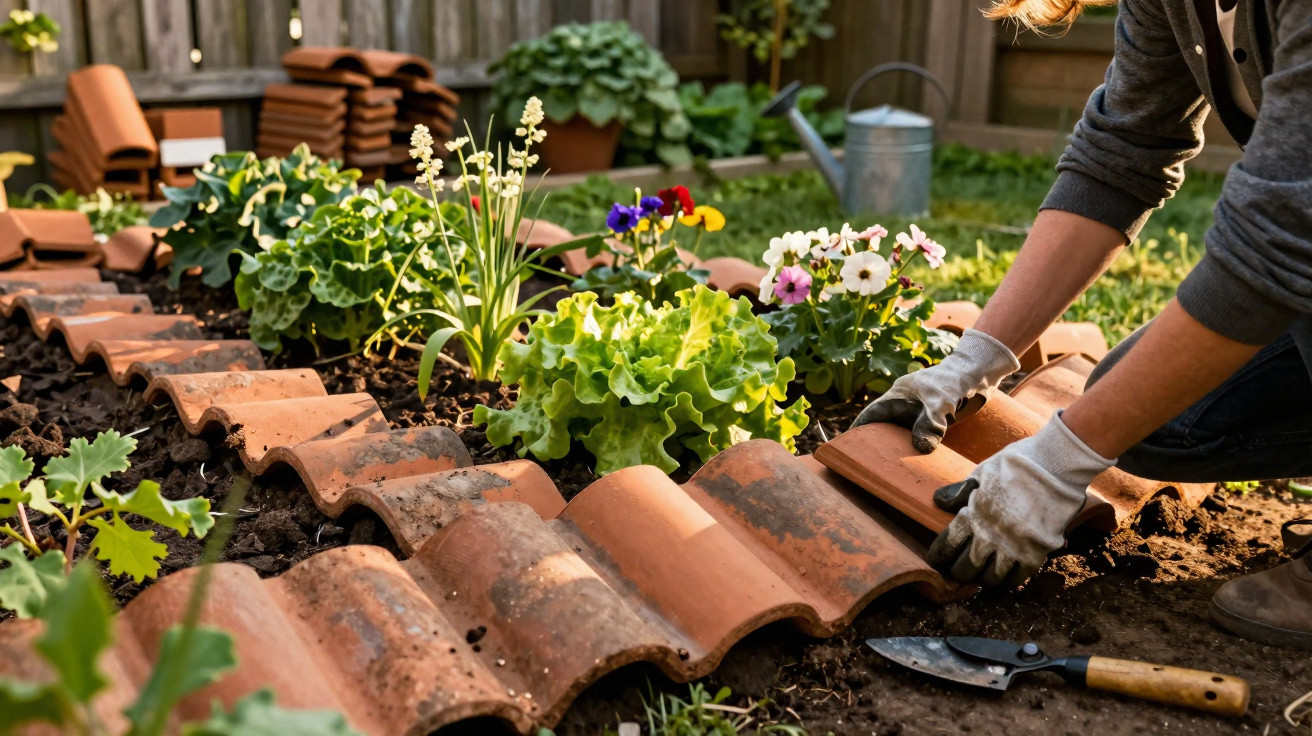
Reusing old roof tiles in the garden is no longer just a make-do fix; it has become a widely used landscaping approach. As well as cutting down on construction waste, clay tiles bring a rustic look, sit comfortably with many outdoor styles, and can be turned into flowerbed edging, low walls, frameworks for vegetable patches, and even safe spots for garden wildlife.
Why use old roof tiles in the garden?
Bringing old roof tiles into your garden combines sustainability, saving money and a bit of imagination. By extending the life of this material, you reduce the demand for new supplies and keep waste out of landfill, tying in naturally with habits such as composting and collecting rainwater.
Because they are made from fired clay, the tiles hold heat well: they soak up warmth during the day and release it gradually overnight. That helps keep soil temperatures steadier in beds and vegetable plots, supporting plants that prefer cooler conditions and helping create a more balanced microclimate.
Watch a video on the YouTube channel Pomar e Horta em Vasos about reusing old building materials, such as roof tiles and bricks, to make decorative borders and shelters in the garden:
https://www.youtube.com/watch?v=F0B6bUjscb4
How to use old roof tiles in the garden creatively?
There are plenty of ways to work old roof tiles into your landscaping without taking on major building work. The best starting point is to choose pieces that are still sound, avoiding tiles with deep cracks so the finished features are safer and last longer outdoors.
Used thoughtfully, tiles can help structure the space, define routes and even act as platforms for pots and succulents. Here are a few flexible ideas that suit gardens of many sizes:
- Flowerbed edging: Set upright, on a slant or laid flat, tiles tidy up beds and make it harder for grass to creep in.
- Small retaining walls: Stacked in layers, they create gentle edging for slight level changes and for raised beds.
- Small decorative touches: Use them as succulent stands, bases for pots, or as accents along gravel paths.
What practical ideas work for old roof tiles in vegetable patches and beds?
In home vegetable gardens and ornamental beds, tiles can hold soil in place, protect the surface and form practical structures. Styles such as “monk-and-nun” tiles, as well as flatter tiles, can be alternated to create wavy borders or upright panels that also help mark walking areas.
Another useful option is building raised beds, which improve drainage, warm the soil more quickly and make gardening easier for anyone who needs to avoid lots of bending down. To help them last longer, it is worth using a base of blocks or concrete so the tiles are not in constant direct contact with damp soil.
What care is needed when reusing old roof tiles in the garden?
Before placing the tiles, sort through them and set aside any that are badly cracked or have edges that are crumbling away. For taller features-such as raised vegetable beds or small walls-the base should be level and, where needed, reinforced with stones or blocks to improve stability.
Handling also calls for care around sharp corners and splinters, so wearing gloves, sturdy closed shoes and using suitable tools is a sensible precaution. With those steps in place, old roof tiles can take on a new role as both structural and decorative elements, helping with drainage, providing shelter for beneficial insects and supporting a tidier, more sustainable garden.


Comments
No comments yet. Be the first to comment!
Leave a Comment