
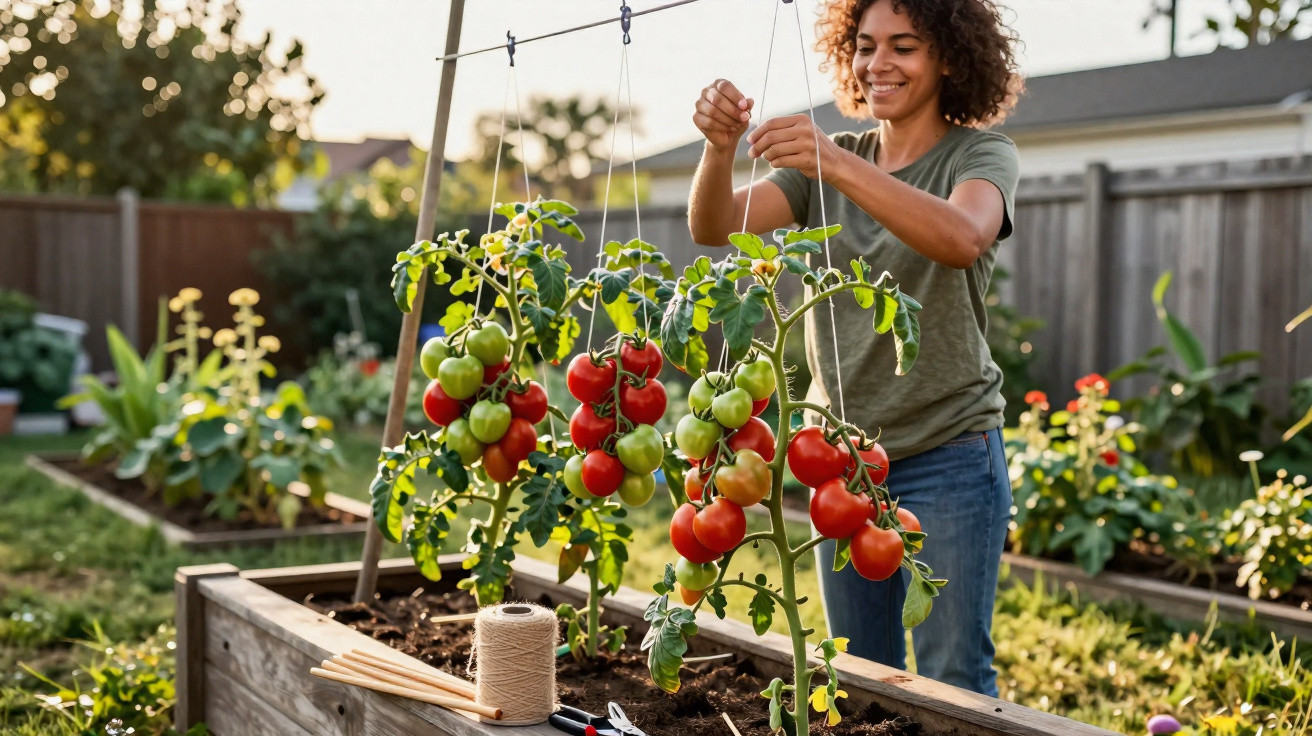
Anyone who grows tomatoes knows the familiar headache: stakes topple over, hog space and rarely look particularly attractive. A technique borrowed from commercial vegetable production is now making its way into gardens and onto balconies, letting tomatoes “float” elegantly - while also promising bigger harvests and far less clutter.
Why it’s time to move on from traditional tomato stakes
Wooden or metal tomato stakes have been a hobby-garden staple for decades. One stake per plant, driven firmly into the soil, tied in regularly, then checked again after a storm. It works, of course - but it comes with several drawbacks.
- They take up a lot of room at ground level.
- They need to be pushed deep into the soil to stay stable.
- In wind and thunderstorms, they’re prone to falling over.
- If you forget to tie plants in, stems can bend or snap quickly.
In small gardens - and especially on balconies - that’s frustrating. Every corner matters, and a forest of stakes looks more like a building site than a comfortable, productive garden.
"The solution comes from the professional world: tomatoes grow on strings and trellises from above - without a single traditional stake."
Tomatoes on a line: how the hanging method works
The principle is simple: instead of training tomatoes up a rigid stake, you guide them on a tensioned wire, rope or trellis positioned above the plant. In effect, the plant climbs into the air.
Step by step to a ‘floating’ tomato plant
- Build a sturdy overhead support above the bed, pot or raised bed: for example, a timber frame, a metal bar, a pergola or the frame of a small canopy.
- Attach a strong wire, string or dedicated horticultural twine to the support so it runs down towards the tomato plant, vertically or on a slight angle.
- Loosely wind the main shoots around the string, or secure them with soft clips.
- As the plant puts on new growth, keep guiding the shoot upwards - with no rigid stake getting in the way.
This approach suits tomato varieties that keep growing continuously and can easily reach 2 metres or more. For those types, the classic single-stake approach is often too short anyway.
A space-saver for balconies, patios and tiny beds
On limited space, the hanging setup really comes into its own. Because plants travel upwards on strings or a trellis, the ground underneath stays comparatively open. That leaves room for herbs, lettuce, radishes or flowers.
Compared with a dense thicket of stakes, the result is a cleaner, more airy layout. It’s easier to move between plants, you trip less, and you’re not constantly gardening around poles. The method is particularly appealing for:
- balcony planters and large pots against a house wall
- patios with a pergola or an archway
- small raised beds in city gardens
- narrow strips alongside fences or walls
"If you think upwards instead of outwards, you can get noticeably more harvest from just a few square metres."
Healthier plants thanks to more air and light
Tomatoes often struggle with fungal diseases such as blight. A common trigger is damp leaves and fruit in cramped, poorly ventilated growth. The hanging method gives plants breathing space.
- Leaves hang more freely and dry faster after rain.
- Air circulates more effectively, so moisture builds up less.
- Trusses develop hanging clear of the foliage and receive more light.
Harvesting becomes easier too. Tomatoes are at eye level, it’s obvious which fruits are ripe, and you don’t need to reach through a maze of stakes and sprawling leaves. That’s gentler on the plants - and kinder on your back.
What materials work for a hanging tomato setup
Switching to an overhead system doesn’t require expensive specialist kit. With a bit of DIY confidence, you can build it using materials you already have.
Basic kit for hanging tomatoes
- Sturdy support structure: a timber frame, metal framework, pergola, climbing arch or the roof structure of a small canopy.
- String or wire: horticultural twine, coir string, nylon rope or other tear-resistant cord. It should be weatherproof and not too thin.
- Gentle fastenings: soft clips, rubber loops, fabric ties or strips of old tights that won’t cut into the stems.
- Optional trellis: metal or plastic mesh to help support side shoots.
Many home gardeners run the same system for years. At the end of the season, the strings can be taken down, dried and used again. Compared with buying new wooden stakes each year, that saves money and reduces waste over time.
Practical tips: making the switch smoothly
As with any growing method, there are a few details worth getting right from the start. Do that, and the season becomes much more relaxed.
- Build the system before planting: tomatoes establish and grow better when the strings or trellis are already in place before they really take off.
- Pinch out side shoots regularly: limit laterals so plants don’t become too dense or overload the strings.
- Train shoots weekly: once a week, re-wrap, twist or re-clip stems rather than trying to untangle a chaotic mess later.
- Check the tension: strings need to stay taut, but not so tight that they bite into the plant.
- Keep an eye on watering: tomatoes grown vertically - especially in pots - dry out faster. A mulch layer helps retain moisture.
"If you treat your tomatoes like climbers, you should feed them like high-performance athletes: enough water, nutrients and light."
Ideal for greenhouses - and a real visual feature
In commercial vegetable production, the hanging method has long been standard: in greenhouses, long rows of tomato “strings” hang down from the roof structure. The plants are simply trained along, with older growth moving lower while new growth continues upwards.
It’s easy to replicate in a home greenhouse. Add a few hooks to the roof frame, tie on strings, and the space becomes a green tomato hall with freely hanging trusses.
Outdoors, appearance is an extra bonus. If you tension the strings into arches, you can create proper tomato tunnels. A climbing arch covered in tomatoes, or a green curtain on a balcony, works like living décor - and conveniently provides snack-sized fruit along the way.
What beginners should watch out for
People trying hanging tomatoes for the first time often underestimate the weight of a heavily laden plant. A vigorous, tall variety can carry several kilograms of fruit in summer. Your support structure must be able to cope safely.
- Don’t design crossbars that are too long or too thin.
- Screw joints together rather than relying only on push-fit connections.
- If attaching to balcony railings, check the fixing is genuinely secure.
Variety choice matters as well. Compact bush tomatoes rarely need a hanging system. For them, a short stake or a small cage is usually enough. The biggest gains come from tall, slender cordon tomatoes - including cocktail and cherry types - that keep pushing upwards.
More yield from less space - and new planting combinations
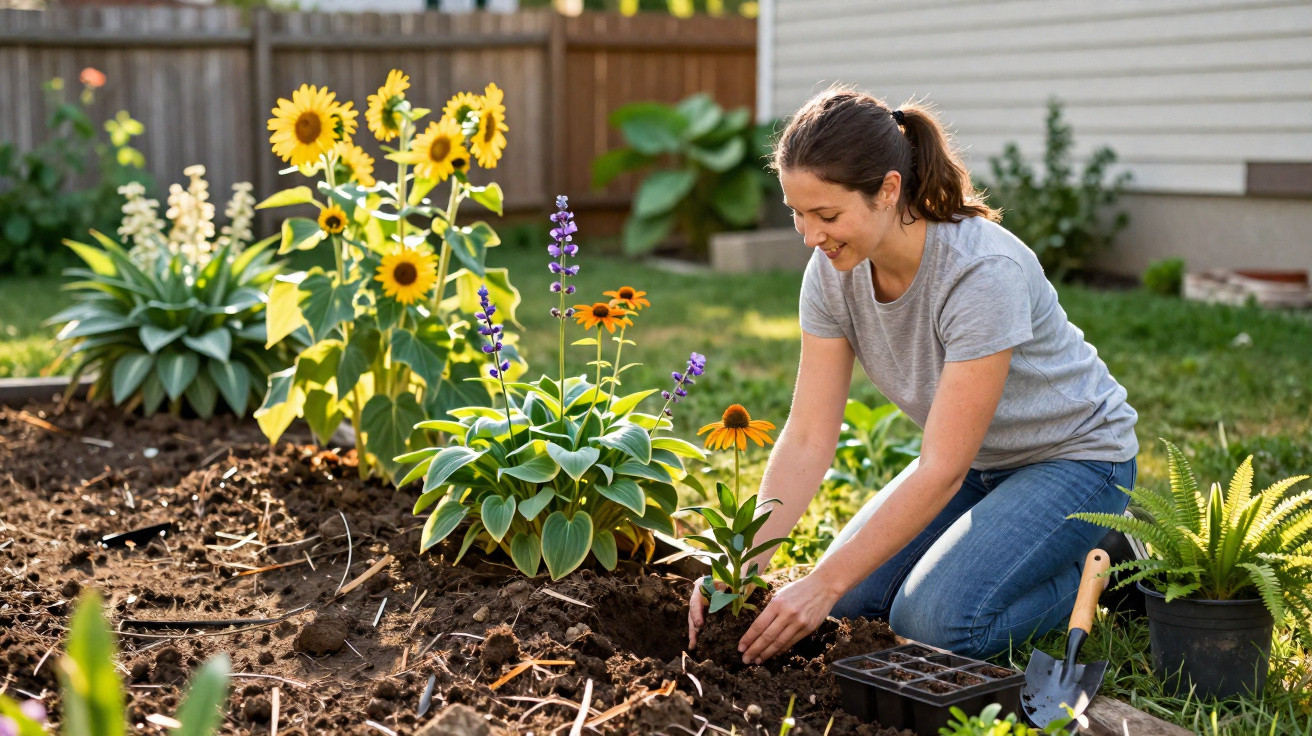
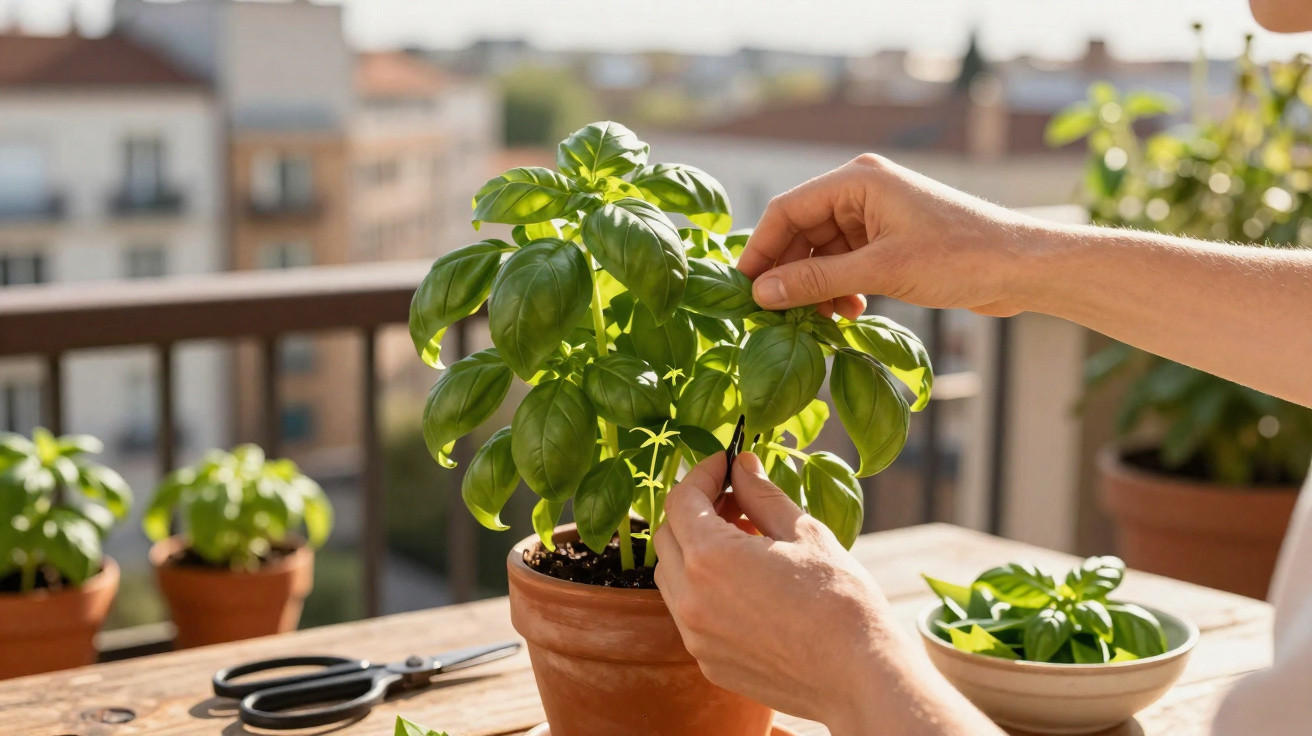
By moving tomatoes upwards, you effectively create extra planting space at ground level. That opens up interesting companion-planting options: basil to deter aphids, marigolds against nematodes, lettuce for early picking while the tomatoes above are still getting going.
Watering and feeding routines can be adapted too. Many gardeners place drip hoses or large saucers under hanging tomato tunnels so water can collect where needed. That keeps foliage dry - making fungal problems less likely - while roots are supplied evenly.
After seeing the method in their own garden, people often wonder why they spent years battling wobbly stakes and crooked plants. The changeover takes an afternoon - and from the next season onwards, it noticeably alters how you grow tomatoes.


Comments
No comments yet. Be the first to comment!
Leave a Comment